Discover Core Update Analysis, Brand Filter, and Sponsored Shops – SEO News – #2 – March 2026
 d-tags

3min.
Comments:0
20 March 2026
 (No Ratings Yet)
 Loading...
 d-tags
3min.
Comments:0
20 March 2026
(No Ratings Yet)Loading...Discover Core Update has now rolled out, so it’s time for the first analysis. The DiscoverSnoop report compares data from before the update (late January) and after its completion (early March).
Some of the biggest losers were large publishers and media platforms. The declines affected both the number of appearances in the Discover feed and user engagement metrics.
Key observations:
Some of these trends were already visible before the update, suggesting that the rollout accelerated existing shifts rather than initiating them.
One of the more interesting findings is the shift in how local content is distributed. Regional publishers are not necessarily losing visibility altogether, but they are no longer widely promoted outside their geographic areas.
For example, local outlets maintained stable traffic within their own states but experienced noticeable declines in other regions across the U.S. This indicates that Discover is now more strongly aligned with user location, limiting the “export” of local content at a national level.
The DiscoverSnoop report also highlights websites that gained significantly, although these results do not always align with other analyses (e.g., NewzDash). One example is Geediting.com, which reportedly grew significantly according to one source, while another indicates a visibility drop during the rollout.
These differences are most likely due to:
This shows that data from individual tools should be treated as directional rather than definitive.
Google has rolled out the branded query filter in Google Search Console to all eligible websites. This new feature allows you to separate traffic from queries containing your brand name from traffic generated by generic keywords, providing a more precise view of SEO and marketing performance.
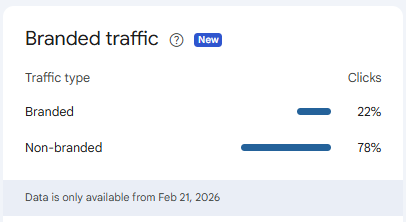
Google confirms that the filter is not available in all cases. It does not apply to subdomains or subdirectories (e.g., /blog), nor to websites with very low impression volumes.
Key takeaways from John Mueller’s response:
In practice, this means that if some branded queries are not visible, it may be due to a lack of actual searches or Google automatically rewriting queries.
Google is experimenting with a new ad format called “Sponsored Shops.” Instead of promoting individual products, the system showcases entire stores within a single, expanded ad unit. The feature was first spotted by Arpan Banerjee, who shared a screenshot of the update on LinkedIn.

Source: Arpan Banerjee, https://www.linkedin.com/feed/update/urn:li:activity:7438871364457099264/
The new format groups multiple products from a single seller within one ad. Users see:
The module works like a mini storefront directly within search results. Users can view multiple products from a single shop at once and quickly evaluate the offer without switching between tabs.
This change may significantly impact both advertising strategies and SEO efforts. The focus shifts from individual products to the entire store, increasing the importance of feed quality, product range, and seller reputation. At the same time, it introduces more interaction points – users can click on either a specific product or the store name, making customer journey analysis more complex.