The Dead Internet Theory: Is AI Slop Taking Over the Web? – AI News – #3 October 2025
4min.

Comments:0

20 October 2025

The Dead Internet Theory: Is AI Slop Taking Over the Web? – AI News – #3 October 2025d-tags
Is the internet as we know it dying? A growing number of experts, including OpenAI CEO Sam Altman and Reddit co-founder Alexis Ohanian, are warning that the web is being flooded by AI-generated content. This phenomenon, known as the "Dead Internet Theory," is becoming a reality. How is AI taking over the web? Are closed, human-only spaces the only escape for the Internet?

4min.

Comments:0

20 October 2025

Do you feel like the internet is getting stranger? That the same dull comments appear under every post, LinkedIn content looks like it was generated by a machine, and discussion forums seem like echoes of themselves? You’re not alone. What was once a niche conspiracy theory is now a serious topic of discussion in Silicon Valley. This is the “dead internet theory,” which suggests that the internet we knew—full of authentic human interactions—is slowly dying, replaced by content created by bots for bots.

What Exactly Is the Dead Internet Theory?

Before diving into expert opinions, it’s worth explaining what the theory itself is. The Dead Internet Theory originally surfaced in 2021 on the niche internet forum Agora Road. Its main premise is that authentic human activity on the internet is systematically being replaced by content generated by bots and artificial intelligence algorithms.

According to this theory, the internet we know is slowly dying. Instead of being a vibrant space for exchanging ideas, it becomes an empty shell—a place where machines create content to attract the attention of other machines, and humans are increasingly marginalized in the process. The theory suggests that a huge portion of comments on forums, product reviews, social media interactions, and even entire articles are no longer created by real users but are the product of automated scripts. Initially treated with skepticism, today—in the era of advanced language models like ChatGPT—this theory is gaining popularity and becoming a serious subject of debate.

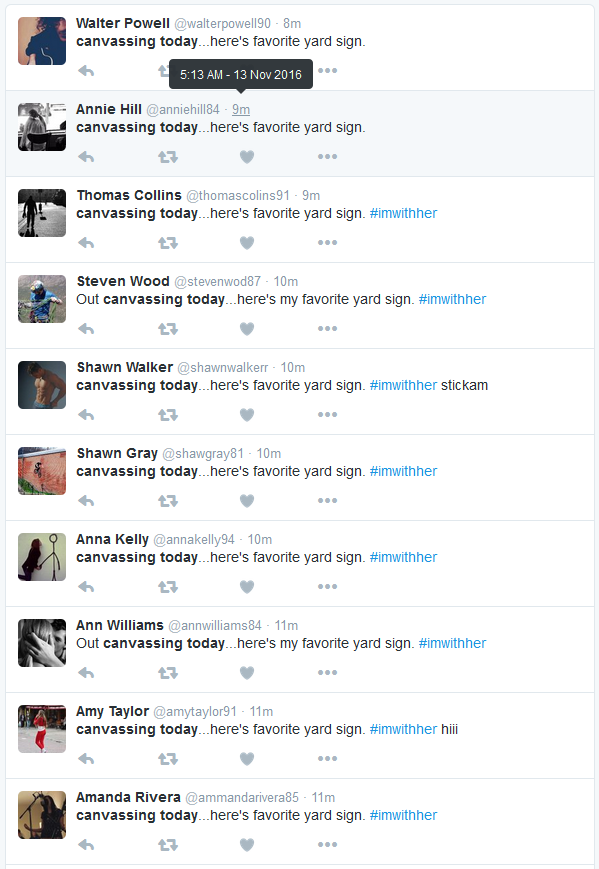
Interestingly, although the theory only entered public discourse recently, the phenomenon has been observed for quite some time. Just look at one of the screenshots referenced by Wikipedia editors regarding content massively reposted by bots during the 2016 US presidential elections—nearly 10 years ago—long before we started thinking about the possibilities generative AI offers users today.

Example of bot-reposted materials on Twitter in 2016 - dead internet theory
Source: https://en.wikipedia.org/wiki/Dead_Internet_theory

Tech Giants Sound the Alarm

Just a few years ago, the idea that most online content is synthetic sounded like science fiction. Today, however, warnings come from the very creators of the technology driving this change. Both Sam Altman, CEO of OpenAI, and Alexis Ohanian, co-founder of Reddit, publicly acknowledge that there is an unsettling amount of truth in this theory.

Sam Altman and the Authenticity Problem

Sam Altman, the man who brought ChatGPT to the world, recently admitted he finds it increasingly difficult to distinguish real discussions from bot activity. In one post on X (formerly Twitter), he stated: “I never took the dead internet theory seriously, but it seems like there are now really a lot of Twitter accounts run by LLMs.”

His concerns deepened when he commented on a Reddit thread full of enthusiastic opinions about a competing AI tool. Altman wrote: “I assume it’s all fake/bots, although in this case, I know the trend [the tool’s popularity] is real.” It’s a paradox of our times: even if a phenomenon is real, its reflection on the internet is so distorted by automation that it loses credibility.

Alexis Ohanian vs. AI Slop

Alexis Ohanian is even more direct. In a recent podcast, he bluntly stated that a large part of the internet is already dead. He used the blunt term “LinkedIn slop” to describe the flood of generic, AI-generated content dominating professional platforms.

According to Ohanian, in a bot-flooded world, the highest value goes to what is verifiably human. “Having proof of life, like live streams and real-time content, becomes damn valuable to hold attention,” he said.

Numbers Don’t Lie: Bots Dominate the Web

The concerns of tech industry leaders are confirmed by hard data. Internet traffic analyses paint a picture of a web where humans are slowly becoming the minority.

According to a report by cybersecurity firm Imperva, in 2023 as much as 49.6% of all internet traffic came from non-human sources. This is a 2% increase over the previous year and dangerously close to the threshold where automated activity will dominate. Moreover, Cloudflare data indicates that nearly one-third of all traffic in the past 12 months came from bots.

This is not just about harmless search engine indexing bots. An increasing share comprises “bad bots” responsible for misinformation, metric manipulation (e.g., artificially inflating views and engagement), and spreading spam. As revealed by NewsGuard in May 2025, over 1,000 news sites are now run almost entirely by artificial intelligence, often masquerading as credible sources.

Side Effects of the Dead Internet Theory: Erosion of Trust and Cultural Void

The dead internet phenomenon is not just a technical problem. It is a process with deep consequences for our culture and how we perceive the digital world.

When Viral Culture Is No Longer Human

Remember the bizarre, absurd trends that once entertained millions? Today, even viral content can be synthetic. A prime example is the so-called “brainrot”—content so absurd and nonsensical it seems created by AI for AI. These often gain massive engagement, which later turns out to be largely driven by bot farms. The internet increasingly resembles a theater where machines perform plays for other machines, and humans are just accidental spectators.

The Quiet Disappearance of the Human Internet

While the web is flooded with synthetic content, authentic human-made content quietly vanishes. The phenomenon known as “link rot” is advancing at an alarming rate. A Pew Research Center study showed that 38% of websites created in 2013 are no longer accessible. Entire archives of human thought, creativity, and history are simply disappearing, replaced by an endless stream of low-quality, automatically generated filler.

What Future Awaits the Internet?

Are we doomed to a digital dystopia? Not necessarily. In response to the bot invasion, a new trend is emerging: retreat towards more closed, authentic spaces. Alexis Ohanian predicts the arrival of the “next generation of social media,” which will be “verifiably human.”

It is already clear that the center of social life is shifting from public feeds to private group chats on Signal, WhatsApp, or Telegram. These “anti-social media,” as a critic from The New York Times called them, are becoming enclaves where real conversations can happen without fear that algorithms are participating in the discussion.

The dead internet theory has ceased to be just a forum curiosity. It is a real challenge we must face. Perhaps the future of the web does not lie in a global, open agora but in smaller, trusted communities where authenticity once again becomes the most valuable currency. Have you noticed the internet becoming more and more… empty? Stay updated on web changes and subscribe to the Delante newsletter!

Information sources:

Author
Maciej Jakubiec - Junior SEO Specialist
Author
Maciej Jakubiec

SEO Specialist

A marketing graduate specializing in e-commerce from the University of Economics in Kraków – part of Delante’s SEO team since 2022. A firm believer in the importance of well-crafted content, and apart from being an SEO, a passionate music producer crafting sounds since his early teens.

Author
Maciej Jakubiec - Junior SEO Specialist
Author
Maciej Jakubiec

SEO Specialist

A marketing graduate specializing in e-commerce from the University of Economics in Kraków – part of Delante’s SEO team since 2022. A firm believer in the importance of well-crafted content, and apart from being an SEO, a passionate music producer crafting sounds since his early teens.