d-tags


 Loading...
AI-Powered Image Cropping and Expansion in Meta Ads
When uploading images or videos to ads in Meta Ads, you may notice a new feature: Crop and expand. This allows the system to automatically crop and resize your assets to fit various ad formats, enabling them to be shown across more placements.
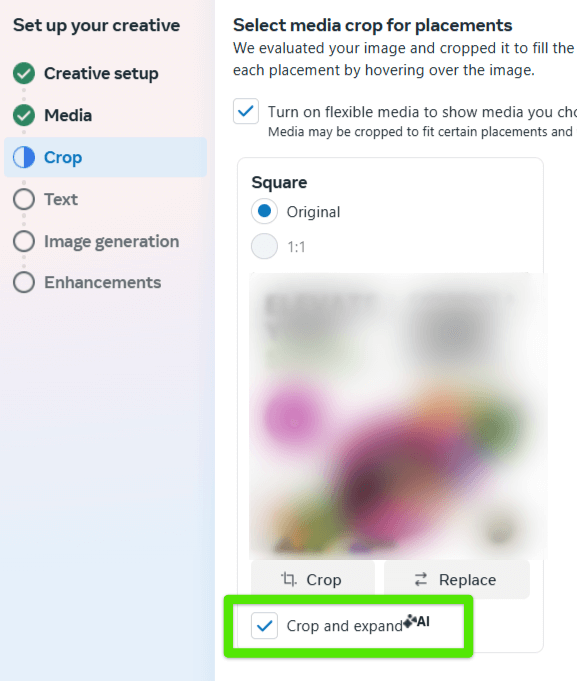
source: Meta Ads Panel
It’s important to note that this feature operates independently of Flexible Media — even if you disable Flexible media, Crop and expand may still remain active on a given image or video asset.
What does this mean for you?
While automatic adjustments can help improve ad reach, they can also alter the composition of your creatives in ways you didn’t intend. If you want full control over how your ads appear, it’s worth checking the settings for each uploaded asset and manually disabling this option if needed.
Ad Text Personalization Based on Personas in Meta Ads
Meta is expanding its AI-generated content capabilities within ads — this time introducing the feature Tailor variations to personas as part of the Advantage+ toolset. This enables you to create different versions of your primary text and headline, tailored to distinct communication styles that better resonate with different audience segments.
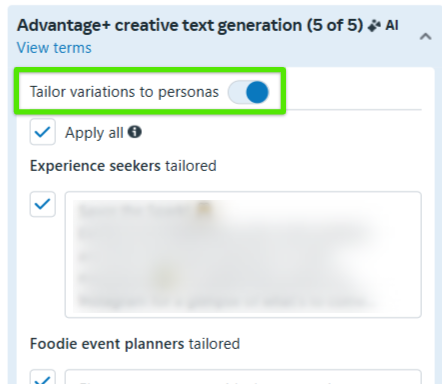
source: Meta Ads Panel
How does it work? Meta analyzes your account data and past ads to identify so-called personas using AI. Based on this analysis, it generates diverse ad text variations that you can use directly or replace with your own versions. It’s worth noting, however, that these personas do not affect targeting — they are used only for creative generation.
For example, if you’re advertising premium clothing, Meta might adjust your ad copy depending on how different audience segments respond. If Meta observes that users who value high-quality materials (like silk, cashmere, wool) engage more with your ads, it may generate a version that emphasizes fabric quality and luxurious finishes.
What does this mean for you?
This tool can help you more effectively tailor ad messaging to different audience segments without manually writing multiple versions. Currently, the feature only works if your primary text is written in English, Portuguese, or Spanish, so not all advertisers will be able to benefit from it yet.
ROAS Optimization for Any Event in Meta Ads
Meta is introducing a long-awaited feature for campaigns using the objective Maximize Conversion Value: the ability to optimize for ROAS (Return on Ad Spend) for any event, not just for purchases.
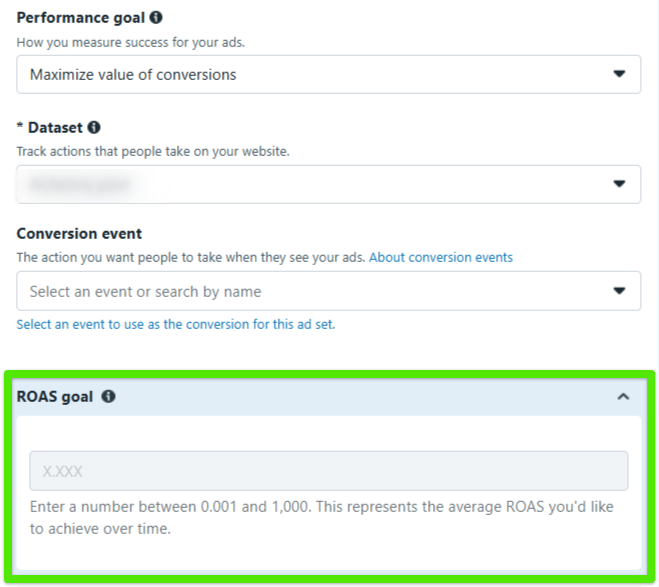
source: Meta Ads Panel
What does this mean for you?
ROAS optimization helps manage your ad budget more efficiently and maximize return on investment by aligning better with your campaign goals and business model.
Google Ads Blocks Conversion Tracking Without Proper Consent Mode Implementation
Google has begun fully disabling conversion tracking in ad accounts that lack properly implemented Consent Mode for users in the European Union and the European Economic Area. A notification email is sent with a deadline for remediation — if the issue is not resolved, conversion data will stop being collected, even though the tags technically remain active.
Critically, even after implementing the required changes, conversion tracking is not restored automatically. A dedicated form must be submitted and manual verification by Google Support is required. As a recommended solution, Google points to the Cookiebot CMP by Usercentrics platform.
The final deadline is set for July 21, 2025, but enforcement has already started.
What does this mean for you?
Failing to implement Consent Mode correctly can result in a total loss of conversion data and reduced campaign effectiveness. Additionally, restoring tracking requires contacting support and going through a manual review process, which may delay optimization efforts.
Sources: