Google Spam Update, John Mueller’s advice, and what’s new at Ahrefs – SEO News – #1 – October 2025
d-tags
d-tags
Google announced the completion of the Spam Update rollout, which began on August 26 and was finalized on September 22, 2025. According to the status page, this was another round of improvements to its automated spam-detection systems.
The Spam Update does not change overall search rankings but focuses solely on removing content classified as spam. Google emphasizes that its algorithms operate continuously, but from time to time it implements significant enhancements to methods for detecting low-quality sites.
What to do if your site’s visibility dropped? If you noticed a decline in your site’s performance during the update rollout, first make sure your content and practices comply with Google’s policies.
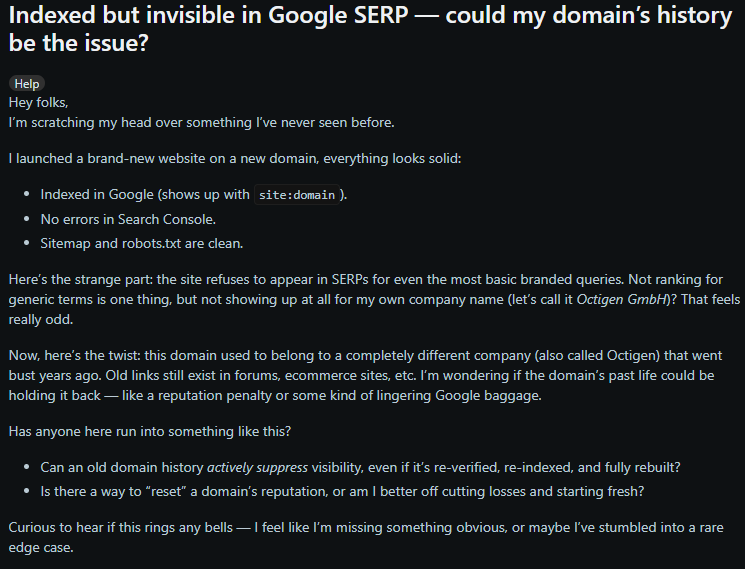
Recently, a Reddit discussion addressed a situation where a new website — despite being properly indexed and showing no errors in Google Search Console — does not appear in search results even for basic branded queries. The site owner noted that the domain previously belonged to another company with the same name and wondered whether the domain’s history could be affecting its current visibility.

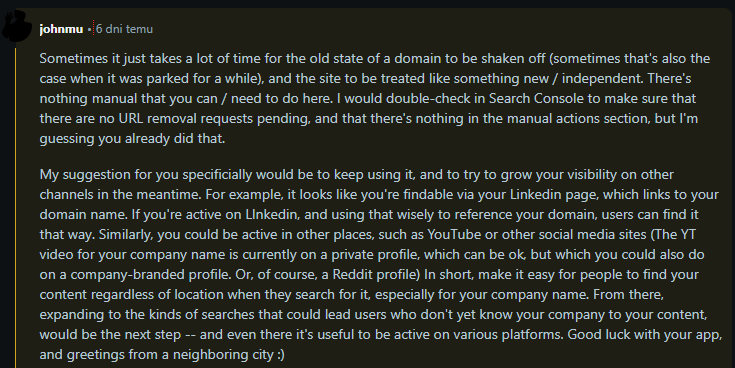
John Mueller from Google responded, emphasizing that with domains that have a history it often takes time for Google’s systems to “shake off” the previous state and treat them as independent, new sites. He added that there is no need for manual interventions — you should check Google Search Console to ensure there are no pending URL removal requests or manual actions.
Mueller suggested that the domain owner should not abandon the domain but should consistently build the brand’s visibility outside of Google as well. He pointed to, among other things:
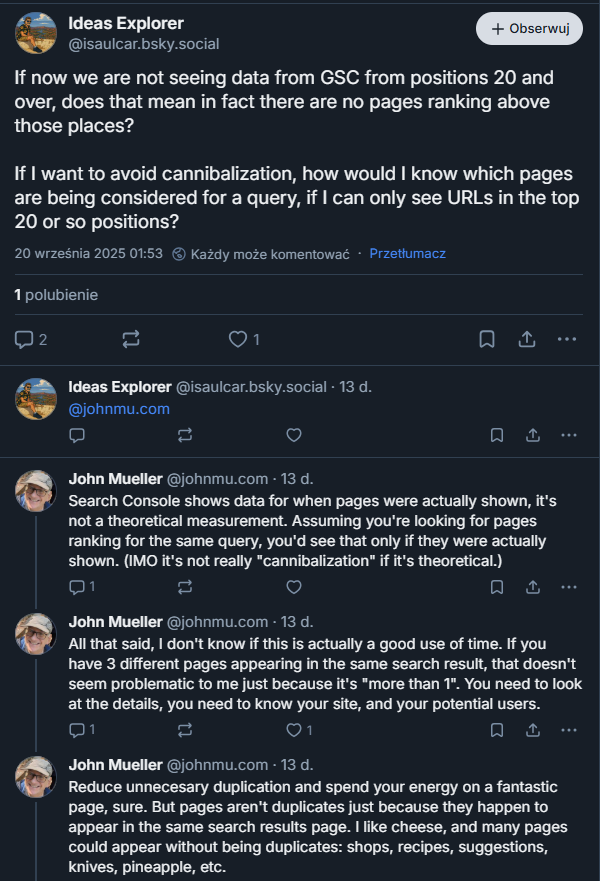
Once again John Mueller weighed in, this time on cannibalization. The discussion started with a question from an expert concerned about multiple URLs from the same domain appearing for a single query. The expert assumed that recent changes in Google (the disabling of the &num=100 parameter) limit Search Console data visibility to the top 20 ranking only, which would make diagnosing “cannibalization” harder.
John Mueller immediately clarified that GSC shows data only for pages that were actually shown in search results. If several pages rank for the same query, the site owner will see that data in the report.
He reassured that the appearance of multiple pages from the same site for the same query should not automatically raise concerns. If several pages generate impressions, it means the algorithms considered them potentially valuable for that query.
If you have 3 different pages appearing in the same search results, I don’t think that’s problematic just because it’s “more than 1”. You need to look at the details, know your site, and know your potential users.
He advised that the best approach is simple — avoid unnecessary duplication and focus on creating strong, valuable pages. Simple? Yes, simple.
The well-known tool Ahrefs has expanded its ecosystem with a social media management module. The new functionality allows planning, publishing and monitoring social media content directly within the platform, which may be particularly useful for specialists who combine SEO and social media activities in one strategy.
What can the new Ahrefs module do? Among the currently available options are:
The Social Media extension fits into the broader trend of convergence between SEO and social media in the context of search — the so-called Search Everywhere.
The new Social Media section in Ahrefs will be expanded with additional tools. Why is it worth paying attention? Mainly because new modules could make the platform a more comprehensive solution not only for SEO but also for broader digital marketing activities in the future.
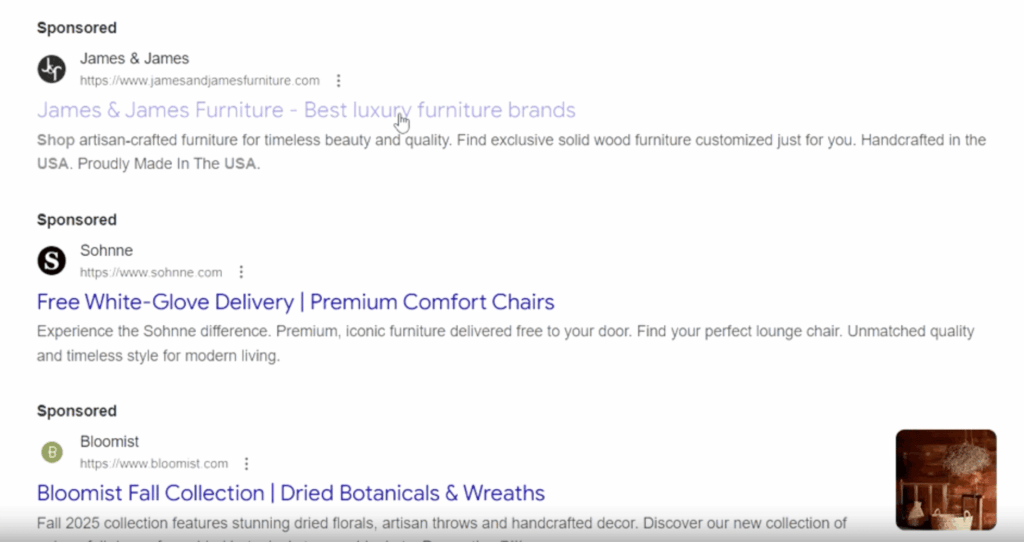
As a final note in our news roundup — an interesting tidbit! Google is experimenting with the appearance of links in search results. This time it’s a subtle visual effect — when hovering the cursor over a result, the link title becomes grayed and muted.
The change was noticed by Sachin Patel, who published recordings of the test on platform X (video below). The effect appeared in both organic and paid results.