
*Shoutout to our CEO, Matt Calik, for this comparison. 😉
What is the llms.txt file?
The llms.txt is a markdown text file that summarizes the key content of your website. You can use it to highlight the most important pages for your business. Think of llms.txt as a hybrid between robots.txt and sitemap.xml – but specifically designed for LLM bots and AI systems like ChatGPT, Google Gemini, Claude, or Perplexity.
According to its creator, Jeremy Howard, the file’s purpose is to help these AI models read and understand websites as a whole. This, in turn, would enable more effective indexing of your content and improve its visibility in AI-powered systems.
There are two versions of the file:
- The basic version: yourdomain.com/llms.txt
- The extended version: yourdomain.com/llms-full.txt (which includes more directives and content)
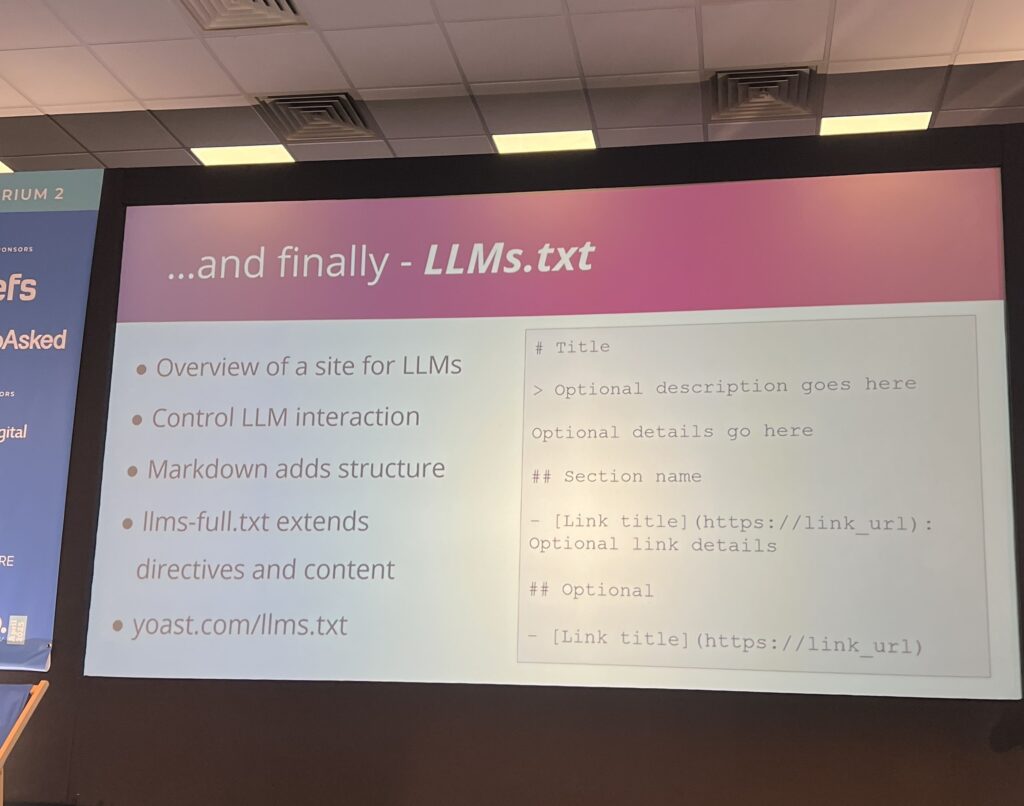
The basic version typically looks like this:
# Title

> Optional description goes here

Optional details go here

## Section name

- [Link title](https://link_url): Optional link details

## Optional

- [Link title](https://link_url)
The file should be placed in the root directory of your domain. Several online generators already exist, such as https://wordlift.io/generate-llms-txt/ or https://writesonic.com/free-tools/llms-txt-generator. WordPress also offers plugins that help generate this file.

Sounds great, right? But does it really work? Do we actually need it?
Does llms.txt file really work?
At the moment, there’s no direct proof that the llms.txt file works as intended. None of the major LLM providers (OpenAI, Google, Anthropic) have officially confirmed its use.
That said, supporters argue: Why not try adding it to your site? If it ever becomes a standard like sitemaps or robots.txt, you’ll be ahead of the competition by implementing it early. There’s some logic in that. 😉
One notable advocate of this logic is Alex Moss from Yoast, who spoke about llms.txt during his presentation at BrightonSEO this April. He predicts it could become a new standard, comparing it to structured data markup. Since then, Yoast has published their own llms.txt file as an example, which you can check out here: https://yoast.com/llms.txt
On the other hand, the extended version is already used by companies like Zapier. You can see their example here: https://docs.zapier.com/llms-full.txt
Our SEO Team Lead, Paulina Konopka, agrees with this positive view: