


We present the marketing activities executed on Google Ads and Meta Ads for two accommodation properties in the Pieniny region. The objective was to increase lodging bookings and promote on-site restaurants, taking into account the seasonality of the travel industry and evolving customer booking behaviors.
The client operates two accommodation properties offering comfortable rooms for families, school groups, and corporate clients. Both properties also feature on-site restaurants, enabling the promotion of additional on-site restaurants. The travel sector in which the client operates is highly seasonal – demand is strong from April to October, while it declines between November and March.
The main challenges included:
The Google Ads and Meta Ads initiatives enabled effective adaptation of advertising communication to the travel industry’s specifics and the properties’ seasonality. Campaigns were planned and launched well in advance, allowing visibility of the offerings to be built before key sales periods, such as winter holidays or the summer season. The strategy simultaneously promoted multiple services – accommodation and on-site restaurants – while differentiating messaging and target audiences.
Campaigns were continuously optimized around the primary goal: booking form submissions. This approach focused the budget on activities that directly supported accommodation sales rather than solely driving reach or website traffic.
Ongoing market analysis and competitor monitoring, combined with regular client communication, were key elements. This allowed flexible responses to market dynamics and ensured advertising efforts remained competitive throughout the season.
As a result, the initiatives achieved:
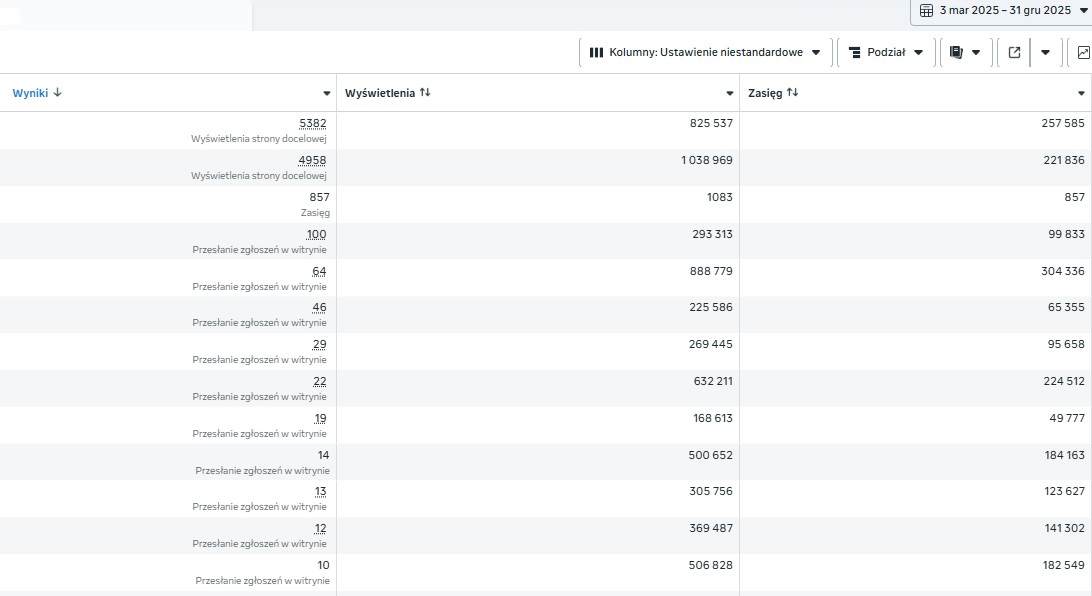
Meta Ads Results from March to December 2025
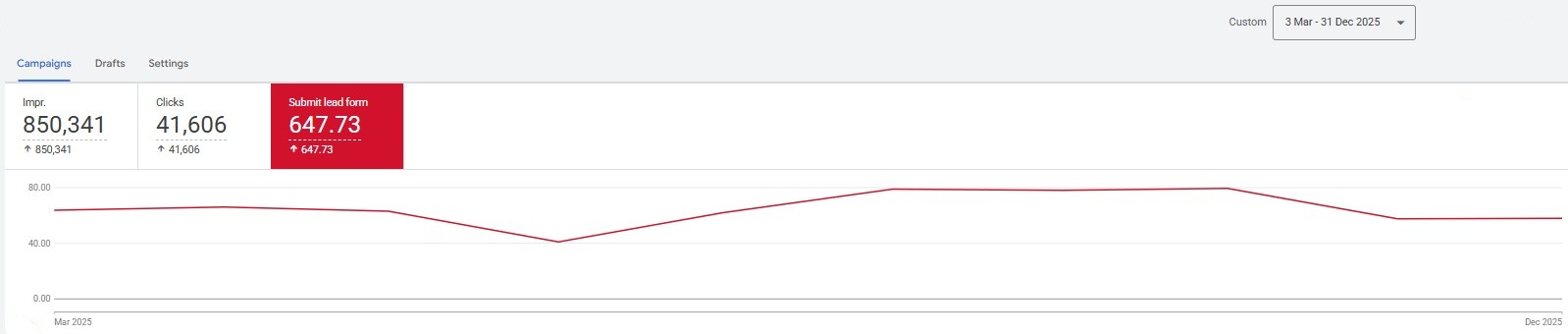
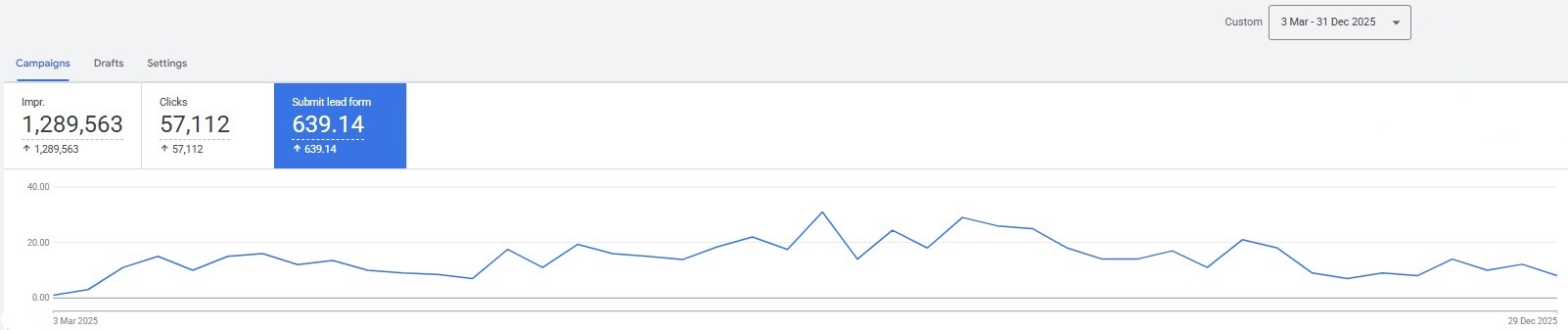
Google Ads Results from March to December 2025
Marketing activities on Google Ads and Meta Ads enabled the client to fully leverage the travel season’s potential and increase booking volumes. Seasonal campaign planning, optimization for booking form submissions, and continuous competitor monitoring proved crucial for achieving measurable results.