d-tags



 Loading...
Update: November 2025
Table of Contents:
Romania – Basic Facts
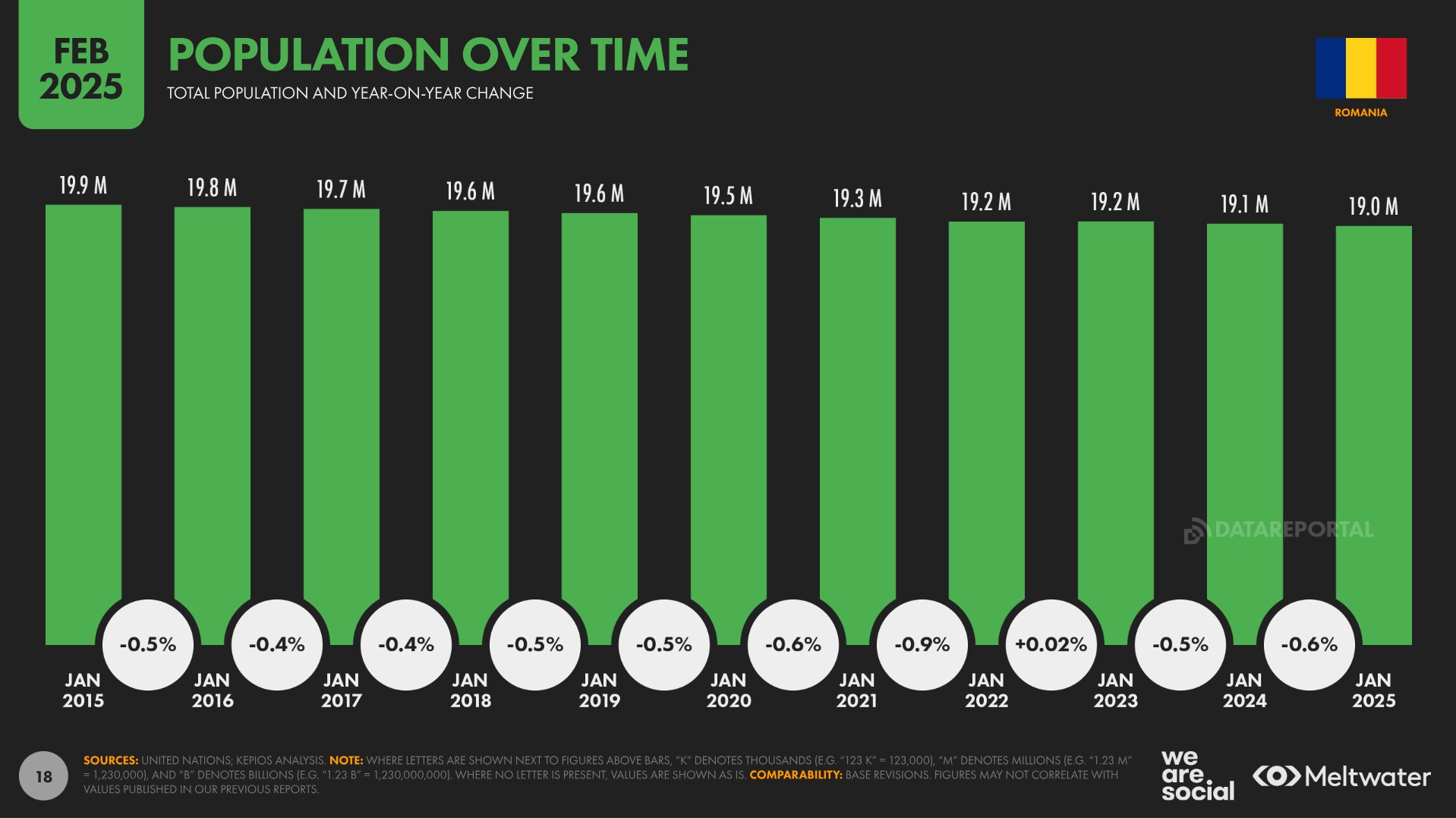
Romania is a country located in Southeastern Europe, on the Black Sea, with its capital in Bucharest and the official language being Romanian. According to the Digital 2025 Romania report, the country’s population is currently around 19 million inhabitants and is steadily declining – over the past ten years alone, the population has decreased by approximately 800,000 people. This downward trend has persisted for many years, mainly due to labour migration and a low birth rate.
Since 2015, Romania has been losing an average of 0.4 to 0.9% of its population annually, placing it among the fastest depopulating countries in the European Union. Despite this, the digital market remains stable – the high level of urbanisation and rapid development of internet infrastructure make the country an attractive destination for online investments, especially in the fields of e-commerce and digital marketing.
Romania joined the EU on January 1, 2007, which enabled its dynamic development. In 2018, Romania received €4.865 billion from the EU which amounts to 2.45 percent of its economy. When it comes to the most crucial sectors of the Romanian economy, we need to mention:
- industry – 26.1%,
- wholesale and retail, transportation, accommodation, and food services – 20.2%,
- public administration, defense, education, health care, and social services – 14.5%.
Even up to 77% of Romanian exports go to EU countries, including 23% sent to Germany, 11% to Italy, and 7% to France. When it comes to importing, it also involves mainly EU countries: Germany – 20%, Italy – 9% and Hungary – 7%. Romania’s GDP per capita is one of the lowest in the EU and amounts to 66% of the Community average.
In 2019, Romania’s GDP grew by 4.1% compared to 2018, while the pandemic of 2020 caused its decrease to -4.8%. In 2021, it’s expected to reach 4.6%. The unemployment rate increased to 7.9% in 2020, however, it’s supposed to drop to 5.5% by 2022.
The Romanian E-commerce Market
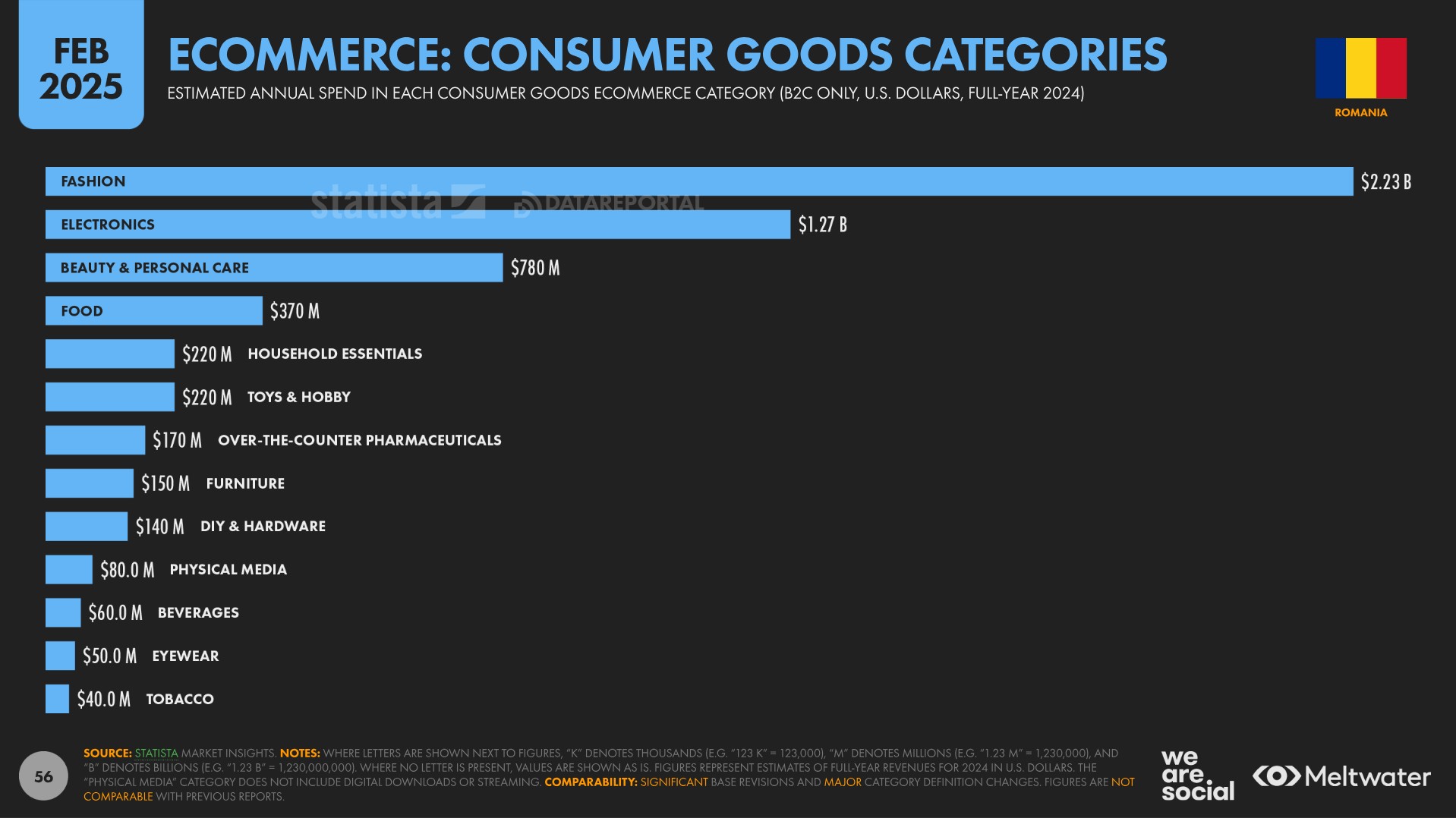
According to ARMO (Association of Romanian Online Stores), at the end of 2020, the e-commerce sector exceeded €5.6 billion which is 30% more when compared to 2019. The increase was much higher than expected which resulted from numerous factors, including the pandemic. Romania is ranked among the countries with the highest annual e-commerce growth rate. In this respect, this place is not as developed as other countries. According to the Digital 2025 report, the e-commerce sector in Romania is developing dynamically and reaching increasingly higher sales values. The fashion industry remains the leader, with Romanians spending around USD 2.23 billion annually, ahead of electronics (USD 1.27 billion) and beauty & personal care products (USD 780 million). The strong performance of these categories confirms that consumers are eager to shop online for everyday items, including clothing, cosmetics, and electronics. Grocery shopping (USD 370 million), cleaning products, and toys follow next, indicating growing trust in online purchases even in less typical segments.
Compared to 2020, there has been a significant increase in both cart value and the share of mobile purchases. E-commerce in Romania has matured – transitioning from a developing market to one in the expansion phase. The dominance of fashion and electronics categories makes these industries the most promising for intensive SEO and content marketing efforts, combined with social media campaigns. Mobile optimisation remains crucial, as smartphones generate the majority of online transactions in the country.
Who are the users?
Currently, 17.8 million people have access to the internet, which represents as much as 94% of the country’s population. Although the number of users has slightly decreased by 0.6% year over year, Romania still ranks among the countries with the highest internet penetration rates in Central and Eastern Europe. As many as 93.7% of internet users access the web via mobile devices, confirming the dominance of smartphones as the primary tool for accessing information and making online purchases.
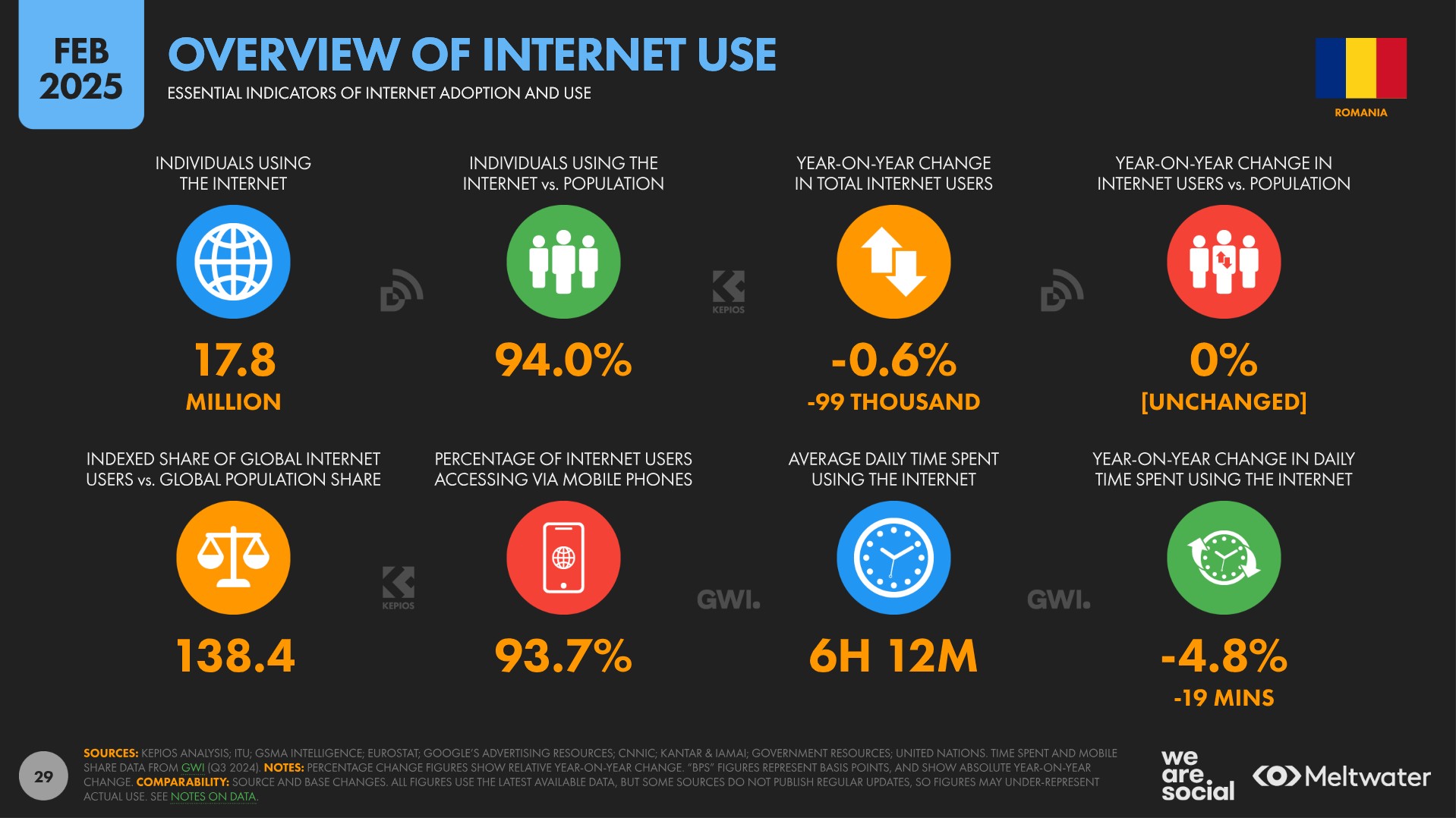
The average user spends over 6 hours a day online, although this time has slightly decreased (-4.8%, or 19 minutes less compared to the previous year). This means that Romanians use the internet intensively but increasingly consciously – focusing on specific goals such as shopping, social media, or communication. For brands, this highlights the importance of mobile optimisation, fast loading times, and thoughtful content – as competition for user attention is stronger than ever.
What are the most common reasons Romanians use the internet?
Romanians most often use the internet to search for information (76.5%) and to stay in touch with family and friends (68.3%). The search for practical advice is also becoming increasingly important – as many as 61.5% of internet users go online to learn how to do or fix something. Activities related to content consumption are also popular: reading news (59.4%), listening to music (58.4%), and watching movies or TV shows (57.3%).
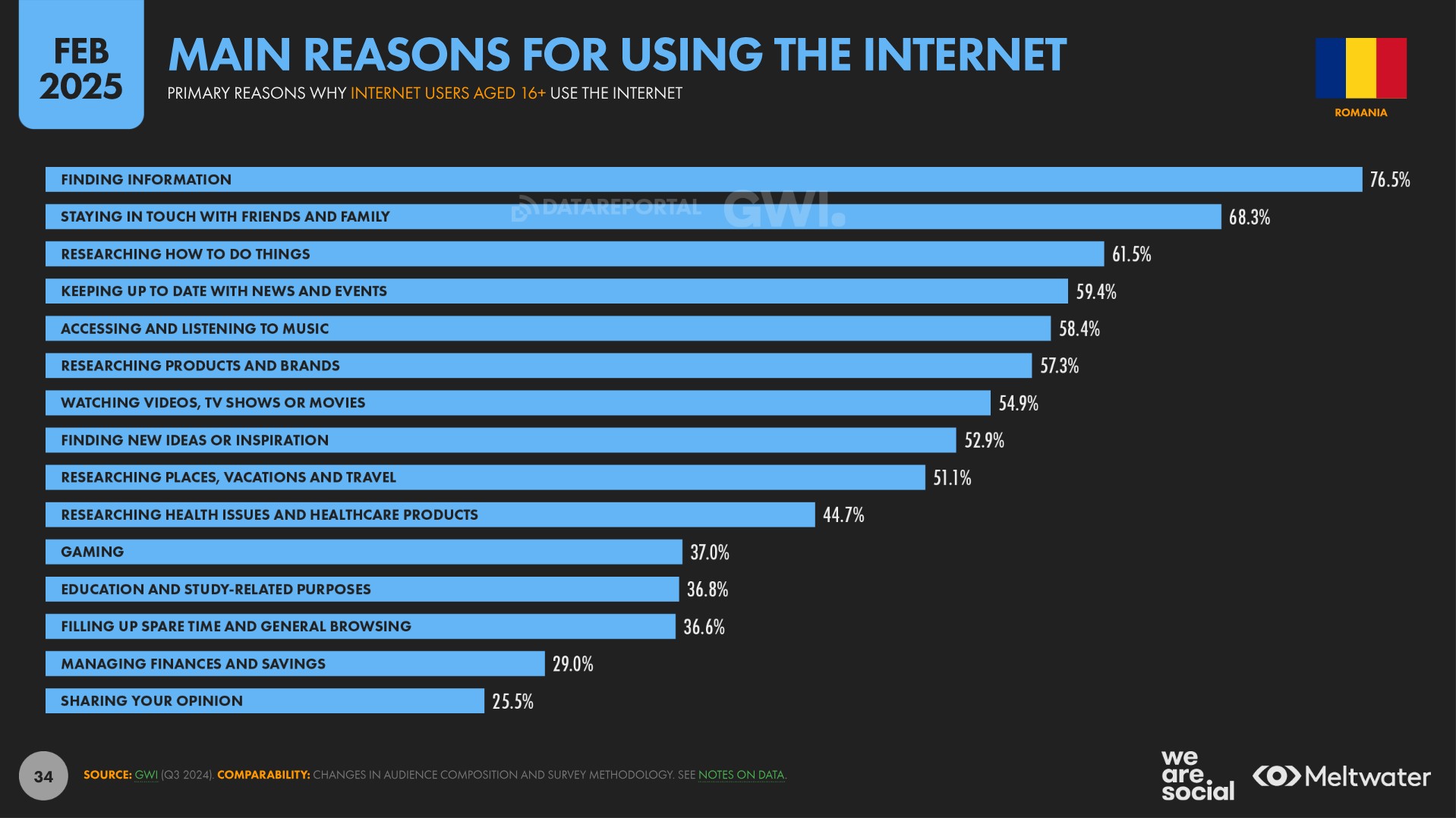
For online businesses and SEO efforts, this means that users in Romania primarily seek knowledge and problem-solving content, making it worthwhile to invest in educational materials, how-to guides, and product reviews. More than half of users (57.3%) research products and brands before making a purchase, while 52.9% look for inspiration – making SEO, blogs, and expert content key tools for building trust and visibility. Romania is a market where well-optimised content can genuinely influence purchasing decisions.
SEO in Romania
As you can see, the Romanian market is continuously developing. Considering the development phase the country is currently in, its online sales are likely to improve in the upcoming years.
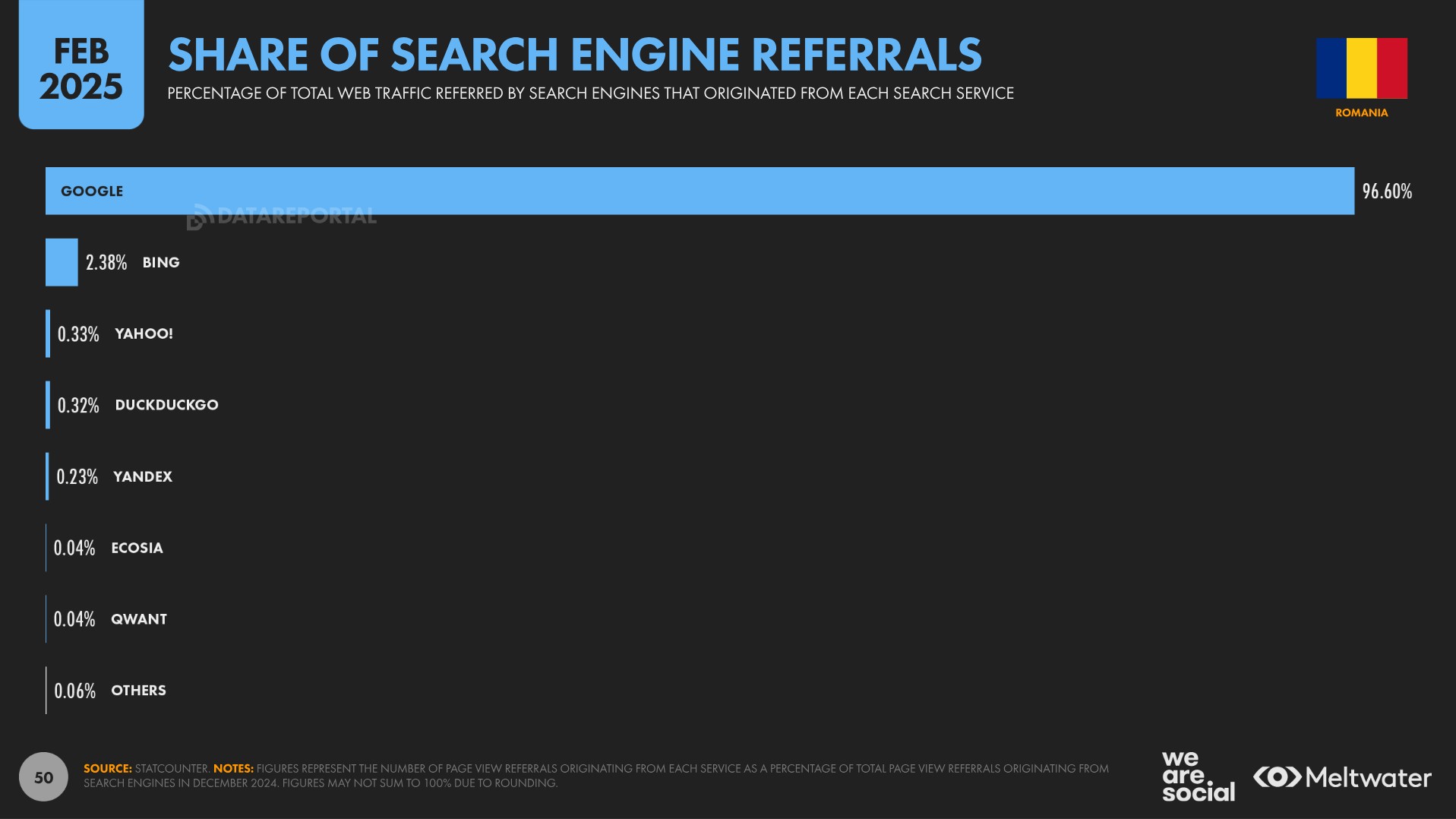
According to the Digital 2025 report, the Google search engine completely dominates the Romanian market – generating as much as 96.6% of all traffic from search engines. In comparison, other search engines like Bing or Yahoo achieve results of only a few percent. This means that SEO in Romania should be focused on Google.ro, as this is where users most often begin their search for information, products, and services.
In the era of AI Overviews, it’s also important to remember visibility in Bing (2.38%), which is increasingly serving as the foundation for AI-powered solutions such as Copilot and integrations with the Edge browser. Although its share of traffic is small, it’s where the first tests of new generative features are being introduced — features that may impact how results are displayed.
There is no doubt that optimising a website for Google search is the key to effectively acquiring customers from the Romanian market. A well-planned SEO strategy that includes Romanian-language content, local keywords, and link building from local domains can deliver quick and measurable results. What to keep in mind when running EO campaigns in Romania? General principles are similar to rules you need to follow in other countries, however, there are a few issues that you should pay special attention to.
.ro Domain
If you conduct activities on google.ro, it’s advisable to choose a domain with a local extension. Of course, you can try to do SEO for your own website – Google Search Console enables indicating the country your page is targeted at – however, it’s undoubtedly better to choose a Romanian domain as it’ll also improve your conversion rate. Besides, take a look at the search results in your country. Do you see any foreign extensions in top positions? Probably not. You don’t need to meet any special requirements to set up a .ro domain and it’s not particularly expensive. 
Hosting in Romania
Website loading time, which depends mainly on the server, is one of the ranking factors. Your server doesn’t have to be in Romania, it can be in one of the neighboring countries. However, if you find a quality server in Romania, choose it. Keep in mind that it’s impossible to determine in advance whether a website hosted in your country will load slower than a page on a server in Romania. Everything depends on the efficiency of applied solutions. Prices in Romania are pretty attractive. Some exemplary services you can try out include: https://www.mxhost.ro/, https://bmfhost.ro/, https://www.thc.ro/. 
Keyword Selection
Benefit from Keyword Planner and choose the country and language of keywords you’re looking for. Ubersuggest or keywordtool.io are other tools helpful in finding the best keywords for Romanian SEO (check out: Keywords – 10 useful tools supporting keyword research).  As a fun fact, we can tell you that grammar and 77% of Romanian vocabulary are similar to Italian, therefore, if you can speak this language, conquering the Romanian market should be a piece of cake for you. Of course, the creation of quality content requires someone fluent in Romanian.
Link Building
Your website won’t be ranked high in Google without quality backlinks. You can acquire them from forums or page directories, however, the most valuable links come from sponsored articles. It’s not necessary to contact individual page owners on your own. Below you can see a list of platforms accepting sponsored articles:
Linkhouse
At the end of July 2021, it included 141 sites with the .ro extension. 
Whitepress
It’s noticeably more numerous, with 1666 websites. 
Natvisor
Select from over 1000 pages.  As you can see, finding a platform where you can place sponsored articles with links shouldn’t be problematic. In Romania, it’s also possible to notice the increasing popularity of blogs. You can access them both on free platforms and on domains registered by their owners. Blogs give you an opportunity for guest blogging and obtaining links from comments, provided that you reach an agreement with the website owner.
Social Media
Although social media activity doesn’t have a direct impact on your visibility in Google, it’s still worth focusing on it. Content published on your Facebook profile can be shared by users, some of them may even link it on their blog.
According to the Digital 2025 Romania (GWI) report, social media remain a key communication channel in Romania – more than 85% of internet users over the age of 16 use them. The clear leaders are Facebook and WhatsApp (both 87.1%), confirming the dominance of the Meta ecosystem. Other high-performing platforms include Messenger (73.4%), Instagram (65.4%), and TikTok (61.2%), which are increasingly being used to build organic reach and support online sales.
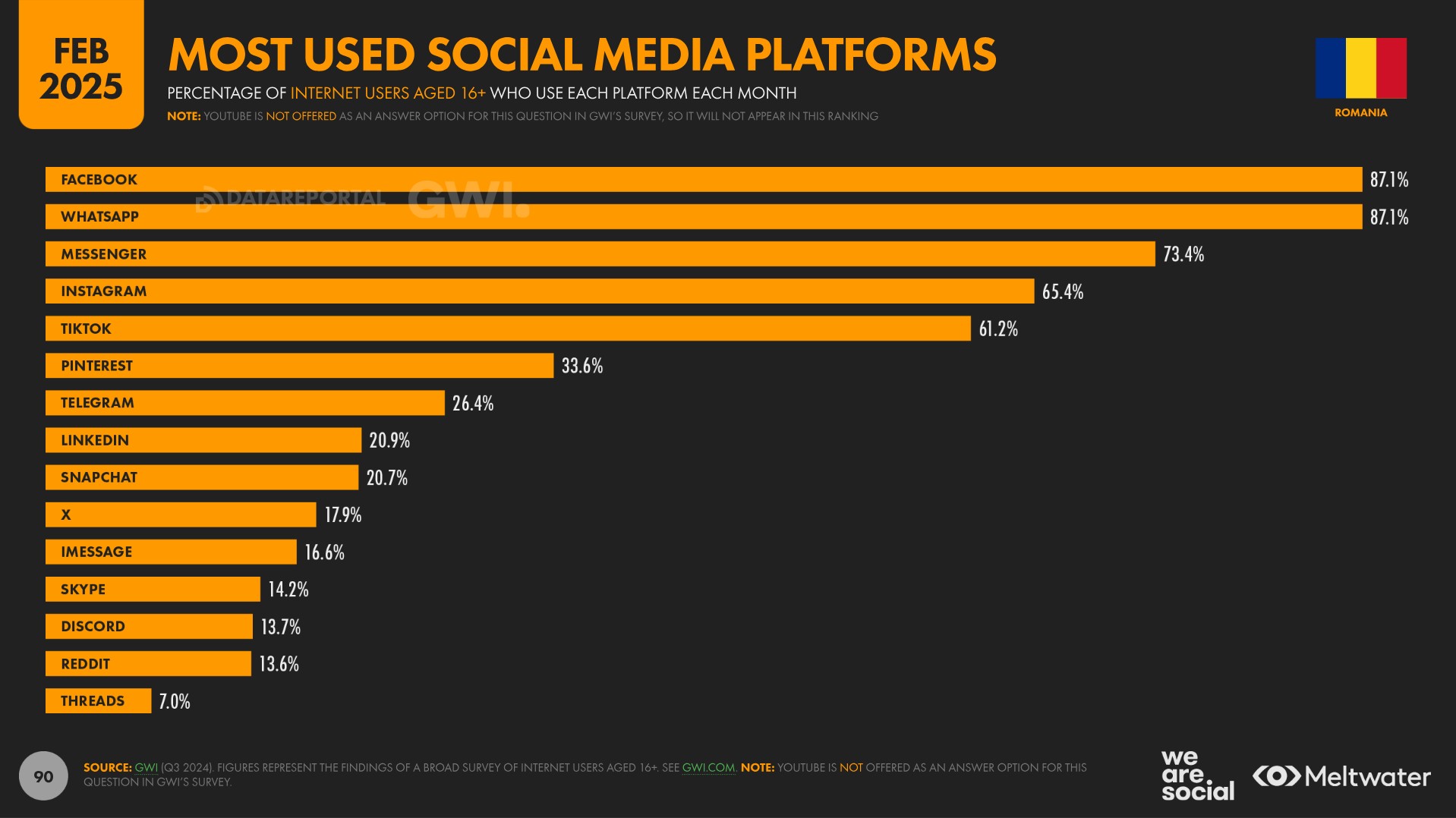
For SEO strategy, this means that Facebook and Instagram should serve as the main channels supporting content distribution, remarketing, and driving traffic to the website. TikTok and Pinterest work well for visual and lifestyle campaigns, while LinkedIn is best suited for B2B activities. In 2025, marketing efforts in Romania should therefore focus on combining SEO with a strong presence on Meta platforms, which continue to shape the local online ecosystem.
The Romanian market is continuously developing, however, it’s still not particularly popular among foreign companies. If your range includes products or services you can offer to residents of this country, consider expanding your business in Romania.