Based on over 800 Google Analytics services, we conducted an analysis of traffic from AI tools such as ChatGPT, Perplexity, Gemini, Claude, and others. We noticed that since July there has been a clear upward trend for AI traffic: its share in all traffic is still only 0.0082% of the total.
- In the second half of the year, there is a 500% increase in AI traffic;
- AI traffic is highly dependent on the industry you are operating in;
- AI traffic represents about 0.0082% of the total.
AI Traffic in the second half of 2024
While overall network traffic in the second half of the year decreased by 7.33% compared to the first 6 months, AI traffic increased by nearly 500% during this time. Despite this, in most of the cases we analyzed, the proportion of AI traffic typically oscillates around hundredths of a percent of the total traffic of a given domain.
The highest growth rate was observed for sites that generated an average of over 2 million sessions per month. In this segment, the second half of the year saw a decline in traffic by 4%, while AI traffic increased by 860% during this period.
Percentage share of AI traffic
The largest percentage share of traffic from AI was seen on sites averaging up to 1,000 sessions per month. This share can reach up to 0.2%, while for larger sites, this result fluctuates within 0.0005%-0.05%.
The aforementioned 0.2% however, often involves single visits. The low share of AI-driven traffic for larger sites may be due to a broader diversification of traffic acquisition sources such as search engine ads, social media, or newsletters. Additionally, factors such as strong branding can translate into a large number of direct visits.
AI traffic distribution among industries
Most of the AI traffic is on websites in the Technology and IT Services category its advantage is almost twice that of the next on the list: Engineering and Industry.
- Production
- Fashion and clothing
- Home and garden
The least we note is in the case of:
- Engineering and Industry
- Adult and erotic products
- Recruitment and Employment
- Animals and Veterinary Services
Traffic distribution in industries may be due to preferences and how users obtain information. Preparations for AI depend on the niche in which you operate.
AI traffic from a geographical angle
Breaking down the share of AI-driven traffic from a geographical perspective, it is evident that European Union countries, especially Poland, have significantly less of this type of traffic than global sites. The reason may be the legal restrictions imposed by the EU.
Companies like OpenAI do not provide all of their functionality available in the USA in our latitudes. On the other hand, global websites are in English, which is the default language for AI; additionally, English-language content and users are more numerous online.
In the Polish market, we see a significant deviation from global trends, and AI traffic increases are definitely lower
How to measure AI traffic?
If you are wondering how to easily track AI traffic on your site, we have prepared an AI report in Looker Studio, which will easily allow you to measure it and better understand what percentage of your traffic is generated by AI tools, and how its distribution changes over time.
Will AI Become a New Channel to Reach Customers?
It’s possible, but for now, the share of traffic from AI remains insignificant. This channel needs to be monitored—using tools like Looker Studio reports, for example. That’s exactly our plan; we’ll revisit this topic in a few months with updated insights.
Does GEO Make Sense?
GEO, or optimization for visibility in AI tools, is growing in popularity. Does it make sense? For digital products and services aimed at global sales—absolutely. In other niches, it’s worth carefully considering whether to include this in your strategy.
The assessment of the effectiveness of GEO strategies hinges on the ability to verify the actions taken.
The simplest method—verifying how much traffic GEO generates for a website—proves unreliable. According to our study, this traffic is generally increasing for everyone, even in cases where most websites do not implement dedicated GEO-focused efforts.
If you’re considering commissioning this type of activity, you need to ask detailed questions about reporting and how the GEO agency plans to measure the effectiveness of their proposed actions.
Where Does AI Traffic Come From?
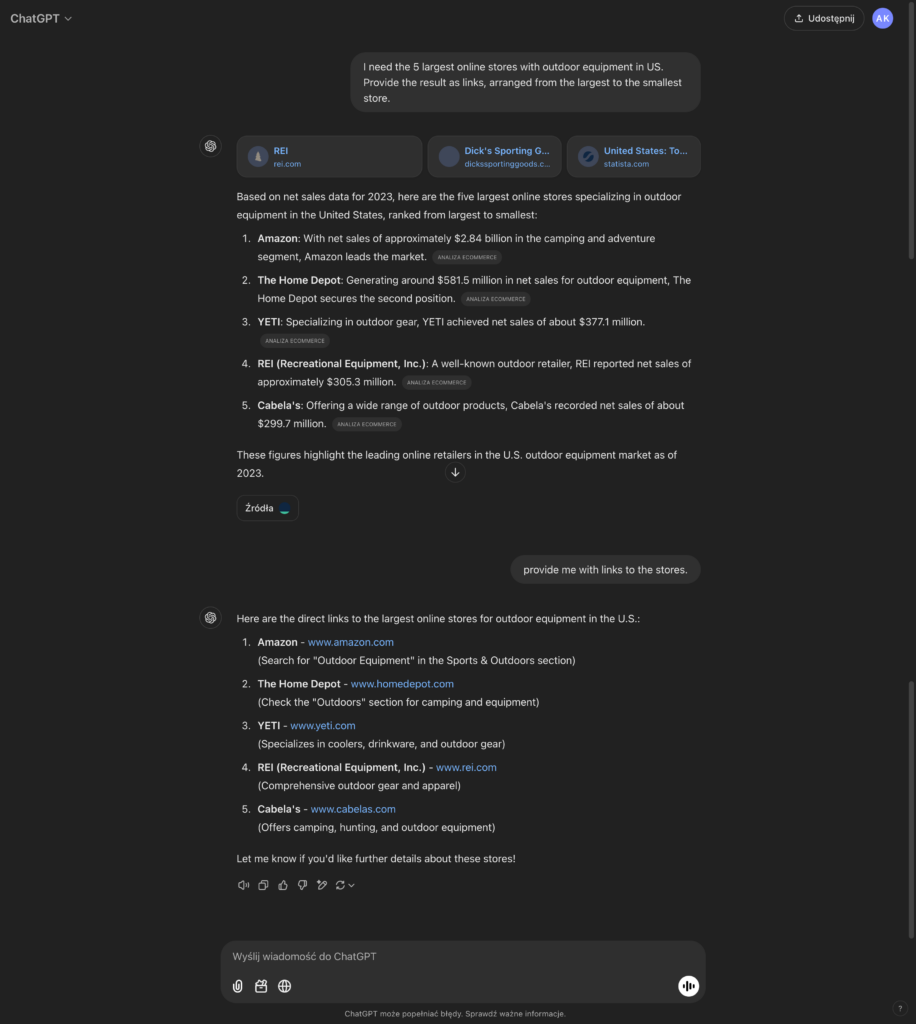
Traffic generated by artificial intelligence on websites stems from actions such as link suggestions by language models. Some results generated by AI models include links to specific websites, which can translate into user visits to those sites. This refers to traffic originating from AI tools, such as links displayed by ChatGPT as sources of provided information.
In this study, we used data from over 800 Google Analytics services, categorized into industries using the GPT 4.0 model. Country classification was based on top-level domain (TLD) extensions. The data was collected in mid-December 2024, meaning that the data for that month is incomplete.
We recognize that this sample is not representative; however, our study is one of the first of its kind. Its purpose is to encourage discussion and establish a benchmark – therefore, we strongly encourage conducting your own analyses.




![AI now constitutes 0.0082% of global online traffic — and this percentage is still rising [Report]](https://delante.co/wp-content/uploads/2025/01/blog-styczen-AI-raport-cover-1.jpg)