Automation in Campaigns and Expanded Exclusion Options – SEM News #1 December 2025

Check out the article to see the latest changes in SEM and broaden your knowledge.

Google is rolling out a feature in the US that allows AI to place calls to stores on behalf of users. The system checks product availability, pricing, and promotions, and then delivers a summarized set of results.
What does this mean for you?
For businesses, this means the need to keep product data up to date and be prepared for automated AI-driven inquiries. At the same time, it represents an opportunity to reach customers faster and potentially increase sales volume.
Google is introducing Partner Match in YouTube Ads, allowing advertisers to leverage encrypted third-party partner data – such as email addresses or postal codes – to build custom audience segments. The feature will be available for Video and Demand Gen campaigns (excluding the UK, Switzerland, and the EEA).
Example:
If you sell mobile subscriptions or financial services, previously your YouTube targeting options were largely limited to interest-based audiences, your own remarketing lists, or demographic criteria, such as “users interested in smartphones” or “ages 25-45.” With Partner Match, Google can utilize encrypted data from an external partner who knows that a specific group of users has a contract or subscription expiring in the coming months. In practice, this means your video ad can reach users who are genuinely approaching a purchase decision, with messaging like “Is your contract about to expire? Check out our new offer,” instead of being shown to a broad, low-intent audience. The result is more relevant reach, reduced budget waste, and higher campaign effectiveness in YouTube Ads.
What does this mean for you?
With Partner Match, you can more precisely reach high-value audiences and improve overall campaign efficiency.
Google Ads now allows advertisers to run dynamic remarketing based on ecommerce data from Google Analytics, without the need to define events via the Google Ads tag. The key requirements are: ecommerce tracking enabled in GA, linked GA and Google Ads accounts with ads personalization turned on, and consistent product IDs between Google Analytics and the product feed.

Source: Google Support
What does this mean for you?
This simplifies the setup of dynamic remarketing for ecommerce, potentially reducing implementation time. However, if processing speed and maximizing audience reach are critical, it is still worth considering an additional Google Ads tag implementation.
Google is beginning to show seller location labels directly in product ads – displaying the city or town where the store carrying the product is located, above the product title.
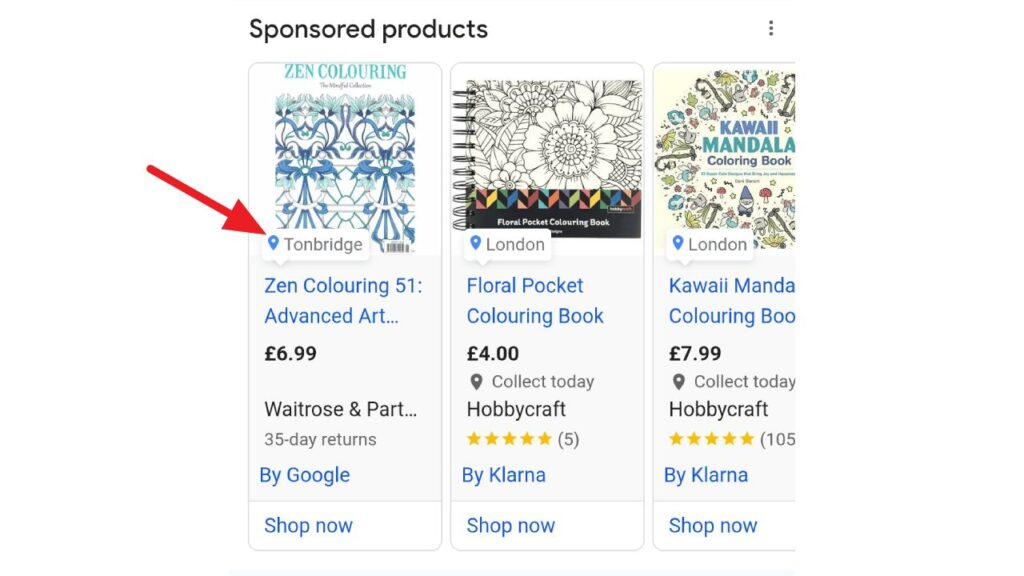
Source: PPC news
What does this mean for you?
The new location labels can enhance user trust and increase CTR in product campaigns, particularly in cases where proximity influences purchasing decisions. In practice, ensuring that your Merchant Center data is accurate and up to date will help you compete more effectively in densely populated retail markets.
Google is introducing a new AI-driven store quality section in Merchant Center, which automatically evaluates websites based on trustworthiness, transparency, and user experience.
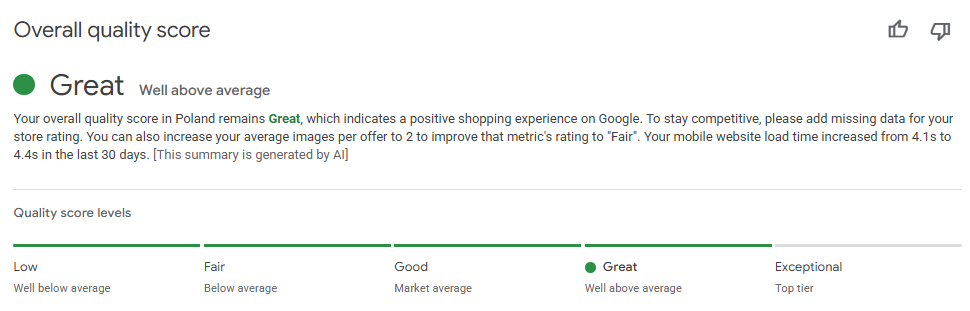
Source: Google Merchant Center panel
What does this mean for you?
For marketers and ecommerce owners, this tool provides an additional quality signal that can impact the visibility and performance of offers in Merchant Center. In practice, it is advisable to regularly monitor this section, optimize website elements for usability and transparency, and use these AI-generated insights as guidance to improve customer experience and ensure compliance with Google’s standards.
Google Ads is expanding Performance Max campaign capabilities by allowing demographic exclusions based on age and gender directly at the campaign level.
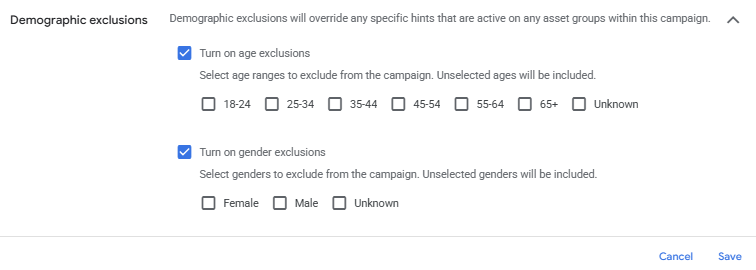
Source: panel Google Ads
What does this mean for you?
This enables advertisers to restrict ad delivery to age groups and genders that are not relevant to their business. It is a significant update that enhances control over reach and the overall effectiveness of Performance Max campaigns.