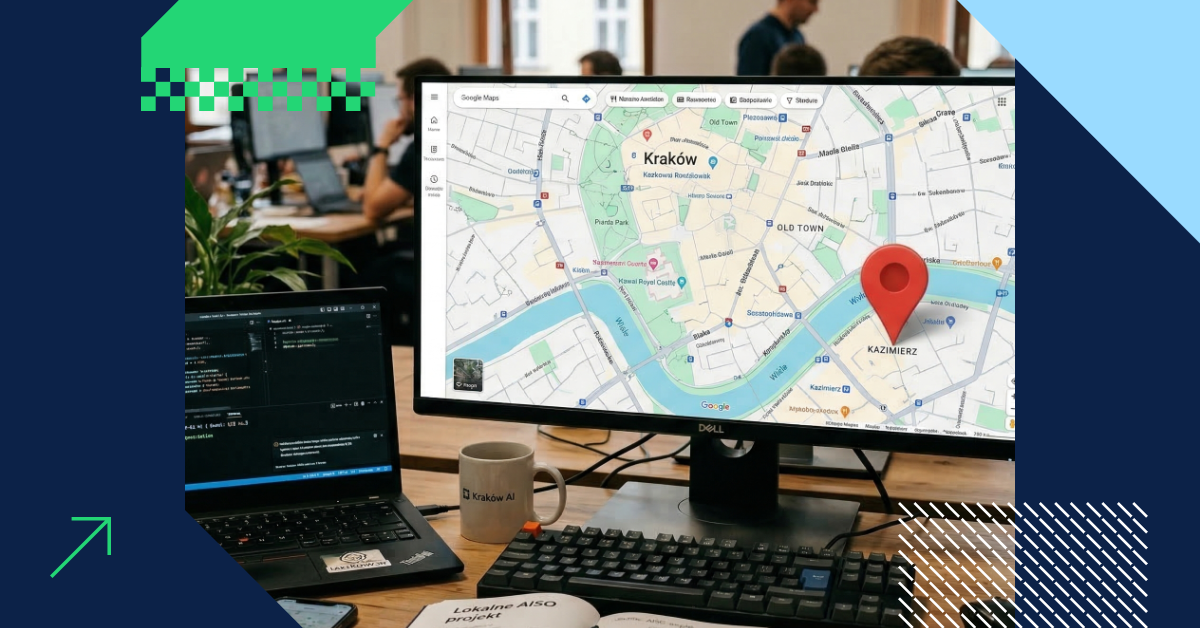
Local AISO: Why Your Google Business Profile Isn’t Enough to Beat the Competition in 2026?

3min.

Comments:0

23 March 2026

Ads
Local AISO: Why Your Google Business Profile Isn’t Enough to Beat the Competition in 2026?d-tags
The traditional "search and click" model gave way to the "ask and receive" model last year. Not long ago, success on a local scale meant securing a spot in the Google Local Pack. Today, that is just a drop in the ocean. Consumers are increasingly directing their queries straight to AI assistants. If your strategy stopped at optimizing your Google Business Profile, you risk being invisible to the new wave of users using ChatGPT, Gemini, or Perplexity. It’s time to change that.

3min.

Comments:0

23 March 2026

Local AISO vs. Traditional Local SEO – Understand the Differences

Understanding the difference between Local AISO and traditional Local SEO is fundamental to effective budget planning. SEO is a battle for visibility in search engines. AISO is a battle for the trust of the Large Language Model (LLM).

Feature Traditional Local SEO Local AISO
Main Goal Ranking in Google Maps / SERP Presence in AI text responses
Channel Google Search, Google Maps ChatGPT, Google Gemini, Perplexity, Claude
Interaction User browses a list and chooses AI provides a ready solution or comparison
Objective To be high in the Local Pack To become part of the AI-generated answer

Paradigm Shift – From Maps to Conversations and “Zero-Click”

The way customers search for local services has undergone a drastic evolution. Google Maps still generates traffic, but it is no longer the sole touchpoint. The 2026 user no longer wants to browse ten pins on a map and analyze reviews manually. They want a ready-made solution.

We are dealing with click erosion. Success is no longer just “getting a site visit,” but appearing in an AI response that immediately provides the user with a phone number or a booking button. LLM models filter available information and provide one specific recommendation with a justification. If AI doesn’t find enough evidence of your service quality outside the Google ecosystem, it will simply recommend a competitor who took better care of their “digital footprint” across a broader spectrum.

What Sources Do LLM Models Rely On?

To manage brand visibility, you must know where models draw their knowledge. Each market leader has slightly different “favorite” data sources:

  • ChatGPT (OpenAI) – Thanks to integration with the Bing index, it draws data from Bing Places, but primarily from Facebook and Yelp.
  • Google Gemini – Naturally based on Google Maps data, but it increasingly analyzes your website content and links to local industry portals.
  • Perplexity – A research-oriented engine. It aggregates data from review portals (TripAdvisor, YellowPages) and local news to build the most objective image of a company.

Local AISO: How to “Feed” the AI Algorithms

First, you must understand the three pillars upon which AI builds your local authority:

  1. Consistency – AI does not forgive mistakes. If you have a different phone number on Facebook than on Google or Bing, the AI deems your data unreliable and will skip you in favor of a more “stable” competitor.

  2. Context – Star ratings are the past. Models scan review content for specific traits. If a customer writes, “the best place for quiet laptop work,” the AI will index you for that specific query.

  3. Signals – Visibility in AI is the sum of signals. You must manage your “digital footprint” everywhere the algorithm looks for confirmation of your quality.

How to Dominate AI Responses? A Checklist

Winning in the AISO era requires going far beyond the “upload a few photos to the profile and forget it” routine. Today, visibility isn’t just a map—it’s being present in AI-generated answers. Here are the foundations of Local AISO:

Multi-channel Presence (Google Business Profile, Bing Places & Apple Maps)

Your company must be active and optimized across multiple ecosystems simultaneously. AI aggregates data from various sources; being absent from one means a lower chance of being cited. Each platform should have:

  • Complete data (description, categories, hours, services).

  • Up-to-date photos (added regularly).

  • Real reviews and responses to them.

  • A consistent business description tailored to user intent.

Absolute NAP Consistency (Name, Address, Phone)

There is no room for “almost the same.” AI doesn’t guess—it compares. Every suite number, phone format, and company name must be identical across the web:

  • Industry directories and citations.

  • Business profiles.

  • Website.

  • Social media. Even minor discrepancies lower data credibility and can exclude your business from AI answers. Consistency = Trust = Visibility.

Natural Language Website Optimization

Stop focusing solely on keywords. AI thinks in questions—your website must answer them. Content should be written the way a customer speaks:

  • Instead of “cheap mechanic London” → “Where can I get a cheap car service in London?”

  • Instead of “best Italian restaurant London” → “Where can I eat the best carbonara in London?” The site should cover the full spectrum of intent: informational, transactional, and local. The more specific the answer, the higher the chance AI will use it.

FAQ Section

An FAQ is no longer an extra—it is fuel for language models. Questions and answers must be:

  • Natural (as typed by users).

  • Specific (no fluff).

  • Based on real customer situations and challenges. A well-prepared FAQ provides “ready-made quotes” that AI can use 1:1 in its responses.

Structured Data (Schema.org)

If content is a language for humans, Schema is the language for AI. Implementing structured data provides information in a format that models understand without interpretation. Essential types for Local AISO:

  • LocalBusiness (company data).

  • FAQPage (question section).

  • Product / Service (offering).

  • Review (ratings).

Ignoring Local AISO means ceding ground to competitors who understand that in 2026, local marketing isn’t just about being on the map—it’s about being in every sentence the AI speaks about your industry.

Author
Wiktoria Wójciak - SEO Specialist
Author
Wiktoria Wójciak

Senior SEO Specialist

She joined the Delante team in 2021, specializing in local SEO and managing Google My Business Profiles.

A graduate in Information Management from Jagiellonian University, she analyzes and optimizes service and e-commerce websites in her daily work. She feels comfortable working in any industry, as long as client communication is based on mutual understanding and cooperation. She believes that good relationships and shared goals are key to achieving satisfying results.

At Delante, she is responsible for processes such as Google My Business optimization and listing positioning. She believes that SEO success lies in understanding the client’s needs and taking a flexible approach to the specifics of each industry.

Author
Wiktoria Wójciak - SEO Specialist
Author
Wiktoria Wójciak

Senior SEO Specialist

She joined the Delante team in 2021, specializing in local SEO and managing Google My Business Profiles.

A graduate in Information Management from Jagiellonian University, she analyzes and optimizes service and e-commerce websites in her daily work. She feels comfortable working in any industry, as long as client communication is based on mutual understanding and cooperation. She believes that good relationships and shared goals are key to achieving satisfying results.

At Delante, she is responsible for processes such as Google My Business optimization and listing positioning. She believes that SEO success lies in understanding the client’s needs and taking a flexible approach to the specifics of each industry.