

New era of lead generation campaigns in Google Ads – SEM news – #1 June 2026

2min.

Comments:0

05 June 2026

New era of lead generation campaigns in Google Ads – SEM news – #1 June 2026d-tags
A review of the latest SEM updates and their impact on advertising campaign performance and results.

2min.

Comments:0

05 June 2026

A game-changing update for lead generation campaigns in Google Ads

During Google Marketing Live 2026, Google introduced Leads Command Center, a native lead management hub within the Google Ads interface. The key improvement is the consolidation of leads generated through Google lead forms into a single location, complete with contact details, lead stage, and submission date.

At the same time, Google launched a new capability that allows Smart Bidding algorithms to learn from the entire customer journey – from the initial inquiry and sales qualification to the final closed sale.
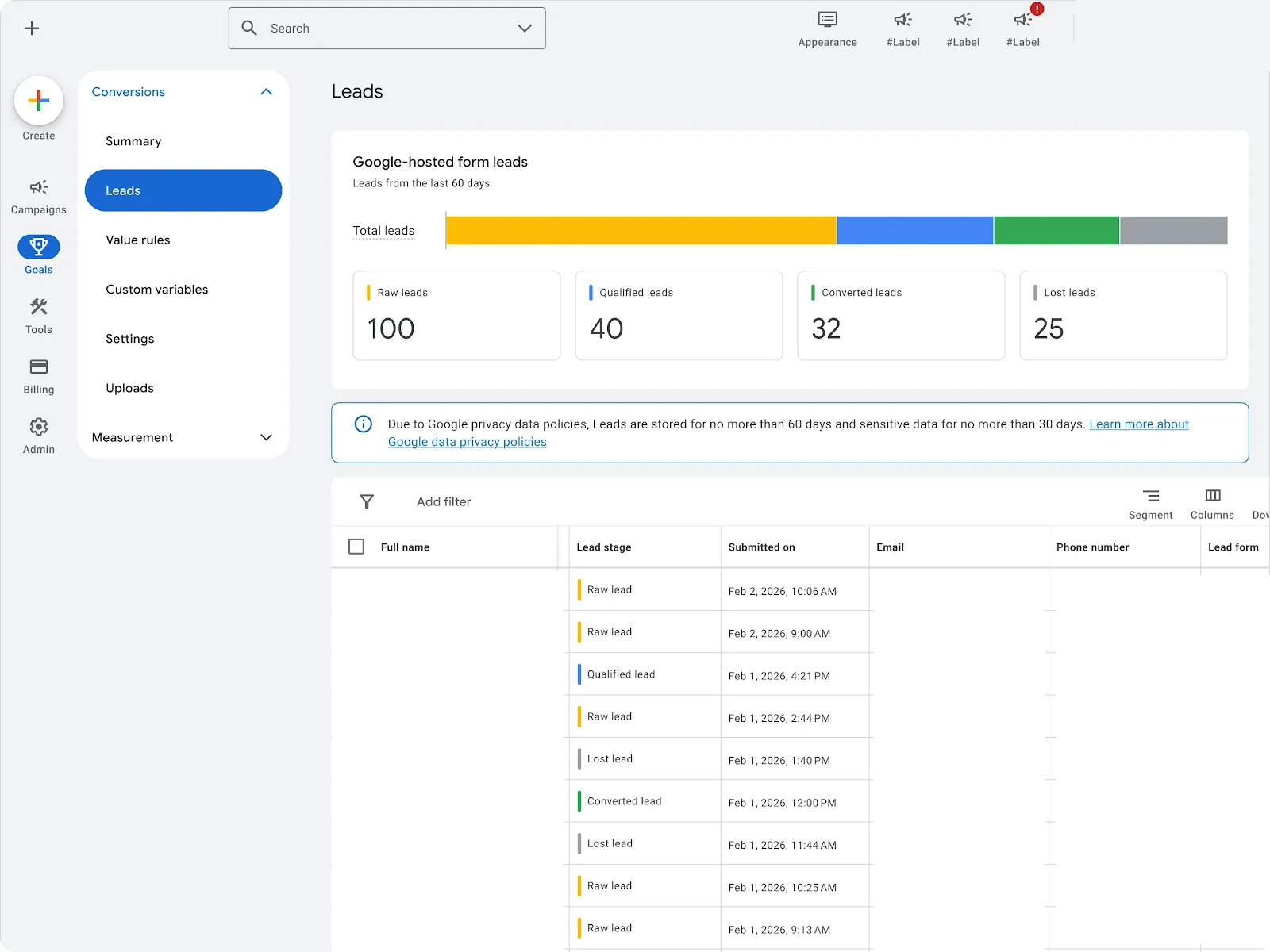
Source : Google Support

What does this mean for you?

For Marketing Managers, this is a significant shift in budget risk management. Until now, optimizing campaigns solely for form submissions meant feeding algorithms with volume rather than quality. The result? Growing numbers in marketing reports but limited impact on sales performance. This disconnect created hidden costs and obscured the true ROI of advertising efforts.

From a budget management perspective, the change brings greater transparency and accountability. Instead of reporting the number of leads generated, you can optimize and evaluate campaign performance based on actual revenue and ROI, aligning marketing investments more closely with business outcomes.
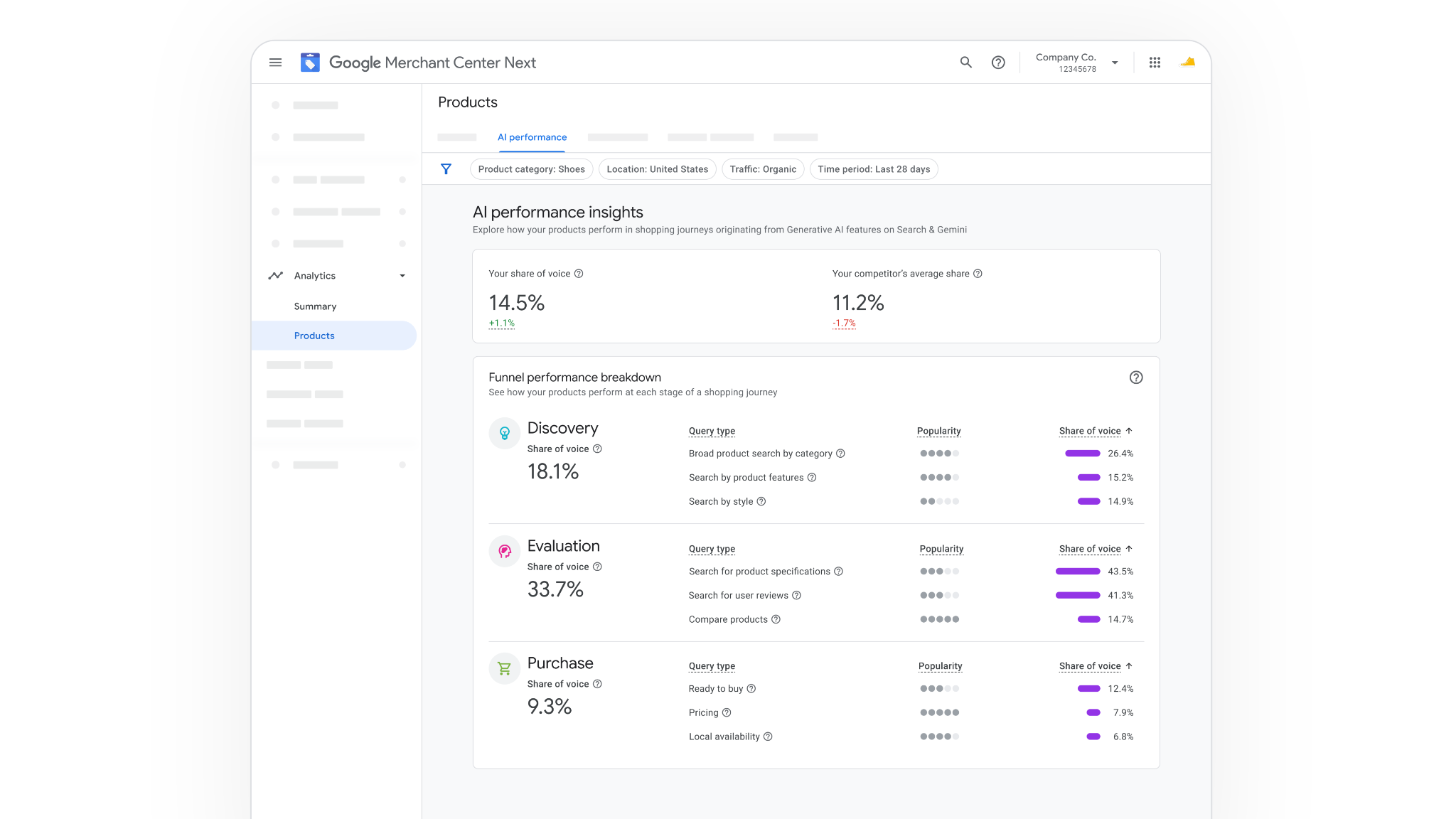

New product visibility insights for AI Search in Merchant Center

During its latest announcements, Google unveiled AI Performance Insights in Merchant Center. From a technical perspective, this is a new reporting dashboard designed to track product visibility and share of presence across AI-powered search experiences, including AI Overviews, AI Mode, and the Gemini app.

Merchants now gain visibility into the specific product queries and attributes that AI systems consider most relevant when recommending products to users, providing a clearer understanding of how products are surfaced in AI-driven discovery environments.

Source : Google Support

What does this mean for you?

For Marketing Managers, this marks a shift from uncertainty and assumptions to measurable risk management in the era of AI Search. Until now, traffic generated through AI Overviews and Gemini has largely been a black box for organizations. While it was clear that AI-driven experiences were influencing consumer purchasing behavior, there were few tools available to assess your brand’s visibility and share within these emerging channels.

From an e-commerce profitability perspective, AI Performance Insights provides actionable data and greater transparency, helping you understand where your products appear, which attributes drive visibility, and how AI-powered discovery can contribute to sustainable business growth and scalability.

The end of the GDN eraGoogle moves Display ads into Demand Gen

Google has announced the gradual migration of Display Network (GDN) campaigns into the Demand Gen ecosystem.

From a technical perspective, this change consolidates the traditional display advertising network with video and social-style ad formats within a single campaign management framework. While access to more than 2 million websites and apps will remain available, campaign optimization will be fully driven by Demand Gen’s automated bidding and targeting systems. The migration process is expected to be completed by 2027.

What does this mean for you?

The integration with Demand Gen shifts the focus of display advertising from low-cost impressions to measurable business outcomes. Success will increasingly depend on profitability (ROI), audience quality, and strong creative assets rather than generating large volumes of inexpensive traffic from low-value placements.

From a budget management perspective, this provides a stronger business case for investment. Instead of allocating resources to campaigns that prioritize scale over impact, you can focus on an ecosystem designed to generate demand, support the customer journey, and drive sustainable revenue growth through more effective automation and optimization.

Author
Kamil Pabiś-Junior SEM Specialist
Author
Kamil Pabiś

Junior SEM Specialist

Graduate in Marketing and Market Communication from the Cracow University of Economics. At Delante since November 2024. Privately, he is interested in music, swimming, and traveling.

Author
Kamil Pabiś-Junior SEM Specialist
Author
Kamil Pabiś

Junior SEM Specialist

Graduate in Marketing and Market Communication from the Cracow University of Economics. At Delante since November 2024. Privately, he is interested in music, swimming, and traveling.