Google Ads Changes: Broader Insight into Campaign Optimization – SEM News #1 July 2026

2min.

Comments:0

10 July 2026

Google Ads Changes: Broader Insight into Campaign Optimization – SEM News #1 July 2026d-tags
Review of current SEM updates and analysis of their impact on the optimization and effectiveness of advertising activities.

2min.

Comments:0

10 July 2026

Channel Diagnostics for Performance Max

Google Ads has introduced a new Channel Diagnostics feature in the Insights & Reports section for Performance Max campaigns. The tool provides visibility into issues at the channel level (e.g. Search, Display, YouTube) and helps identify asset gaps and errors. The system highlights specific limitations affecting campaign delivery and performance. This is a step towards greater transparency in the previously “closed” PMax model.

What Does this Mean for You?

You gain greater control over campaign quality and faster identification of bottlenecks affecting performance. You can respond more precisely to asset issues and delivery limitations instead of operating solely on aggregated data. In practice, this means better budget utilization and more informed management of automation in PMax.

Text Disclaimers in Google Ads

Google Ads has introduced a new “text disclaimer” asset. This solution allows required legal information (e.g. terms, disclaimers, disclosures) to be added directly to Search ads, both on desktop and mobile. Previously, advertisers had to “simulate” disclaimers through pinned descriptions, which limited control over their delivery. The new format ensures guaranteed display in a dedicated ad section and reduces uncertainty around compliance, particularly in regulated industries (finance, healthcare, legal, insurance, real estate).
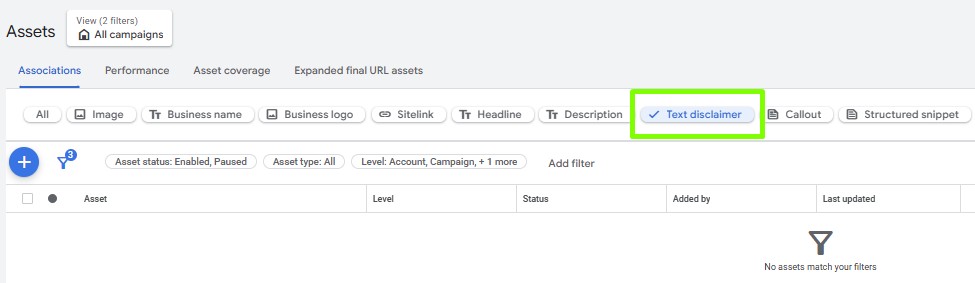
text disclaimer google ads

Source: Google Ads panel

What Does this Mean for You?

You gain greater control over ensuring advertising communication complies with legal requirements and eliminate the risk of key disclaimers not being displayed. This simplifies campaign management in environments with strict compliance requirements and reduces the need for asset-level workarounds. In practice, it means lower regulatory risk exposure and more predictable communication execution — without a significant impact on performance, but with substantial control benefits.

Performance Max with Audience Reporting

Google is expanding Performance Max campaign reporting with a new “Audience” section, providing greater transparency into which segments actually generate results. Advertisers can now analyze the performance of specific groups (e.g. in-market segments, custom segments, or similar audiences) based on metrics such as clicks, CTR, CPC, and conversions. This is the first step towards opening up the PMax “black box” and gaining a better understanding of where the budget is actually being allocated.

What Does this Mean for You?

You gain the ability to optimize PMax campaigns more consciously at the audience level rather than relying solely on input signals. You can identify segments that contribute real conversion value and reduce budget waste on low-value audiences. In practice, this means better budget allocation, more precise algorithm guidance, and greater control over traffic quality in automation-driven campaigns.

Author
Weronika Strzeżyk - Junior SEM Specialist
Author
Weronika Strzeżyk

SEM Specialist

A graduate of the AGH University of Science and Technology and the University of Economics in Krakow. At Delante since the SEM internship in August 2023.

In her free time, she is an enthusiast of watching ski jumping and exploring the culture of the Pieniny and Upper Silesia regions.

Author
Weronika Strzeżyk - Junior SEM Specialist
Author
Weronika Strzeżyk

SEM Specialist

A graduate of the AGH University of Science and Technology and the University of Economics in Krakow. At Delante since the SEM internship in August 2023.

In her free time, she is an enthusiast of watching ski jumping and exploring the culture of the Pieniny and Upper Silesia regions.