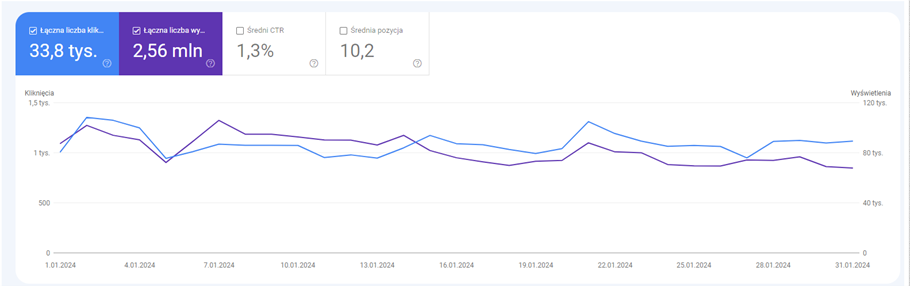
Luxtrade’s website sometimes showed content in the wrong language – there were instances where Polish mixed with Ukrainian on the same page. That’s why our next move was fixing the improperly implemented hreflang attributes.
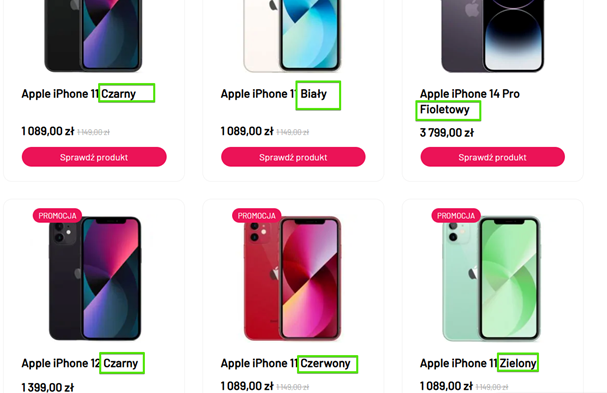
One thing that negatively influenced the user experience and hurt conversions was how the content showed up on the website. Sometimes, because of messed-up hreflangs, some info was displayed in Polish while other elements and messages were in Ukrainian – like in the example below:
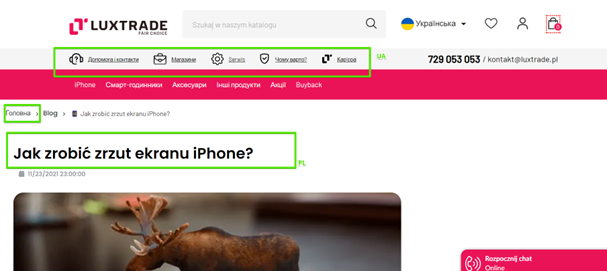
Given the situation in Ukraine and the number of Ukrainians in Poland at that time, we needed to set up Luxtrade’s website languages properly. We fixed the messed-up hreflangs, so now the website knows where users are and what language they prefer. This means even users located in Poland can get the Ukrainian version of the website displayed on their screens.
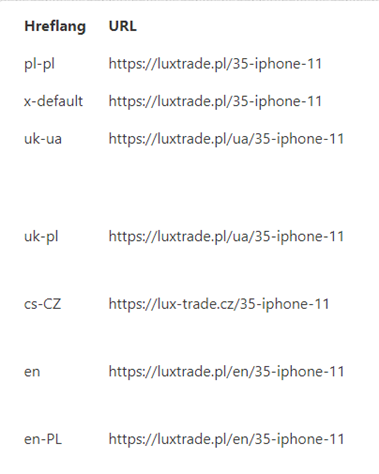
Fixing the blog issue was another win thanks to getting hreflangs right. Turns out, on the Ukrainian blog, some posts were in Polish, messing up the user experience and causing content duplication. Sorting out the hreflangs fixed it and reduced content duplication.
Then, we had to tackle the Czech and English website language versions. They shouldn’t have been indexed in the first place – users couldn’t find them from the homepage as they were hidden. Despite this, Google had indexed both, which negatively affected organic traffic. We put them out of the index and set up separate subdomains for each language version.







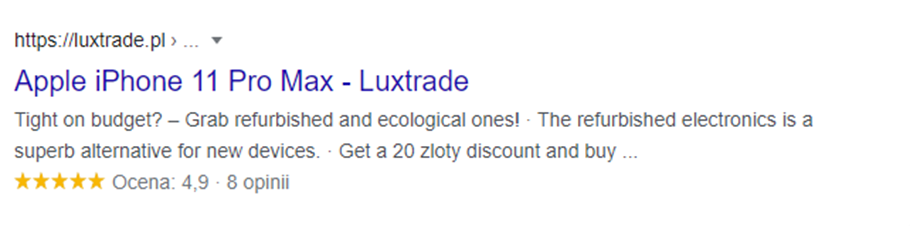 Example of a page title before adding long-tail keywords: