d-tags


 Loading...
The start of 2025 is the perfect moment to look at e-commerce prognosis and rethink your strategy with fresh eyes to ensure you finish the year on top, not struggling to keep up. Whether you’re new to online business, considering it, or planning a major change in the upcoming months, this article is your perfect starting point.
E-commerce – the sector where convenience reigns supreme
In 2024, global retail e-commerce sales surpassed $4.1 trillion. According to McKinsey’s The Next Big Arenas of Competition report, e-commerce is still in the fast-growth phase, continuing to evolve as consumer habits shift and technology advances. While the big change initially came with the rise of online shopping in general, future growth will likely be driven by expanding categories like healthcare and food.
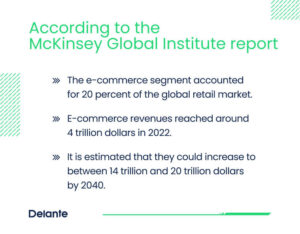
Moreover, when thinking about the e-commerce future, investing in customer acquisition, last-mile delivery, and payment systems looks like a smart move too. With e-commerce already accounting for 20% of the $17 trillion global retail market in 2022, there’s still plenty of room for growth, both in new regions and across different industries.
But where’s the real money, and what’s behind the success of e-commerce? It all comes down to one key factor: convenience. Whether you’re buying groceries, the latest tech gadget, or custom-made furniture, it’s all just a few taps away. This shift has been accelerated by the rise of mobile devices. In 2024, nearly 80% of retail website visits came from smartphones, and many of those visits turned into purchases. Mobile shopping has transformed the shopping experience, especially in regions like China, where over 70% of total online sales are already made via mobile devices.
Yet, convenience alone isn’t enough. To thrive in the e-commerce future, businesses must invest in creating seamless experiences, focusing on aspects such as:
- fast loading websites
- user-friendly interfaces
- consistent branding across platforms
- accessibility & optimizing websites for people with disabilities
- SEO that also plays a pivotal role here – a fast website optimized for search engines isn’t just nice to have, it’s a necessity. After all, if your customers can’t find you on Google, you might as well not exist.
SEO – your key to being seen
We all know that most online shopping journeys begin with a search. Whether it’s “best wireless headphones” or “organic skincare near me,” those keywords are breadcrumbs leading customers to your digital space. So, without a solid SEO strategy, you’re essentially leaving money on the table.
But SEO isn’t just about keywords. It’s about creating high-quality, relevant content that answers your customers’ questions and provides real value. It’s about optimizing product descriptions, using compelling meta titles, and ensuring your website is mobile-friendly. It’s also about investing in strategies like local SEO for brick-and-mortar businesses going digital and voice search optimization as smart assistants become more popular.
And don’t forget content marketing. A well-written blog post or guide can do wonders for your search rankings while establishing your brand as a trusted authority. The e-commerce prognosis is clear: businesses that prioritize SEO are better positioned to attract, engage, and retain customers in an increasingly competitive market.
Want to learn more? Check our SEO guide for e-commerce.