Ever heard the term 'knowledge graph' and wondered what it is? It's a graphical representation of the way Google gathers and understands data about different entities. It's also the basis for knowledge panels - the information panels you'll see in search results. Read on to find out more!
Let’s start by explaining what a knowledge graph is. In general, this is a data model that maps the relationships between different real-world entities. It utilizes a network of nodes and edges to show them. It looks more or less like this, but more complex:
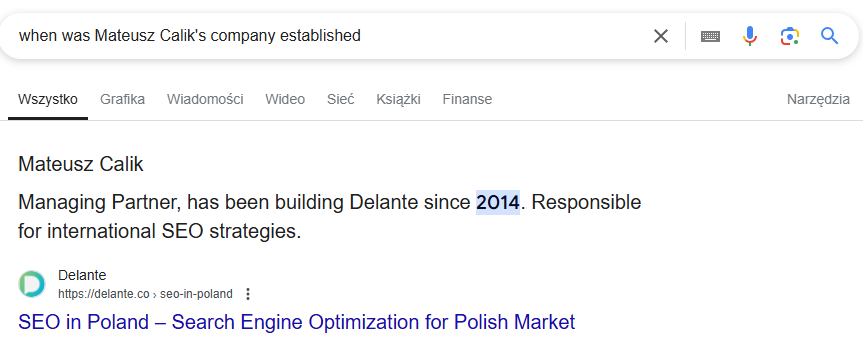
In terms of Google, this is the way how the search engine analyzes and understands the data about different entities to present accurate search results. A knowledge graph enables complex queries by understanding the context and connections between various pieces of information stored in its database. For instance, if you search “when was Mateusz Calik’s company established,” Google is capable and will present you with information about Delante — it knows that Mateusz Calik is the CEO of Delante thanks to the knowledge graphs. This whole process was named semantic web search.
How Does Google’s Knowledge Graph Work?
Naturally, Google needs a way to retrieve the information and create a knowledge graph to present you with relevant results. It does so by collecting information from various websites, connecting them into knowledge graphs, and thus learning about user intentions. The data is often sourced from popular, reputable websites, such as:
Wikipedia,
LinkedIn,
Bloomberg,
or Crunchbase.
As you might expect, these are not the only sites involved — Google retrieves the data from all over the web, including your website. That’s why elements like organization schema markup matter. What’s more, Google doesn’t just use knowledge graphs internally — it also uses this data model to create visual representations in the form of Knowledge Panels.
What Is a Knowledge Panel? Differences vs. a Knowledge Graph
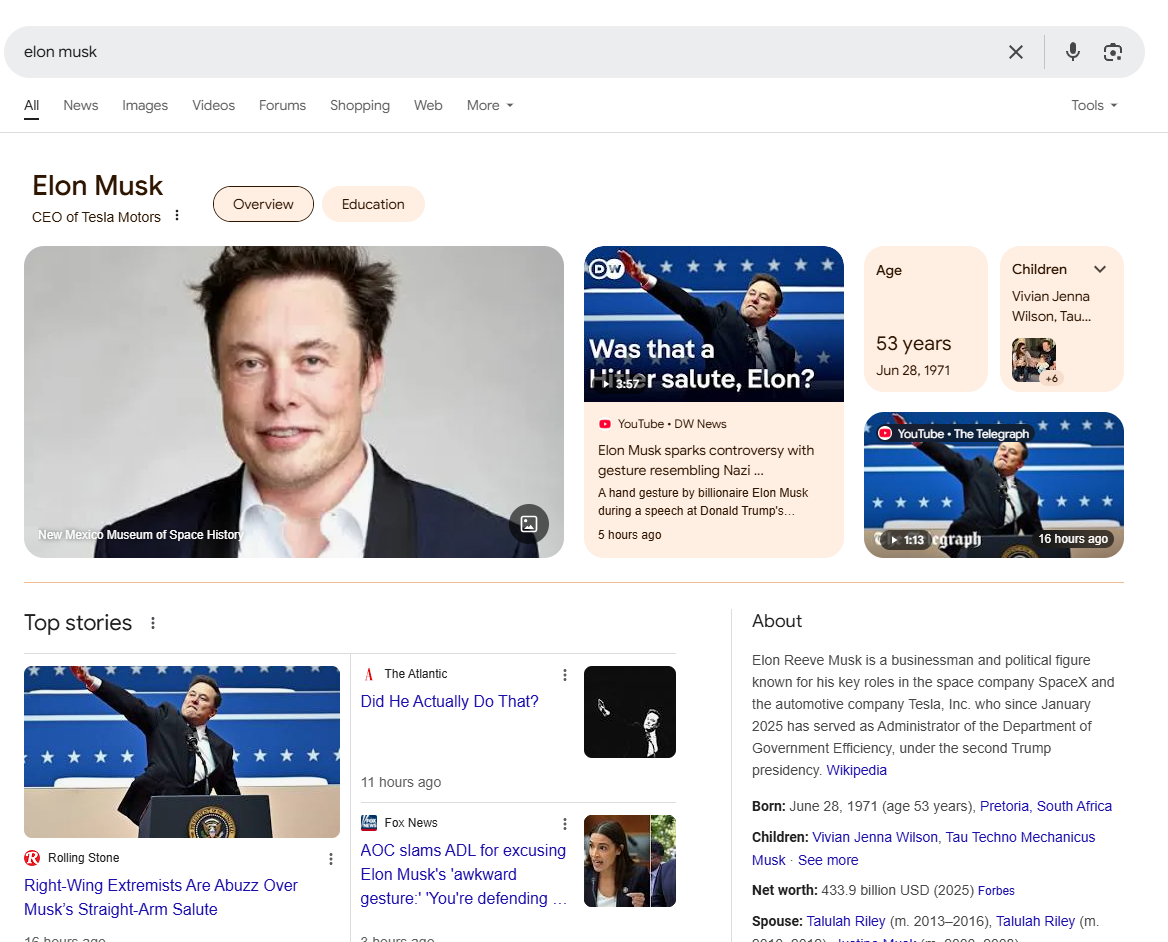
A knowledge panel is SERP feature used to display structured data collected in Google Knowledge Graphs about specific entities. For instance, data about a celebrity or well-known CEO, with all the relevant and up-to-date information, like news.
Ideally, you want to appear in this panel because:
it increases the chances of users visiting your company page,
it enables you to reach out to users who look for your business with less specific search terms,
it gives the full context about your company to the user right away.
While the data in the panel is based on the graph data model, you can also modify it. If you feel that some information was left out, or you want to include additional details, you can claim the Knowledge Panel and edit it yourself. In this case, Google will review the changes manually and inform you whether they were accepted or not.
How to Optimize Your Website for Google Knowledge Graph?
As we established, it’s crucial that you optimize your website for the Google Knowledge Graph as it may bring measurable benefits. But, how do you do it? Here are some methods that do the trick.
Claim and Edit Your Knowledge Panel
Firstly, you should claim and edit your knowledge panel. This way, you’ll ensure that all the important and relevant data are taken into account by Google. Here’s how you do that:
Ensure Your Schema Markup is Up to Date
If you don’t know how to create your organization schema markup, don’t worry — it’s not as difficult as it may seem. All you have to do is input all the data into our organization schema generator!
Get Your Business on the Websites from Which Google Likes to Draw Data
Getting your own page on Wikipedia, LinkedIn, or Bloomberg might also help you since these are the pages from which the knowledge graph acquires new knowledge. At the same time, remember that Google retrieves data from multiple data sources — this might not be enough on its own.
Use SEO Tools (Like SEMrush) to Learn More About Your Knowledge Panels
SEO tools enable you to preview the keywords for which a knowledge panel appears for your website. It’s a great source of information about the data organized in Google Knowledge Graph, as it lets you conclude what gaps you need to fill in.
Optimize Your Website
Other SEO efforts, like increasing your topical authority, might also impact the way data is stored and processed in graph databases and the information retrieval process carried out in search results. And if you need help with that, contact us at Delante — we’re happy to drive your business growth!
The Takeaway
A knowledge graph is a data model used by Google to understand data about real-world entities. Its role is to provide users — human beings — with the possibility to use non-specific query language. After all, we don’t always know what we’re searching for, and this way, we don’t need to.
Thanks to the associated Knowledge Panel, optimizing your web pages for the Knowledge Graph becomes a task worth the time. At the same time, it’s also in line with other SEO efforts, so you don’t need to put too many resources into this feature of Google search. Check our technical SEO services if you need help with similar cases, and follow our blog — you’ll find many more helpful entries about search engines and how to optimize for them here!
Having completed English Studies with a translation specialty, he has discovered his marketing knack, joining Delante as an English copywriter. Ever since, he has developed a keen interest in content strategizing and effective communication, prioritizing clarity and logic in his texts and content plans. He’s also keen on accessible content and audio-description.
Having completed English Studies with a translation specialty, he has discovered his marketing knack, joining Delante as an English copywriter. Ever since, he has developed a keen interest in content strategizing and effective communication, prioritizing clarity and logic in his texts and content plans. He’s also keen on accessible content and audio-description.


 d-tags


 Loading...