
Next-Generation Content Hubs: How to Design Blog Sections and Knowledge Bases for AI Crawlers

4min.

Comments:0

11 June 2026

Next-Generation Content Hubs: How to Design Blog Sections and Knowledge Bases for AI Crawlersd-tags
Content hubs have a new audience, and it does not scroll, click, or convert in your dashboards, at least not directly. AI crawlers from Google, OpenAI, Anthropic, and Perplexity now read your blog and knowledge base, then decide whether your brand gets quoted when a potential customer asks a chatbot for recommendations. For a CMO, this is not a technical curiosity. It is a distribution channel forming in real time, and the brands structured for it are quietly absorbing the discovery moments your funnel used to own.

4min.

Comments:0

11 June 2026

The Buyer Journey Now Starts Inside an Answer

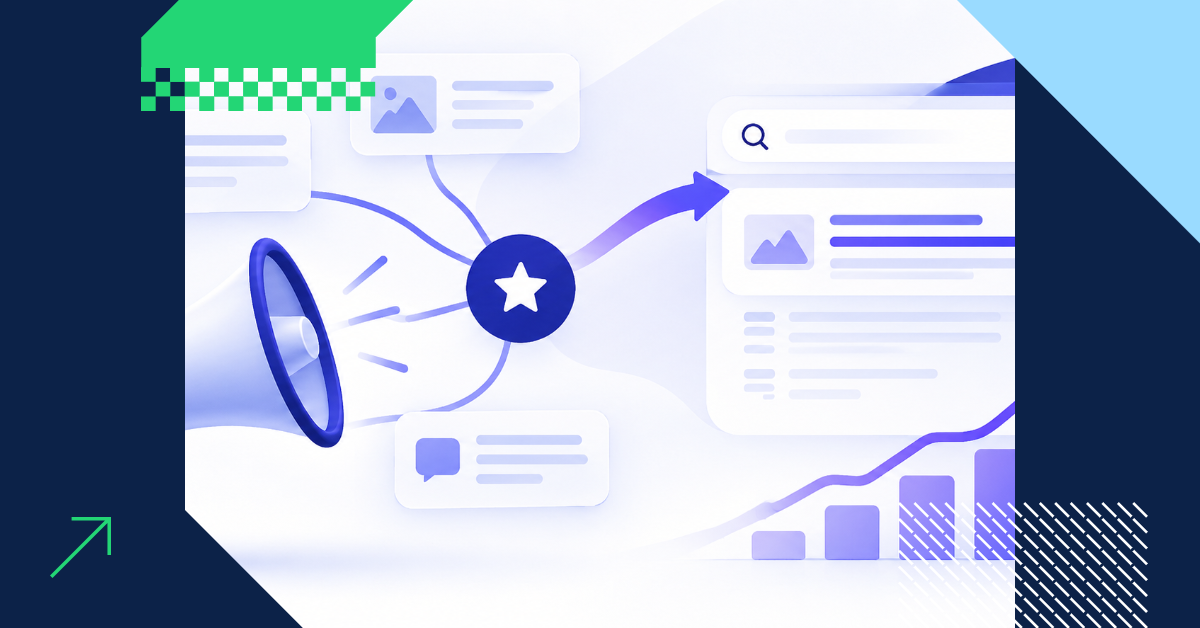
A growing share of B2B research happens in conversational interfaces before anyone touches your website. Google’s AI Overviews and AI Mode use a query fan-out technique, issuing multiple related searches across subtopics to assemble a single response (1), which means your content competes paragraph against paragraph, not domain against domain. A buyer in the research phase may read three sentences sourced from your knowledge base and form a brand impression without a single session in your analytics.

The strategic question is no longer whether you rank, but whether AI systems trust your hub enough to speak in your words. That trust is earned through architecture and authority, not through ad spend, which makes it one of the few defensible assets in the channel. And unlike paid placements, a citation in an AI answer compounds: every time the model retrieves your page, the structure that earned the first citation earns the next one.


Why This Is an Architecture Problem, Not a Copywriting Problem

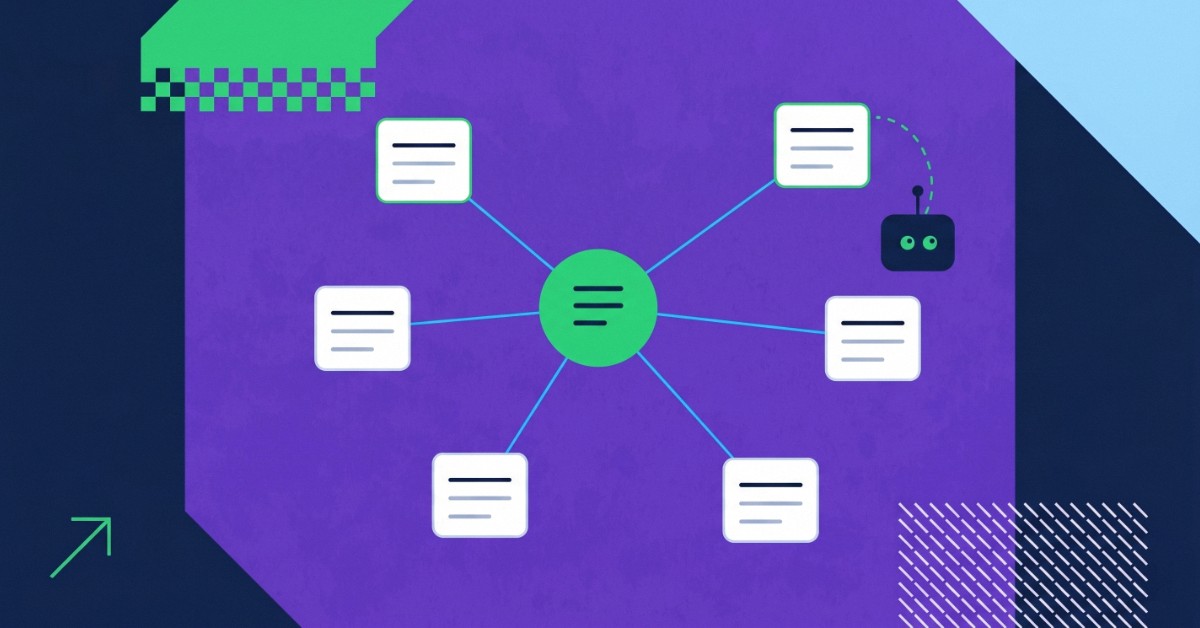
Most underperforming hubs are like warehouses: hundreds of posts stacked chronologically with no hierarchy a machine can parse. A next-generation hub works like a library, with pillar pages defining core topics, supporting articles one click below, and a glossary layer that pins down every entity in your category. Each crawler pass then confirms the same structure: this brand owns this topic, in this depth, with this consistency.

Feature Warehouse blog Next-generation hub

Structure

Chronological feed


Pillar pages, supporting articles, glossary layer


Internal linking


Random or absent


Deliberate hierarchy from broad to specific


AI citability


Low, content hard to extract


High, every section quotable on its own


Topical authority


Diluted across unrelated posts


Concentrated, machine-readable per topic


Maintenance cost Grows with every post

Stable, new posts strengthen existing pillars

Connections matter as much as pages. A deliberate internal linking structure functions like signage between library aisles, moving bots from broad concepts to specific answers without dead ends. Orphaned pages are the most expensive waste in content marketing, because every article a crawler cannot reach is budget spent on something machines will never cite. For a marketing leader, the audit question is blunt: what share of our published content is actually reachable, parseable, and quotable?

What Authoritative Means to a Machine

AI systems extract passages, so authority shows up at the paragraph level. Sections that open with a direct answer, name entities explicitly, and package facts in tables or FAQ blocks get quoted; vague thought-leadership prose gets skipped. Google’s official optimization guide is unambiguous that unique, expert-led, non-commodity content is the foundation for visibility in generative AI experiences (2).

In practice, an AI-ready hub passes five checks:

  1. Answer-first sections. Every H2 opens with a direct, complete answer in the first two sentences, so a model can lift it without parsing the whole page.
  2. Explicit entities. Products, standards, and regulations are named in full instead of hiding behind “it” or “this solution” three paragraphs after the noun appeared.
  3. Extractable formats. Tables, numbered steps, and FAQ blocks package facts in shapes retrieval systems handle reliably.
  4. Visible expertise. Author bylines, cited data with dates, and original insights signal the experience that both Google and LLMs reward.
  5. Deliberate bot governance. Someone on your team owns the robots.txt decisions for AI crawlers, and those decisions are documented.

That last point deserves a CMO’s attention. OpenAI runs separate bots, GPTBot for model training and OAI-SearchBot for search citations, each controlled independently in robots.txt (3). A single inherited robots.txt rule can remove your brand from ChatGPT answers while your competitors stay quotable, and most organizations have never reviewed theirs.

The Eligibility Layer Your Team Cannot Skip

Strategy fails without plumbing. A page must be indexed and snippet-eligible in Google Search before it can appear as a supporting link in AI Overviews or AI Mode (1), which puts rendering, schema markup, and sitemap discipline on the critical path. Inefficient sites pay twice, since AI bots and classic search bots now compete for the same crawl budget, and every duplicate or thin page reduces how often your revenue-driving content gets read.

This is rarely work an in-house content team can absorb alongside production. It sits at the intersection of technical SEO, information architecture, and editorial standards, which is precisely why it tends to stall internally.

How to Put AI Visibility on the Marketing Dashboard

A channel you cannot measure will lose every budget conversation, so AI visibility needs its own line in reporting. The core metric is AI citation share: how often your brand appears in answers from ChatGPT, Gemini, Perplexity, and Google’s AI features for the queries your buyers actually ask. Dedicated monitoring tools now track this the way rank trackers once tracked positions.

Around that core, three supporting signals complete the picture. Branded search lift indicates buyers who met you inside an answer and came looking; referral traffic from AI platforms, while still small, converts at notably higher rates than classic organic; and leads attributed to hub content in your CRM close the loop to pipeline. Reported together each quarter, these four numbers turn AI visibility from a curiosity into a managed channel with a trend line. Expect attribution to stay fuzzier than PPC, and treat the trend, not any single month, as the signal.

Delante builds and rebuilds content hubs for exactly this environment, combining AISO audits, hub architecture, and AI visibility monitoring so you can see where your brand appears in generated answers and what it earns you. If AI search is on your 2026 roadmap, talk to us before you commission another batch of articles, because structure decides what those articles are worth.

Is Your Content Hub AI-Ready?

We'll audit your blog and knowledge base, then restructure them so AI tools can read and cite your brand.

Get a content audit!
Ania Bitner
Ania Bitner Content Team Leader

Sources:

(1) Google Search Central, AI Features and Your Website: https://developers.google.com/search/docs/appearance/ai-features

(2) Google Search Central, Optimizing Your Website for Generative AI Features on Google Search: https://developers.google.com/search/docs/fundamentals/ai-optimization-guide

(3) OpenAI, Overview of OpenAI Crawlers (GPTBot, OAI-SearchBot, ChatGPT-User): https://platform.openai.com/docs/bots

Test AI

Lorem Ipsum


Author
Miłosz Świerad - copywriter
Author
Miłosz Świerad

Junior Copywriter

FAQ

How do we measure whether AI search visibility drives revenue?

Start with AI visibility monitoring that tracks brand mentions and citations across ChatGPT, Gemini, and Perplexity, then correlate with branded search lift and assisted conversions. Attribution is less direct than PPC, but trend lines emerge within a quarter.

Do we need to rebuild our entire content hub from scratch?

Usually not. Most hubs need restructuring rather than rewriting: a pillar layer, repaired internal links, and consolidation of overlapping posts. An audit typically identifies the 20 percent of changes that produce most of the gain.

Should we block AI bots from our content?

Block training bots if data protection demands it, but blocking search bots like OAI-SearchBot removes you from AI citations entirely. The right setup is selective, and it should be a documented decision, not a default.