
Author


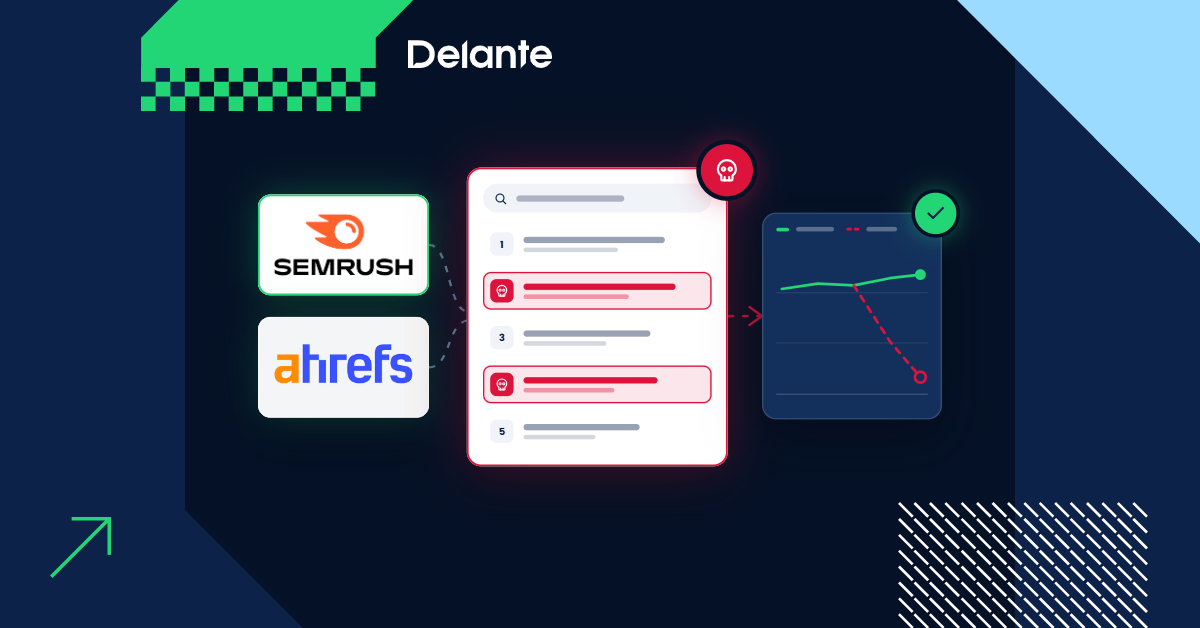
Semrush has officially confirmed that some Google Search results collected by SEO rank-tracking tools may be inaccurate, potentially creating misleading increases or drops in reported website rankings. In its October 27, 2026 statement, the company acknowledged an issue known as poisoned SERPs, which is also affecting other SEO data providers, including Ahrefs. Research by Nozzle identified suspicious results across 53 countries, including the United States, United Kingdom, Germany, and Australia. What does this mean for website owners, and how can businesses determine whether a ranking drop is real?
Importantly, the percentages reported by Nozzle describe a specific dataset of automatically collected search results. They do not mean that the same share of all Google searches is inaccurate.
For website owners, the immediate recommendation is to verify unexpected ranking changes against Google Search Console and organic traffic data before making major SEO decisions.
On October 27, 2026, Semrush published an official statement addressing irregularities in Google ranking data.
The company confirmed that some automated requests to Google return search results that appear legitimate but differ from what a typical user would see. The SEO industry refers to this phenomenon as poisoned SERPs. A SERP, or Search Engine Results Page, is the page Google displays in response to a search query. Rank-tracking tools collect data from these pages to monitor keyword positions, analyze competitors, and estimate search visibility.
In its official statement, Semrush acknowledged:
“This is an industry-wide issue affecting data providers across the SEO space.”
The company described two main forms of suspicious results.
In some cases, Google returns pages that are visibly unrelated to the original search query.
These results are easier for automated systems to detect because the mismatch is obvious.
Other cases are considerably more difficult to identify.
The first few results may appear normal, while lower-ranking pages are only loosely related to the search. Semrush cited a search in Brazil for a specific baby stroller model.
The returned results included a dental equipment store because both products were associated with the Portuguese word carrinho. An automated SEO system might record this as a valid Google result, even though it does not reflect the intended search.
If this data enters a rank-tracking database, it can distort reported keyword positions.
SEO tools use automated data collection systems to monitor Google Search results.
These systems retrieve ranking information at specific intervals and use it to calculate changes in keyword positions and website visibility. If a collection system receives results that differ from those shown to regular Google users, it may record an inaccurate position.
Consider an e-commerce website that has consistently ranked in Google’s top 10 for an important product-related keyword. A ranking tool suddenly reports that the page has fallen 15 positions. However, Google Search Console continues to show relatively stable impressions and organic clicks for that query. In this situation, the apparent ranking drop could be caused by inaccurate data collection rather than a genuine deterioration in search visibility.
This does not mean that every ranking decline reported by SEO tools is incorrect.
Actual ranking changes still occur because of competition, website updates, technical problems, and changes to Google’s search systems. The important point is that unusual movements should be independently verified.
On October 22, 2026, Ahrefs published its own statement regarding suspicious Google Search results. The company confirmed an increase in abnormal results returned to automated data collection systems.
According to Ahrefs:
“Depending on the data provider, we’re seeing between 5% and 20% of search results affected in this way.”
This estimate does not describe all searches performed by Google users.
Instead, it concerns results collected by SEO data providers.
Ahrefs also confirmed that it had implemented additional filters to reject abnormal results and request accurate replacements. The company is reviewing historical data that may have been affected. Other SEO technology providers, including AccuRanker and BrightLocal, have reported related concerns. The scale of the issue can vary between providers because their data collection methods, validation processes, and monitored queries are different.
SEO rank-tracking company Nozzle published one of the most detailed investigations into the issue. Its analysis covered 56.1 million qualifying Google SERPs across 53 countries between August 20 and October 21, 2026. Of these, 29.9 million were evaluated during the period beginning September 13. Nozzle compared current search results against a historical baseline for the same queries.When a substantial proportion of the websites normally appearing in a search result disappeared, the SERP could be classified as potentially poisoned.
The key findings include:
| Metric | Finding |
| Total qualifying SERPs analyzed | 56.1 million |
| SERPs evaluated since September 13 | 29.9 million |
| Countries covered | 53 |
| Suspicious results on page 1 or 2 in the qualifying sample | 22.6% |
| Suspicious results on page 1 | 12.2% |
| Suspicious results on page 2 | 17.9% |
| Peak daily rate in the two-page sample | 43.5% |
The 22.6% figure does not mean that nearly one in four Google searches worldwide is inaccurate.
It applies only to the subset of automatically collected search results eligible for Nozzle’s comparison methodology, including both the first and second result pages. The study also found that suspicious results occurred more frequently on page two than on page one. This matters because rank-tracking reports covering positions outside the top 10 may also be affected.
Another notable finding was that 67.9% of the suspicious SERPs followed by another observation had most of their usual websites back within three days.
That means an apparent ranking collapse can sometimes disappear almost as quickly as it appeared. However, a rapid recovery alone does not prove that the original change was caused by faulty data.
Nozzle’s research identified suspicious results in multiple regions, indicating that the issue is not limited to a single national Google index.
Selected country-level results from the study include:
| Country | Suspicious SERPs in Nozzle’s sample |
| South Africa | 22.4% |
| Austria | 21.0% |
| Australia | 12.9% |
| India | 12.6% |
| Canada | 11.0% |
| Poland | 10.2% |
| United States | 8.8% |
| Germany | 6.4% |
| France | 5.3% |
| United Kingdom | 4.1% |
These percentages describe country-specific samples collected by Nozzle.
They should not be interpreted as direct measurements of Google Search quality for all users in those countries. The differences may reflect the keywords, devices, data collection systems, and other characteristics of the analyzed samples.
For international businesses, the important finding is that ranking data anomalies may affect SEO reporting across multiple markets. A company managing websites in the United States, Germany, and Australia may therefore need to evaluate unexpected ranking changes separately for each market.
One of the biggest challenges is that suspicious results do not always look technically incorrect. A SERP may contain the expected layout, valid links, and seemingly relevant websites. The problem becomes apparent only when the results are compared against historical data or other reliable signals.
As Nozzle explains:
“A refused request tells a scraper to try again; a poisoned one gets stored as real.”
This distinction is crucial. When Google blocks an automated request, a data collection system can recognize the failure and retry. But when it receives a complete page containing misleading results, the system may treat that data as valid. From a research and development perspective, this makes additional validation mechanisms increasingly important.
“The biggest challenge isn’t detecting results that are obviously incorrect. It’s identifying results that appear legitimate but don’t reflect what users actually see in Google. Automated systems may accept this information unless additional quality checks are in place. That’s why anomaly detection, historical comparisons, and independent data validation are becoming increasingly important.”
Wojciech Urban, SEO R&D Specialist at Delante
For SEO technology providers, the issue highlights the importance of maintaining reliable data collection methods as search engines change how their results are accessed.
That has not been officially confirmed. Some industry observers believe the issue may be connected to Google’s attempts to limit large-scale automated collection of search results. One hypothesis is that such measures could be intended to restrict mass data collection for AI training and other automated systems. SEO rank trackers might then be affected by the same mechanisms.
However, Google has not publicly confirmed that it deliberately serves altered search results to SEO monitoring platforms.
The explanation remains an industry interpretation, not an established fact. The term poisoned SERPs describes the behavior identified by SEO data providers. It does not, by itself, establish Google’s intentions.
For SEO agencies and businesses, the primary concern is the accuracy and interpretation of ranking data. Keyword monitoring remains valuable, but an individual ranking chart should not be the only measure of SEO performance.
At Delante, we evaluate SEO results using a broader set of indicators, including organic visibility, website traffic, conversions, and business outcomes.
The current situation demonstrates why this approach matters.
“A sudden ranking drop in an SEO tool doesn’t necessarily mean a website has lost visibility in Google. That’s why we never base our assessment of a client’s performance on a single chart. We compare Google Search Console data, analyze organic traffic, and check whether ranking changes are reflected in actual business results. Misinterpreting inaccurate data could lead to unnecessary changes in SEO strategy.”
Przemek Jaskierski, SEO Strategy Manager at Delante
If Semrush, Ahrefs, or another rank tracker reports a sudden decline, start by reviewing Google Search Console.
Pay particular attention to:
For more information, see Delante’s guide to Google Search Console and its key features.
Keep in mind that Google Search Console uses a different measurement methodology from external rank trackers.
Average position is based on recorded search impressions and may vary according to location, device, and other factors.
A discrepancy between tools is therefore not automatically proof that one of them is incorrect.
A sudden ranking decline can encourage businesses to make immediate changes to content, internal linking, or technical optimization. But if the underlying data is inaccurate, those changes may be unnecessary. Before making substantial adjustments, confirm whether other sources indicate a genuine performance problem.
When ranking data appears suspicious, reports should distinguish confirmed performance changes from measurements that require additional investigation. Businesses need to understand whether a decline reflects actual search performance or uncertainty in an external data source. Transparent reporting is especially important when several SEO platforms are experiencing similar collection problems.
The issue also highlights the limitations of evaluating SEO exclusively through individual keyword positions. Organic traffic, conversions, search demand, and overall brand visibility provide additional context. As search evolves, businesses may also need to consider their presence in AI Overviews and AI-generated responses. That broader approach helps companies understand their actual visibility across search experiences rather than relying on a single metric.
Both companies have announced additional data quality measures. Semrush says it has adjusted data sources, filters clearly incorrect results, and uses additional validation checks to identify suspicious SERPs. When an anomaly is detected, the system may retrieve the data again.
Ahrefs has similarly introduced filtering and re-collection processes and is reviewing potentially affected historical results. These measures may reduce the number of inaccurate observations reaching customers.
However, they do not establish that every problematic data point has been identified or corrected. For now, comparing several sources remains an important part of reliable SEO analysis.
If Semrush, Ahrefs, or another SEO tool has reported a substantial ranking decline in recent weeks, don’t immediately assume your website has lost its actual Google visibility.
Start with these five steps:
For additional guidance, see our article on the reasons behind Google ranking drops.
At Delante, we analyze website visibility using multiple sources, combining keyword rankings with organic traffic and measurable business performance.
If you’ve noticed unusual fluctuations in Semrush, Ahrefs, or other SEO tools, we can help determine whether they reflect an actual SEO issue or potentially inaccurate ranking data.
Contact Delante to discuss your website’s performance and identify the appropriate next steps.
If you’re already a Delante client, contact the SEO specialist managing your project to review any unexpected ranking changes.