January in the Red? You Have 4 Weeks to Change Course Before Your Q1 Loss Becomes Irreversible

5min.

Comments:0

24 February 2026

Ads
January in the Red? You Have 4 Weeks to Change Course Before Your Q1 Loss Becomes Irreversibled-tags
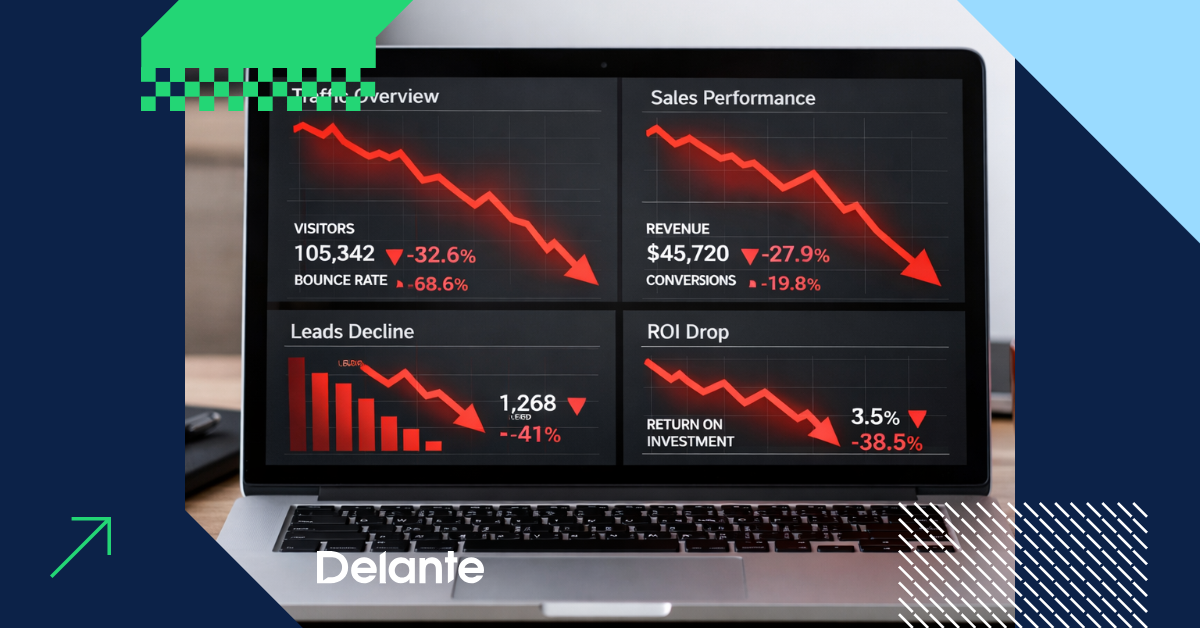
As a Marketing Director, you open your dashboard after January closes and analyze the results. The metrics are falling short, and the numbers are flashing red. Your first thought? "Relax, we'll hit the quarterly target by March." The truth is, waiting for better results and wasting time is far worse than losing budget. You can always inject more money into marketing, but you can't stretch time so easily. That's why if you're already seeing a slump in January, you need to act immediately.

5min.

Comments:0

24 February 2026

The Psychology of Decision-Making: Why are you afraid to pivot your strategy mid-quarter?

Because turning a ship around is never easy, managers are afraid to admit (both to themselves and to the CEO) that the marketing strategy developed in Q4 isn’t delivering results when it collides with reality.

How does this mechanism work? Clinging to an unprofitable and ineffective campaign provides a false sense of security; after all, you’re staying the course and executing a pre-approved plan. But it’s exactly this stubborn grip on flawed assumptions that leads to lost profits. We tend to think that what is familiar and safe is better, and if it always worked before, it will work now. The problem is that modern marketing requires a shift in approach, and it’s better to realize this sooner rather than later.

According to psychologist Daniel Kahneman, the pain of losing is psychologically twice as powerful as the pleasure of gaining. That’s exactly why you’re afraid to abandon an ad campaign that isn’t working once the budget has been allocated, because you treat it as a sunk cost in terms of effort and money.

The takeaway? Pivoting your strategic assumptions in February is not a failure. It’s incredibly difficult to predict how the entire marketing ecosystem and consumer behaviors will shift due to the widespread adoption of AI. The real art lies in quick reaction, quick conclusion, and quick adaptation of your actions. Setting a new course is proof of agility, which is especially crucial in SEO (SEO Agility).


Diagnosis: 4 Types of a “Red January”

Missing your targets can stem from various causes, so before you scrap your current strategy and start reallocating your budget, start with a diagnosis. Based on our experience, we’ve outlined the 4 most common scenarios below to help you pinpoint the problem:

Scenario A: An Intent Crisis (Traffic is there, leads aren’t)

  • Symptoms: Traffic is low-intent. Session charts are green, but conversion rates (CR) are tanking.
  • Cause: Your messaging is reaching people who are researching, not buying. And they never come back to your site.
  • Data: According to the LinkedIn B2B Institute, only 5% of the market is ready to buy now. If you don’t have leads, it means you’re burning your budget educating the other 95% instead of closing that 5%.
  • Action plan: Analyze your landing page and CTA. Add “safety nets” (Trust Signals) to the page, like quotes from your experts with photos, awards, and certifications, anything that proves brand credibility. Change your CTA from “Buy” to “Let’s talk / Book a call”. This gives you the chance to persuade a hesitant client.
  • Shift in customer intent: In 2026, e-commerce and B2B users are even more cautious. If your messaging still solely pushes for a purchase without showing how you intend to solve their problem, you’re losing customers right out of the gate.

Scenario B: A Visibility Crisis (The AISO effect / Competition)

  • Symptoms: The budget is the same, but traffic is dropping. Meanwhile, CPC is rising.
  • Cause: Competitors have entered with fresh annual budgets and your campaigns are losing efficiency, OR users are getting their answers from AI (Zero-Click Searches), OR they are searching via LLMs like ChatGPT without ever visiting your site. Any of these can cause traffic drops and are common phenomena in the era of widespread AI adoption, AIO, and AI Mode in Google.
  • Action: How do you solve this? Try analyzing where your competition is winning, where they are absent, and where an opportunity for your business might emerge. Don’t just keep doing what you’ve been doing; if it’s not working, look for new solutions, and if you don’t know how to do it yourself, ask the experts. At the same time, if you aren’t optimizing for AI yet, supplement your strategy with AISO (AI Search Optimization) efforts.

Scenario C: A Quality Crisis (The Sales vs. Marketing War)

  • Symptoms: Marketing is firing on all cylinders and leads are flowing in, but the sales team is complaining about low quality.
  • Cause: Excessively Broad Match keywords and a lack of negative keywords in your campaigns. This means you might be acquiring indecisive customers, those not genuinely interested in actually buying your services, or you’re simply targeting the wrong demographic.
  • Action: Immediately slash the top-of-funnel budget. Reallocate 100% of those funds to the bottom of the funnel, specifically, high-intent transactional keywords and remarketing campaigns. This will ensure you utilize your budget much more effectively.

Scenario D: A Demand Crisis

  • Symptoms: Traffic and engagement are there, but there aren’t enough leads. You’re hitting a wall despite your efforts being effective.
  • Cause: Likely, demand on that specific channel has simply dried up.
  • Action: Expand! Consider expanding into foreign markets (Cross-border) or launching aggressive campaigns (Conquesting) to win over customers who are already using a service provider but might be dissatisfied and looking to switch.

Want to boost your visibility in AI answers?

We'll help you develop an effective AISO (AI + SEO) strategy!

Let's talk!
Michał Grzyb
Michał Grzyb SEO & AI Specialist

Action plan: Recovery Sprint (28 Days)

Do you know what the problem might be in your case? Then don’t wait, act. Below is a sample recovery plan that incorporates quick wins and long-term goals.

  1. Week 1 (The week of budget cuts): Evaluate what has potential and what doesn’t. Turn off all campaigns that generate costs without delivering ROAS; free up your budget. Instead of going to the CEO for new funds and a budget increase (which might not be approved), reallocate, but only where there’s real potential.
  2. Week 2 (The week of change): Shift funds into “low-hanging fruit”, easy-to-execute steps that can quickly help close sales. If you want to catch up on your target, invest in remarketing, abandoned-cart recovery, and upselling campaigns targeting your current customer base.
  3. Week 3 (The week of fixes): Remove potential sales blockers. Check if your forms are working correctly, test site speed (especially on mobile), and create content tailored for CFOs (the decision-makers on the client’s side).
  4. Week 4 (The week of verification and scaling): If the trend in February is pointing upward, you have a solid foundation for March and can start scaling the actions you’ve taken.

Managing Up: How to defend this pivot to your CEO?

The worst thing you can do is wait until the end of Q1 to tell your CEO, “We missed the target this quarter because January was short, February was even shorter, and by March, we didn’t have time to implement changes.” If you’re planning and analyzing without executing changes, you have no chance of defending your results.

The math is simple. If January ends at 80% of the monthly goal, then to close Q1 at 100%, you need to hit 110% of the target in both February and March. When you’re in mid-February, waiting for the trend to bounce back on its own is a massive risk. You need a strategy, but above all, you need action, and that is exactly what you need to communicate to the board.

How do you do it? Go to the board right now with this message: “We’ve noticed a deviation from our Q1 target. We’ve already diagnosed the cause and implemented a recovery plan that includes X and Y (planned actions). We expect a course correction in week Z.” This shows that you have your finger on the pulse, you’re not afraid to make changes to protect results, and you draw actionable conclusions from your strategic planning.

Summary: Don’t procrastinate, because Q4 won’t save you

Do you think you’ll be able to “bounce back” from annual target deficits in December and around Black Friday? That’s a trap many managers fall into. Building your bottom line at the last minute means working under extreme pressure and paying premium ad rates, which you can easily avoid.

At Delante, we help Managers chart an effective course of action and pivot strategies to hit their intended targets. If you’re seeing red in your reports, we can react together right now.

With us, you’ll execute a Q1 Recovery Sprint where we pinpoint exactly what is burning through your ad budget, shift funds to where the buying intent is, and create a roadmap to help you deliver on your quarterly target.

Contact us!
Author

Gosia Kwiecień, Delante’s Head of SEO, leads with a decade of expertise, ensuring client success and fostering a team culture where every member’s growth and contribution is valued.

FAQ

Won't the board perceive a mid-quarter change in ad strategy as a lack of competence?

Quite the opposite. By pivoting your strategy based on hard data and conclusions, you demonstrate two things: first, that the bottom line is your top priority, even if it means admitting flawed initial assumptions. Second, it highlights your agility and adaptability in a dynamic environment.

How soon after implementing this plan will I see a real change in CR and ROAS reports?

The first results from identifying “low-hanging fruit”, simple tasks that can yield significant results, can be noticeable in as little as a week or even faster, depending on the type of fix. For example, if you find and resolve a hard blocker in your conversion funnel, like broken forms, the impact can be instantaneous.