What Is Meta Muse?
Meta Muse, officially called Muse, is Meta’s personal AI agent designed not only to answer questions but also to perform tasks on a user’s behalf. It can use a web browser, connected apps and services, fill out forms, organize information, make bookings, and support online purchases.
Meta launched Muse in September 2026 as an example of agentic AI, meaning an AI system capable of planning and carrying out multiple actions required to achieve a user’s goal.
How Does Meta Muse Work?
A user can give Muse a task or broader objective.
Muse can then plan the necessary steps and use tools, its web browser, and connected services to complete the work.
Unlike a traditional chatbot, the process does not necessarily end when an answer is generated.
Muse can move from information to action.
What Is Muse Secure VM?
Each Muse operates inside a dedicated environment called Muse Secure VM.
It is a cloud-based virtual computer containing the browser, file system, and tools the agent needs to work.
Meta also uses additional security controls and requires user approval for sensitive actions such as sending messages or completing purchases.
Meta Muse vs. Meta AI
Meta AI is primarily an AI assistant for conversations and content generation. Muse is designed as an agent capable of taking action on behalf of the user.
For example, Meta AI may recommend several hotels.
Muse can potentially go further by visiting hotel websites, checking availability, comparing options, and helping complete a booking.
Meta Muse vs. Muse Spark
Muse and Muse Spark are not the same product.
Muse is the personal AI agent.
Muse Spark is Meta’s family of AI models designed for reasoning, tool use, multimodal understanding, and agentic workflows.
Muse combines these models with browsers, tools, memory, connectors, and Meta’s agent infrastructure.
How Does Meta Muse Use Websites?
Muse has its own Chromium-based web browser and can navigate websites, read information, interact with interfaces, complete forms, and perform transactions.
Meta has disclosed an important technical detail: its browser sub-agent sees an accessibility tree snapshot rather than the raw page DOM.
This means website accessibility and semantic interface structure may also affect how effectively AI agents can interact with web pages.
Meta Muse and Online Shopping
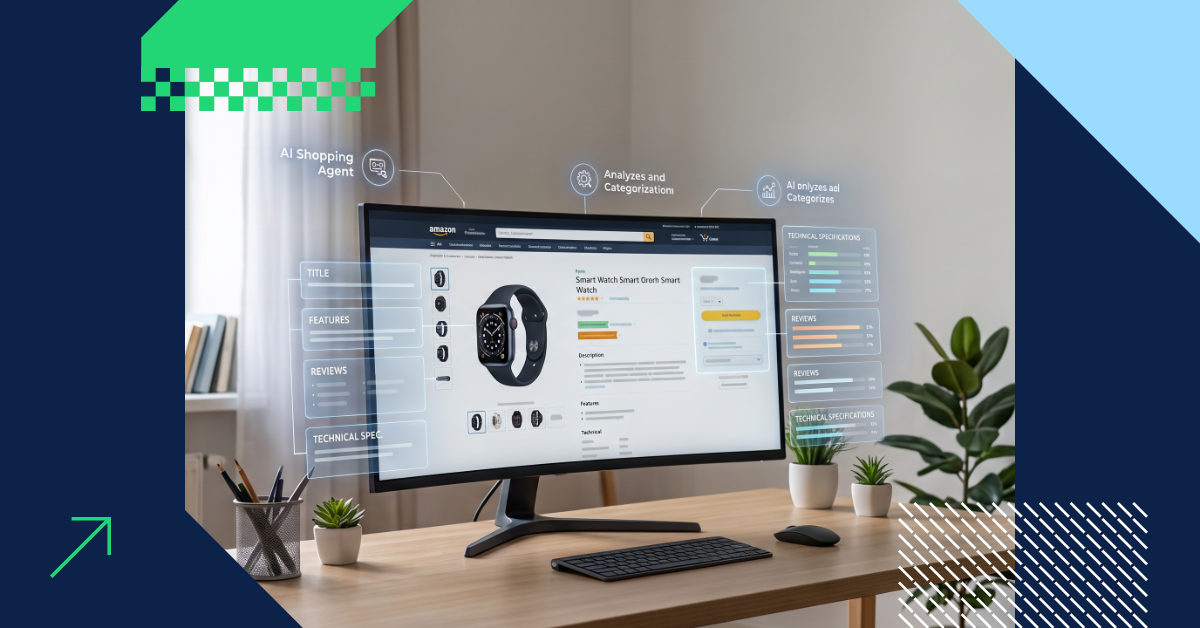
Muse can also assist with online purchases.
It can discover products, visit ecommerce websites, compare available options, and progress toward checkout.
At launch, Meta integrated Muse with Stripe Link and announced support for Shop Pay.
Purchases require user approval before the transaction is completed.
This makes Muse an example of agentic commerce, where AI can participate not only in product discovery and recommendations but also in completing the purchase.
Meta Muse vs. AI Search
Muse is not simply another AI search engine.
AI Search primarily focuses on finding information and generating an answer.
Muse can use information found online as one step in a broader task.
Instead of asking:
“What are the best running shoes?”
a user could ask:
“Find running shoes for road running under $150, check whether my size is available, and buy the best option.”
In this environment, visibility is no longer only about appearing in search results or AI-generated answers.
The agent must also be able to find, understand, compare, and act on the information available.
What Does Meta Muse Mean for SEO and Ecommerce?
AI agents add another layer to digital visibility.
Traditional SEO asks:
Can the page be found?
AI Search adds:
Can the brand and its information be understood and used in an answer?
Agentic AI introduces another question:
Can the agent successfully interact with the website and complete the user’s task?
This may increase the importance of complete product information, accurate pricing and availability, clear product variants, accessible interfaces, understandable comparison data, and straightforward conversion processes.
These should not be described as official Muse ranking factors, as Meta has not published a ranking system for Muse.
Can You Optimize a Website for Meta Muse?
There are currently no official Meta guidelines for “ranking in Muse.”
However, websites can be designed so that both people and AI agents can more easily understand and interact with them.
Important areas include:
- complete information,
- logical site structure,
- accessible interfaces,
- clear controls and labels,
- accurate product data,
- current information,
- straightforward conversion processes.
For ecommerce brands, the question therefore expands from:
“Can AI recommend my product?”
to:
“Can an AI agent find, evaluate, and purchase my product for the user?”
How Does Delante Approach Meta Muse?
At Delante, we view Meta Muse as an example of the shift from AI Search toward the agentic web and agentic commerce.
We don’t create hypothetical Muse ranking factors when Meta has not published any.
Instead, we evaluate the complete journey:
Can the agent discover the brand?
Can it understand the offer?
Does it have the information needed to compare it?
Can it interact with the website correctly?
Can it move from recommendation to action?
Preparing for agentic environments therefore combines SEO, AISO, product data, web accessibility, UX, and technical website architecture.
Muse also illustrates why the future of search is no longer limited to asking:
“Will AI recommend my brand?”
The next question is:
“Can AI choose my brand and complete the task?”