Author


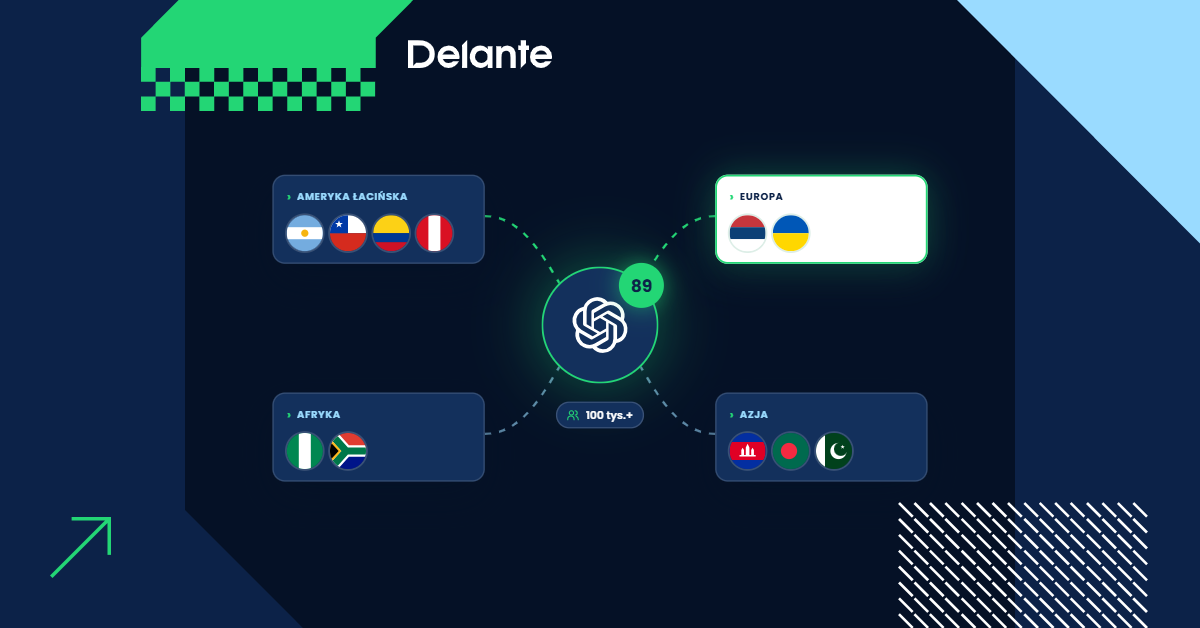
OpenAI has expanded ChatGPT Ads to 26 additional countries, bringing its advertising platform to 89 markets worldwide. Announced on October 21, 2026, the expansion comes as more than 100,000 advertisers have run campaigns on ChatGPT since the platform’s launch. For international brands and businesses, the announcement marks another major step in the growth of AI-powered advertising and opens up new opportunities to reach customers as they research products, compare options, and make purchasing decisions.
OpenAI has officially announced another major geographical expansion of its advertising platform.
As of October 21, ChatGPT Ads is rolling out across 26 additional countries, increasing its total availability to 89 markets worldwide.
OpenAI also confirmed that more than 100,000 advertisers have run campaigns on ChatGPT since advertising was introduced just over eight months ago.
The main takeaways from the announcement include:
Importantly, the figure of 100,000 advertisers is cumulative. It does not mean all these businesses currently have active campaigns.
OpenAI has also not released updated platform-wide figures for return on ad spend (ROAS), cost per acquisition (CPA), or average conversion rates.
The latest expansion covers markets across Latin America, Europe, the Middle East, Africa, and Asia.
OpenAI has confirmed several of the newly supported countries:
| Region | Newly announced markets |
| Latin America | Argentina, Chile, Colombia, Peru |
| Europe | Serbia, Ukraine |
| Africa | Nigeria, South Africa |
| Asia | Cambodia, Bangladesh, Pakistan |
Latin America accounts for 14 of the 26 newly added markets.
The announcement follows earlier launches in Mexico, Brazil, several European countries, Southeast Asia, and Taiwan.
The countries listed above are examples highlighted by OpenAI rather than the complete list of 26 new markets.
Advertisers should verify current availability and eligibility through OpenAI’s Ads Manager before planning campaigns in specific locations.
OpenAI began testing advertising in ChatGPT in the United States in February 2026.
Initially, ChatGPT Ads operated as a limited advertising program, with access gradually expanding to more advertisers and markets.
Over the following months, OpenAI introduced additional tools for campaign management, targeting, and performance measurement.
On August 31, 2026, OpenAI announced that ChatGPT Ads had reached $1 billion in annualized revenue run rate.
This figure represents the annualized value of the platform’s revenue pace at that point. It should not be confused with revenue actually generated over the preceding 12 months.
The platform continued expanding internationally, including launches across Southeast Asia and Taiwan in September.
By October 21, ChatGPT Ads had reached 89 countries.
This rapid expansion demonstrates growing geographical availability and strong interest from businesses experimenting with advertising in conversational AI.
However, the number of advertisers using the platform does not establish its profitability or performance across different industries.
Advertising in ChatGPT operates in a different context from traditional search advertising.
With Google Ads, a user might enter a short search query describing a product, service, or immediate need.
In ChatGPT, users can explain their circumstances in detail, describe specific requirements, set a budget, compare alternatives, and refine their options through follow-up questions.
Consider someone furnishing a new apartment.
They might begin by asking for interior design ideas, explore different furniture materials, compare products within their budget, and eventually narrow their choices to a few suitable options.
An advertisement relevant to that conversation could introduce a product or retailer while the user is actively considering possible solutions.
OpenAI says its advertising system is designed to help businesses connect with people during these moments of exploration and decision-making.
At the same time, ChatGPT Ads operates under several important principles.
Advertisements are clearly labeled and displayed separately from ChatGPT’s answers.
Advertisers cannot pay to influence the model’s organic recommendations or determine which brands are mentioned in ChatGPT responses.
OpenAI also states that conversations remain private from advertisers and that user data is not sold to them.
For marketers, this distinction matters because paid advertising and organic AI search visibility are separate opportunities.
The availability of ChatGPT Ads across 89 markets creates new opportunities for companies running international marketing campaigns.
From Delante’s perspective, three areas deserve particular attention.
Businesses operating across multiple countries can now consider ChatGPT Ads as an additional channel alongside established platforms such as Google Ads and Microsoft Ads.
This may be particularly relevant for e-commerce brands, B2B companies, SaaS providers, educational businesses, and services involving longer decision-making processes.
However, availability in a new market does not automatically guarantee substantial advertising inventory or qualified traffic.
Campaign scale may vary depending on local ChatGPT usage, competition, supported formats, and targeting options.
Before investing, advertisers should evaluate market eligibility, business objectives, landing page localization, and measurement readiness.
Conversational advertising creates opportunities to reach users while they are exploring a problem, evaluating alternatives, or preparing to make a decision.
These stages often require different advertising messages.
Someone researching a general solution may benefit from educational content, while a user comparing specific providers may respond better to a detailed offer or product comparison.
Advertisers should therefore pay attention to the context in which their products and services could be relevant.
Effective ChatGPT Ads strategies should combine audience research, appropriate messaging, and landing pages aligned with user expectations.
As ChatGPT Ads expands internationally, accurate conversion tracking and performance measurement become increasingly important.
Campaigns targeting multiple countries may generate very different results depending on market conditions, advertising costs, and customer behavior.
Impressions and clicks alone are not sufficient to evaluate campaign success.
Advertisers should also analyze conversions, revenue, acquisition costs, lead quality, and the performance of individual target markets.
At Delante, we have been monitoring the development of ChatGPT Ads through campaigns across different markets and business models.
Our first-month analysis covered campaigns in e-commerce, B2B, technology, home and living, hospitality, education, and high-ticket services.
By the end of September 2026, campaigns managed by Delante had generated:
These figures represent Delante’s own campaign data, not official benchmarks for the entire ChatGPT Ads platform.
The analyzed campaigns differed in budget, target market, industry, and duration. As a result, the figures should be interpreted as early observations rather than universally achievable performance expectations.
One of the most interesting findings was that campaign performance did not follow a simple industry-based pattern.
Strong engagement appeared across both e-commerce and B2B campaigns.
The context in which users were researching products or services seemed particularly important.
For example, one B2B technology campaign recorded a 7.34% CTR during a selected week.
However, the CTR dropped to 2.06% the following week.
This illustrates both the channel’s potential and the volatility that advertisers may experience.
In another campaign from the home and living sector, reported cost per conversion declined from PLN 16.60 to PLN 6.80 across the analyzed weeks, where conversion measurement had been validated.
These results indicate potential performance opportunities, but they do not establish predictable conversion costs across the platform.
Another important lesson involved traffic quality.
In one B2B campaign, a large proportion of registrations came from a market where users were unlikely to become paying customers.
The market was subsequently excluded from targeting, allowing the budget to be redirected toward locations with stronger commercial potential.
The key takeaway is that ChatGPT Ads performance should be evaluated based on business outcomes, not just engagement metrics or the number of registrations.
Our complete analysis is available in Delante’s first-month ChatGPT Ads campaign report (original article in Polish).
Surpassing 100,000 advertisers is an important milestone for OpenAI.
As more businesses explore ChatGPT Ads, competition for available advertising opportunities could increase.
However, there is not yet enough publicly available information to determine how this expansion will affect CPC, CPM, or acquisition costs across individual markets.
Advertising conditions may differ significantly by country, industry, and audience.
A newly supported market should not automatically be considered cheaper or more effective than an established advertising channel.
For businesses evaluating ChatGPT Ads, the most practical approach is to test the platform with clear campaign objectives, a controlled budget, and reliable measurement.
The growth of paid advertising within ChatGPT makes it increasingly important to distinguish between advertising and organic visibility in AI-generated answers.
ChatGPT Ads and AI Search Optimization (AISO) serve different marketing purposes.
AISO focuses on improving how brands, products, and services are represented in AI-powered search and recommendation experiences.
This may include improving the availability, quality, consistency, and authority of information about a business.
ChatGPT Ads, on the other hand, allows advertisers to reach users through clearly labeled paid placements that may be relevant to the context of their conversations.
Running paid campaigns does not guarantee that a brand will appear in ChatGPT’s organic responses.
Likewise, strong organic AI visibility does not guarantee advertising exposure.
For some businesses, the two approaches may complement each other.
The right strategy will depend on commercial objectives, available budgets, target audiences, and the role AI-powered discovery plays in the customer journey.
OpenAI has announced plans to continue investing in the development of its advertising platform.
According to the company’s October 21 announcement, upcoming areas of development include:
OpenAI has not provided a detailed rollout schedule for every planned feature.
The company has also not released comprehensive platform-wide ROAS or conversion performance benchmarks.
The expansion to 89 countries shows that ChatGPT Ads is developing into a global advertising platform. But for businesses, the most important question remains whether the channel can generate qualified traffic and measurable results at an acceptable cost.
At Delante, we continue testing ChatGPT Ads and analyzing campaign performance as the platform evolves.
Businesses considering this advertising channel should approach it as an opportunity for structured experimentation, with realistic performance expectations and careful evaluation of results.