Author


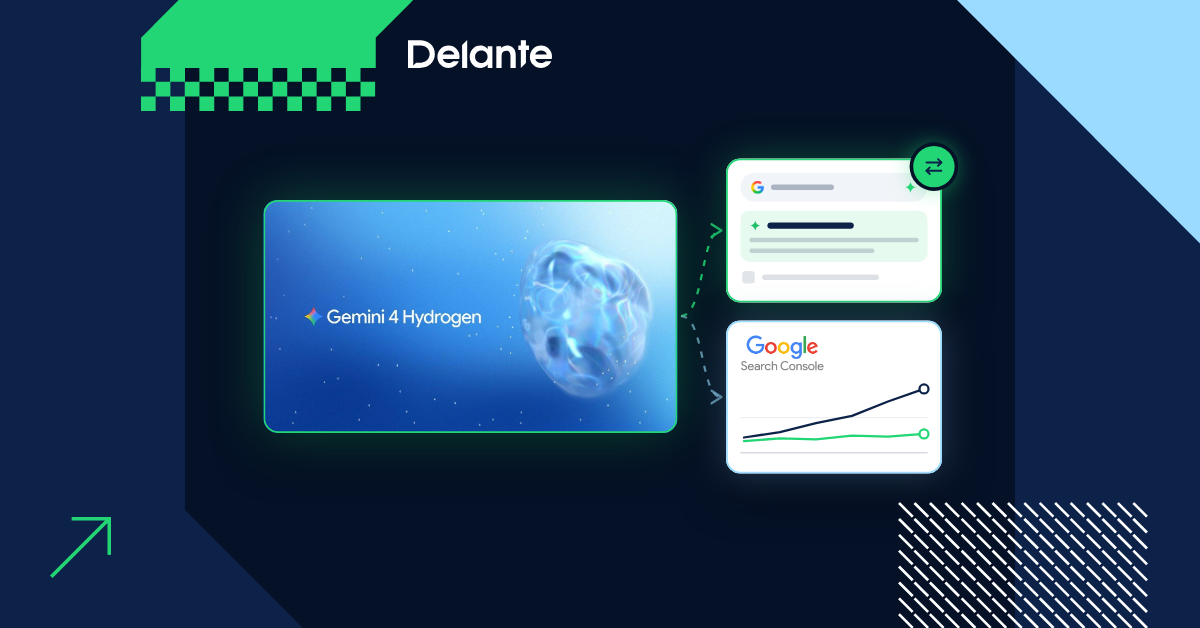
Google introduced Gemini 4 Hydrogen to Google Search on November 12, 2026, calling it the biggest model upgrade to Search yet. The new model is designed to understand complex search queries more accurately, explore a broader range of relevant sources, and generate richer answers with images, comparison tables, and interactive tools. Google says the upgrade is available globally across supported AI Search experiences. For businesses, the key question is whether these improvements will change which websites AI Mode cites, how products are recommended, and how much traffic reaches the original sources.
What does this mean for businesses? Companies should monitor how their brands, products, and services appear in AI Mode, particularly for complex queries involving comparisons, specific requirements, and purchase decisions.
The release does not justify an immediate overhaul of SEO strategies. It does, however, make understanding search intent and measuring AI visibility increasingly important.
On November 12, 2026, Google announced that Gemini 4 Hydrogen was being introduced to Google Search.
Robby Stein, Vice President of Product for Google Search, described the launch as the company’s biggest model upgrade to Search so far.
Hydrogen is part of Google’s Gemini 4 model family and is designed to combine advanced reasoning with faster, more efficient responses.
For Google Search users, the company highlights three main improvements.
Google says Hydrogen can interpret detailed, multi-part questions more precisely.
Instead of breaking their needs into several short searches, users can describe a complete problem.
For example, someone shopping for a laptop might ask:
“What’s the best lightweight laptop under $1,500 for video editing and travel, with at least 16 GB of RAM and good battery life?”
The model is designed to understand the different requirements and respond to the question as a whole.
This is particularly relevant to e-commerce and service businesses because customers often evaluate several criteria before making a decision.
A search query may include budget limitations, technical specifications, intended use, location, or personal preferences.
For businesses, that reinforces the importance of content that addresses real customer questions rather than focusing exclusively on individual keywords.
One of the most important technical changes is Google’s upgraded query fan-out process.
Query fan-out allows an AI-powered search system to break a complicated question into related subtopics and perform several searches to gather supporting information.
Consider a user researching an espresso machine for a small office.
Their question might involve:
Rather than relying on one set of conventional search results, AI Mode can explore multiple aspects of the question and combine the findings into a response.
According to Google, Gemini 4 Hydrogen improves this process through more advanced reasoning and simultaneous searches.
The company says the upgrade connects users with a broader range of relevant websites, including sources they might not have discovered through traditional search.
For SEO, this is potentially significant: a website may be useful for a specific part of a complex question even if it is not the most prominent source for the broader topic.
However, Google has not published data showing that smaller websites, niche publishers, or e-commerce stores will receive more citations following the update.
Those possibilities need to be evaluated through actual search results.
Google is also expanding the visual and interactive elements of AI-generated responses.
With Hydrogen, users may see more:
For online shopping, these capabilities can help users evaluate different products without conducting numerous separate searches.
For example, a customer comparing several cameras might receive a table outlining specifications, price ranges, and suitability for different uses.
This creates opportunities for brands whose websites provide accurate, detailed, and accessible product information.
At the same time, richer answers may change the number of users who click through to a retailer’s website.
Google has not confirmed whether the new model will increase or decrease organic traffic to external sources.
The release is particularly important because it changes the technology used to interpret questions and assemble AI-generated responses.
For businesses, the potential implications go beyond traditional keyword rankings.
Google’s improved query fan-out could create additional opportunities for specialized content.
A retailer publishing detailed information about product compatibility, for example, may provide useful answers to one part of a complex shopping query.
A B2B service provider could similarly become relevant when users ask about a specific technical problem or business requirement.
However, this is not a confirmed ranking advantage.
We do not yet know whether Hydrogen will consistently cite more domains, favor certain content types, or change the distribution of recommendations between competing brands.
The practical approach is to test those questions rather than assume the outcome.
Conversational search allows users to express their needs in greater detail.
This makes search intent particularly important.
Businesses should examine whether their content answers questions about:
A useful page should help customers understand their options and make informed decisions.
That doesn’t mean every possible AI prompt needs its own landing page.
Instead, businesses should identify recurring customer needs and provide complete, reliable information.
This approach also supports international SEO.
The same product may be evaluated differently across countries due to local preferences, pricing, availability, regulations, or customer expectations.
Read Delante’s guide to preparing global brands for conversational search for more context.
The new visual comparison features are especially relevant to e-commerce.
When AI systems compare products, accurate specifications and consistent information become essential.
Retailers should ensure their websites clearly communicate product attributes, availability, pricing, shipping conditions, and other information customers need.
Structured data can help search engines understand page content, although implementing schema does not guarantee inclusion in an AI-generated answer.
In our GEO product page checklist for e-commerce, we explain how retailers can improve product information, technical accessibility, and customer experience.
These foundations remain useful regardless of which AI model Google uses.
Hydrogen is designed to connect users with a broader range of links.
However, appearing in an AI-generated answer does not automatically generate a website visit.
A brand may be cited in AI Mode while the user obtains sufficient information without clicking through.
Alternatively, a user might discover a product in AI Search and return later through organic search or another channel.
For businesses, this creates a measurement challenge.
Traditional SEO metrics remain valuable, but they should be complemented by indicators of AI visibility.
At Delante, our AI Search Optimization services focus on metrics including brand presence, Share of Voice, citations, recommendations, and recognized AI referral traffic.
The goal is to understand not only whether a brand appears in AI-powered answers, but also how those interactions relate to commercial performance.
No new technical requirements have been announced.
Google Search Central states that the existing SEO fundamentals remain relevant to AI Overviews and AI Mode.
To be eligible as a supporting link, a page must be indexed and eligible to appear in Google Search with a snippet.
Google also recommends:
There is no special schema markup or AI-specific file required to appear in AI Mode.
Importantly, meeting these requirements does not guarantee that Google will cite a website.
Hydrogen’s launch should therefore be treated as a reason to review AI visibility and content quality, not as a reason to implement unverified technical shortcuts.
Hydrogen is not the first Gemini 4 model associated with Google’s AI-powered search developments.
In October 2026, Google introduced Gemini 4 Argon, emphasizing its capabilities for complex reasoning and demanding tasks.
At Delante, we analyzed what this development could mean for AI-generated product and service recommendations.
Read our earlier article: Gemini 4 Argon Comes to Google AI Mode: SEO Impact.
Hydrogen is positioned differently within the Gemini family, combining reasoning capabilities with speed and efficiency for everyday tasks.
For Google Search, the November release specifically emphasizes improved query interpretation, broader source discovery, and more visual responses.
There is no confirmed evidence that Hydrogen will consistently recommend different brands from Argon or favor a particular category of websites.
The distinction matters because businesses should evaluate actual search behavior rather than assume that benchmark improvements translate directly into SEO results.
The two announcements are separate.
Google began rolling out its November 2026 Core Update on November 10, two days before announcing Gemini 4 Hydrogen.
A core update involves broad changes to Google’s ranking systems.
Hydrogen is a model upgrade intended to improve AI-powered Search experiences.
Google has not confirmed that the two releases are part of one coordinated update.
As a result, businesses should be careful when interpreting ranking changes during November.
A decline in traditional organic positions cannot automatically be attributed to Hydrogen.
Similarly, a change in AI Mode citations is not sufficient evidence that the core update caused it.
The overlap makes controlled monitoring particularly important.
The immediate priority is to establish whether the updated search experience changes how relevant brands and products appear.
We recommend five steps.
1. Test complex search queries. Focus on realistic customer questions involving comparisons, budgets, specifications, and purchasing decisions.
2. Monitor AI Mode visibility. Track brand mentions, recommendations, cited sources, and how products or services are represented.
3. Review content gaps. Identify questions that customers ask but your website does not answer adequately.
4. Check technical accessibility. Ensure important pages are indexable and contain accurate information that Google can access.
5. Measure business outcomes. Compare AI visibility with recognized traffic, leads, conversions, and revenue where reliable data is available.
For international businesses, tests should be repeated across important markets and languages.
Search responses may differ by region, query phrasing, and context.
Using a consistent set of prompts and multiple observations will provide a more useful picture than a single screenshot.
Gemini 4 Hydrogen represents another step in Google’s transition toward more conversational, visual, and context-aware search experiences.
The company says the new model can better interpret complicated questions and connect users with more relevant information.
However, the commercial consequences remain uncertain.
Google has not published post-launch data on organic CTR, AI Mode citations, or conversion performance.
Those effects will need to be evaluated over time.
For businesses, the central takeaway is that Google Search is becoming better at understanding complete customer problems, not just individual search terms.
A strong visibility strategy should therefore combine technical SEO, useful content, search intent analysis, and ongoing monitoring of AI-powered answers.
At Delante, we help international businesses understand how their brands and products appear across Google AI Mode, AI Overviews, ChatGPT, and other AI-powered search environments.
We combine technical SEO, content optimization, and AISO monitoring to evaluate visibility, citations, recommendations, and business outcomes.
Explore our AI Search Optimization services to learn how we can help your business prepare for the next stage of search.