Pricing psychology has consistently shown that consumers do not evaluate a product’s value in a purely rational way.
We don’t buy numbers. We buy what those numbers mean.
Anchoring Effect
Daniel Kahneman and Amos Tversky described the anchoring effect as our tendency to evaluate new information through the lens of the first value we encounter. In practice, this means that the first price a user sees becomes the reference point for every price that follows.
If a customer first sees a package priced at $4,999, an offer priced at $2,999 may appear reasonable.
If the order is reversed, however, the exact same price may seem expensive. This is why the way pricing options are presented has a greater impact than many businesses realize.
Reference Price
Users rarely evaluate a price in isolation. Instead, they compare it with:
- competing offers,
- their previous purchases,
- the price they remember seeing in Google,
- their own perception of the product’s value.
If the offer falls within an acceptable price range, users move on to the next stage of evaluation.
If the gap is too large, the buying journey often ends immediately.
Framing
The way the same price is presented also matters. Compare these three messages:
- $1,200,
- From $1,200,
- $100 per month.
The amount is exactly the same. What changes is how users interpret it. This is known as the framing effect.
Mental Accounting
Richard Thaler observed that people do not perceive all money as belonging to a single mental budget. They evaluate the cost of a product differently from shipping costs, and both differently from a monthly subscription fee.
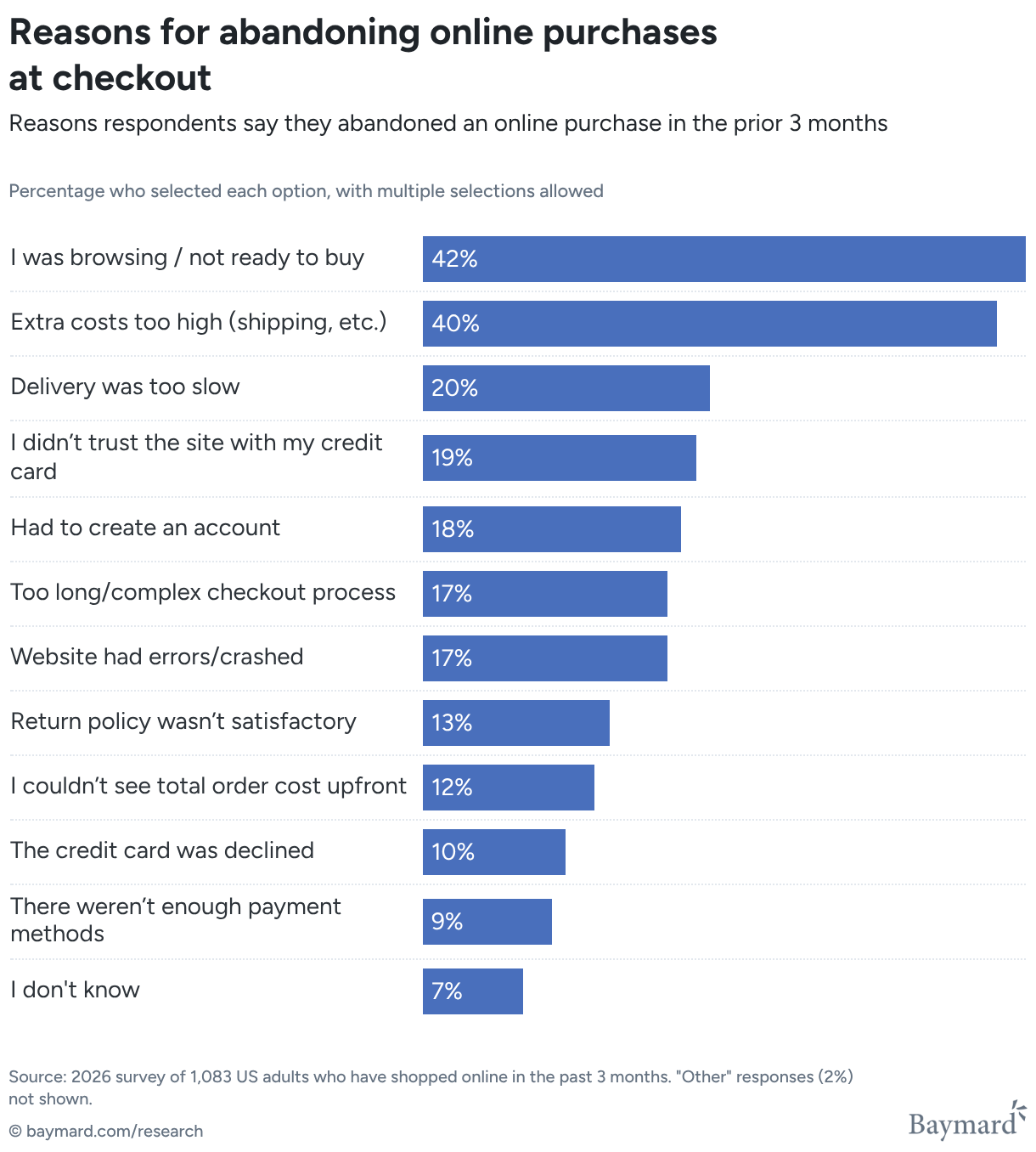
That’s why free shipping often has a stronger psychological impact than reducing the product price by the same amount. The economic value of the transaction remains unchanged. What changes is how the offer is perceived.









 Michał Grzyb