SEO is Google Merchandising. Why Companies Must Prioritize Online Product Visibility

3min.

Comments:0

29 January 2026

SEO is Google Merchandising. Why Companies Must Prioritize Online Product Visibilityd-tags
In traditional brick-and-mortar retail, no one doubts that good merchandising is the foundation of sales. A well-stocked shelf, the right number of facings, and seasonal displays all ensure the product is visible and more likely to end up in a basket. However, when we apply this logic to the online world, many companies still… forget about the shelf where their customers "shop" every day. That shelf is Google. That is why we increasingly say that SEO is merchandising for Google. Sound like a stretch? Let me explain.

3min.

Comments:0

29 January 2026

Your sales shelf is on Google, too

When a customer walks into a physical store, they see products arranged in a specific way. Some are at eye level, others are in the bottom zones. Some have Point-of-Sale (POS) highlights, while others sit in the shadow of the competition.

It works identically on Google:

  • High rankings for a specific keyword = a shelf at eye level,
  • Results with extensions (e.g., FAQ, rich snippets= attractive POS materials,
  • AI OverviewsDirect Answers = premium displays / prime real estate,
  • CTR = attention rate (i.e., whether the shopper actually notices your product),
  • SEO = managing visibility and shelf space on Google.
If your site is buried on the second or third page of results, it is as if your product were placed on the bottom shelf, near the floor, in a dark corner of the aisle. It is in stock. But nobody sees it.

You might sell exclusively in brick-and-mortar stores. You might operate on a B2B model where sales are closed by sales reps. You might be in an industry where products are selected offline.

But there is one thing you cannot avoid:

The customer is vetting you on Google anyway:

  • they want to investigate your brand,
  • read reviews,
  • compare your products against competitors,
  • check availability,
  • validate your credibility,
  • see if you are the category leader.
Even if the final transaction happens offline, the decision-making process begins in the search engine. And if that’s the case, you need the right exposure. In traditional merchandising, you pay for a better shelf. On Google, you earn that shelf through SEO.


Product page analysis

We will check if your product page (PDP) drives purchases!

Let's talk!
Damian Hliwa
Damian Hliwa Head of SEO

Merchandising and SEO share the same goal: winning the customer’s attention

Anyone who has worked with retail shelving knows one truth: customers do not buy what they do not see.

That is why companies invest in:

  • end-cap displays,
  • POS materials,
  • store layouts,
  • planograms,
  • and constant inventory control.

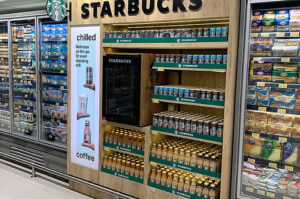
starbucks merchandising

Source: https://anvilkw.com/display-stand/

The online world operates on the same mechanism:

  • If you don’t have visibility, no one clicks.
  • If you don’t have clicks, you don’t have traffic.
  • If you don’t have traffic, you don’t have sales.

You can’t “skip” this step.

Google runs its own “planogram,” and SEO decides where you stand

In stores, shelf space is determined by a planogram, a carefully engineered arrangement of categories and SKUs (stock keeping units).

A planogram exists in Google, too, only it is dynamic. Search engine bots analyze the following daily:

  • your site structure,
  • content quality,
  • competition,
  • domain authority,
  • technical performance,
  • inbound links.

Based on this, they assign you a spot on their “shelf.”

SEO is the process by which you:

  • improve the quality of your exposure,
  • move up to a higher “shelf”,
  • earn additional highlights,
  • become more visible than the competition.

If you invest in offline merchandising but not SEO, you are wasting potential

Imagine this scenario:

You have the perfect display in the store. Products are rotating, you are managing facings, availability, and seasonal promos. But when someone searches for a category name on Google, e.g., “women’s winter boots,” your brand is nowhere to be found.

What does this mean for your sales?

  • The customer saw you in a brick-and-mortar store but won’t be able to find you online. You lose sales to people who later check reviews, prices, and specs online before making their final decision.
  • The customer starts on Google and finds your competitor. Even if you are perfectly positioned on the physical shelf, you lose on the digital shelf.
  • You invest in offline promos but drive online traffic… to someone else. It is as if you paid for a display in a store that a competing product uses.

SEO acts like your Google merchandiser – 24/7

    • It ensures your “shelves” (subpages) are stocked and complete.
    • It maintains the right number of “facings” (high rankings for keywords).
    • It reacts to seasonality.
    • It increases your brand’s share of shelf in the category.
    • It builds an advantage right where the customer journey begins.

    And today, most purchases and buying decisions begin in a search engine, regardless of the industry.

SEO Audit

Let's talk about an SEO audit for your website!

Contact us!
Wojciech Urban
Wojciech Urban Senior SEO R&D Specialist

Ready to bring your merchandising expertise online?

At Delante, we will show you:

  • what your “shelf” on Google looks like today,
  • which phrases you are already visible for, and which ones need work,
  • what actions will yield the fastest and most effective results for you,
  • how to prepare a product page (PDP) that converts,
  • how to increase your share of the shopping category in search.

Write to us – we will prepare an analysis and a concrete action plan for you!

Author
Author
Piotr Nowak

Global Sales Director

FAQ

Why compare SEO to retail merchandising?

Just as we meticulously plan product exposure and arrangement on store shelves to catch the eye, Google arranges us on its “shelves.” Through SEO, you can increase your chances of securing the prime spot on this “virtual shelf,” which directly leads to conversions.

Does SEO matter if sales happen primarily offline or via sales reps?

Yes! Even if the final transaction is offline, the potential customer will almost certainly check the brand online, read reviews, and compare prices before deciding to buy. If a brand ignores SEO and lacks an online presence, it risks losing customers.

What does "good brand exposure" mean on Google?

It means brand visibility for keywords with high purchase intent, e.g., categories like “women’s winter boots”, as well as presence in Featured Snippets (Direct Answers) or AI Overviews. Essentially, appearing everywhere a user might search for products in your industry.

Why is investing in offline merchandising without SEO a waste?

Buying decisions often happen outside the brick-and-mortar store. The path to purchase might start with a physical visit, but the customer will later validate their choice by checking reviews, prices, and competitor offers online. If they can’t find your store there, they will stray from the path leading to your product and choose a competitor’s offer instead.