
Target Audiences for LLM Models: Where Do Your Customers Look for Information, and How Can You Perform There?

7min.

Comments:0

14 May 2026

Target Audiences for LLM Models: Where Do Your Customers Look for Information, and How Can You Perform There?d-tags
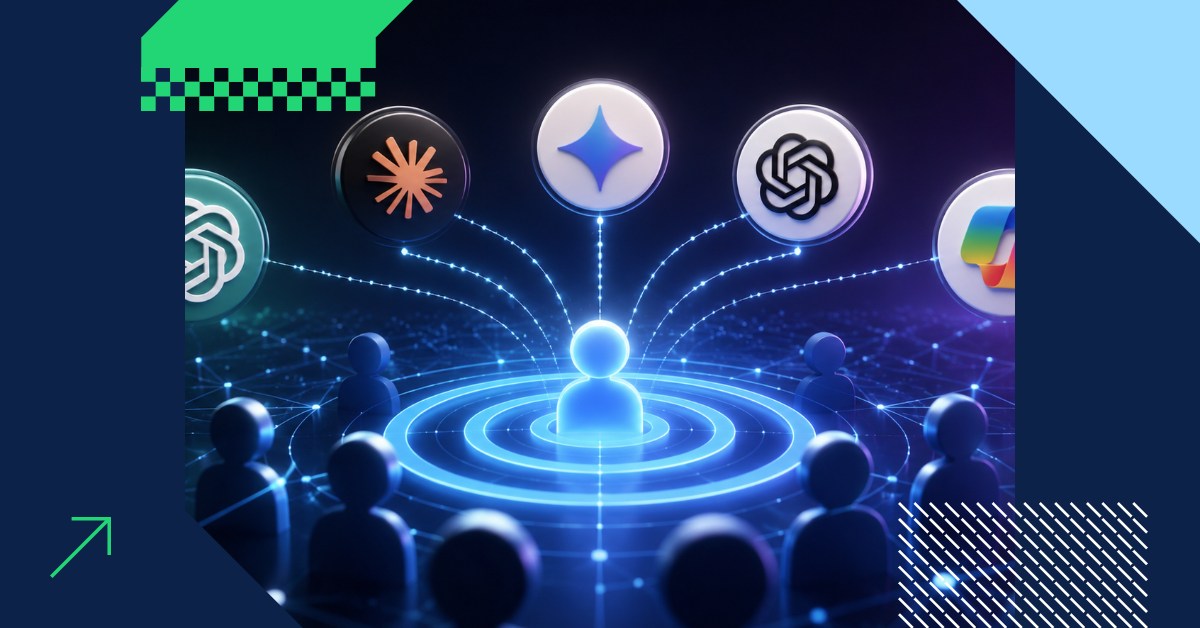
Every LLM, from the corporate-leaning Copilot to the mass-reach ChatGPT, attracts a completely different audience and calls for a different approach to off-site strategy and optimization. The channel you choose to build your brand's presence in should depend first and foremost on your target audience. Find out which assistants your potential customers actually use, and how to adapt your strategy so the algorithms are happy to cite your brand.

7min.

Comments:0

14 May 2026

Why Optimizing for “One AI” Is a Mistake

Many marketing managers still treat LLMs as a single, homogeneous channel, and that is a strategic mistake. The AI tooling ecosystem has fragmented heavily, and relying on visibility in ChatGPT alone may not be enough. Why? Because depending on your target audience, you should be focusing on different models.

Someone shopping for running shoes will ask ChatGPT, turn to Gemini, or rely on AI Overviews, while a financial analyst researching the semiconductor market will reach for Perplexity or Copilot.

To allocate your content marketing and off-site budget effectively, you need to understand who uses each model and how those models build their answers.


1. Perplexity AI: A Search Engine for Analysts and Investors

Of all the most popular LLMs, Perplexity is the one that most resembles a search engine. Its answers carry immediate, visible source citations right at the top, alongside local (Places) and visual (Images) tabs. On top of that, users get related-topic suggestions that recall the familiar People Also Ask section in Google.

Dominant Industries and Users

On the industry side, this is mostly finance, technology (IT), business analytics, and the B2B sector. Perplexity is favored by professionals hunting for hard data, statistics, and verified facts rather than generalities.

Off-site Strategy

Perplexity’s algorithm rewards exposure of brand-unique data. Publishing fresh, data-rich how-to articles, reports, case studies, and credible listings increases your chances of being cited. The brand should also work on earning brand mentions and links from sites with a high Trust Flow, ideally topically related to its industry.

Responsiveness

Perplexity indexes the web in real time, so its responsiveness is very high. Publish a new industry report in the morning, and the model can cite it in answers to users that same day.

2. ChatGPT (OpenAI): The High-Reach Giant for B2C and E-commerce

ChatGPT is currently the most popular LLM, and it has gone from a tech curiosity to a mainstream, everyday AI assistant at scale. Thanks to its popularity and first-mover advantage in the AI market, it is now a powerful recommendation tool used by as many as 900 million users every week (1).

Dominant Industries and Users

The most prominent industries in ChatGPT are e-commerce, education, travel, and lifestyle. ChatGPT boasts a very broad demographic, which makes it a strong choice for the B2C sector in the widest sense.

Off-site Strategy

Here, scaling reach matters most. The more trusted sites mention your brand, the more authority it builds in the algorithms’ eyes. It also pays to secure English-language publications, since those are the sources ChatGPT cites most often. Historical trust and a brand’s standing matter too, so ranking in ChatGPT can be more demanding and time-consuming. ChatGPT builds its answers on Bing search results, so when optimizing for this tool, it is worth strengthening your visibility in Bing as well.

Responsiveness

While ChatGPT also pulls data from the web, its core knowledge base is refreshed less often than Perplexity’s, so its responsiveness can be described as medium. Shifting how a brand appears in ChatGPT’s answers takes time and consistent authority building.

3. Microsoft Copilot: The Default Corporate Assistant

Copilot has the biggest distribution advantage of all the models covered in this article. It is built in by default to the Windows 11 operating system, the Microsoft Edge browser, and the Microsoft 365 suite. That makes it a natural choice in the workplace, especially in corporations and larger companies.

Dominant Industries and Users

As a result, the dominant industries are IT, finance, and the broader enterprise sector. The typical user is a director, manager, or specialist working on a company computer during the day. That makes Copilot the best choice for B2B companies that want to reach business decision-makers directly.

Off-site Strategy

The priority should be authority and stability. To show up in this tool, a brand needs to invest a larger budget in expert articles and white papers and build e-PR, often referred to as digital PR, with reputable business media (for example Forbes, Business Insider, or B2B trade outlets). Like ChatGPT, Copilot pulls information from Bing, which is worth factoring into your strategy.

Responsiveness

Copilot’s responsiveness is unfortunately low. Microsoft’s ecosystem is far more conservative than other LLMs. Its algorithms prefer stable, trusted domains over fast-appearing new content. That is why optimizing for Copilot is more of a marathon than a sprint.

4. Google AI Overviews and AI Mode: The Global Reach Leader

AI Overviews are AI-generated summaries that appear at the top of Google’s search results. That gives a brand unmatched, global reach. AIO answers address queries early in the purchase funnel, which makes them an important part of building brand recognition.

Google also offers a conversational AI Mode, where users learn about a topic through a back-and-forth with the AI model.

Dominant Industries and Users

Like Google itself, AIO and AI Mode have global reach and a full spectrum of users, both B2B and B2C. The model answers queries across every topic, while the AI Overviews block appears mainly on informational queries. Ranking in AI Mode and AI Overviews is a good move for any business that counts Google search (organic or paid) among its main revenue sources.

Off-site Strategy

Here the strategy is close to what we use for traditional Google SEO. Strong authority and careful attention to EEAT (Experience, Expertise, Authoritativeness, Trustworthiness) carry real weight. AI Overviews often surface information from well-cited sources such as forums (Reddit, Quora) and trusted news outlets.

Responsiveness

Responsiveness in AIO and AI Mode is highly variable. Right now it is the most unstable environment of all, because Google is constantly testing and refreshing its algorithms and models. The same user entering the same query a day, or even a few hours, apart can get a completely different answer and different sources. Monitoring visibility in AIO therefore takes constant verification.

5. Claude: Scientific Rigor and High Ethical Standards

Claude positions itself as the safest and most ethical LLM on the market. It has a large context window, which makes it a favorite among researchers and people in fields that demand deep subject-matter expertise.

Dominant Industries and Users

Medicine, law, niche scientific research, R&D, and IT. Claude’s users like it for programming, extensive analysis on large datasets, and reviewing legal documents. Ranking in Claude is a good choice mainly for companies whose target audience sits in the scientific, IT, and legal fields.

Off-site Strategy

Rigor and reliability matter most here. Thin articles full of fluff, with no data or sources, simply will not work. Claude favors content that is unique and exhaustive. For publications, focus on peer-reviewed trade journals and on producing comprehensive research reports.

Responsiveness

Claude does not really act as a live search engine the way Perplexity does. Its responsiveness is low, because the algorithms reward solid subject-matter foundations that cannot be rewritten overnight. Ranking in Claude takes patience and careful selection of outlets for external publications.

6. Google Gemini: A Multimodal Ecosystem and Video Analytics

Gemini is Google’s flagship LLM, and it stands out for its deep integration across the entire ecosystem (Google Workspace, Android, and YouTube). Its biggest strength is multimodality, the ability to analyze text, images, audio, and video at the same time. Many users rely on Gemini to create written content and graphics.

Dominant Industries and Users

On the industry side, this is marketing, content creation, education, and the B2B sector that uses Google Workspace day to day. The user base is fairly broad. On one side you have marketers and content creators, on another, employees at companies running Google Workspace, and on a third, Android users who simply rely on Gemini as a personal assistant.

Off-site Strategy

When planning link building for Gemini, focus on semantics and topical relevance. The algorithm needs to recognize your brand as a verified entity, so presence in social media and consistent NAPs matters, as does earning links from topically relevant sites. Running a YouTube channel is a smart move too, since Gemini is excellent at analyzing and citing video transcripts.

Responsiveness

Thanks to constant, direct access to Google search, Gemini’s responsiveness is high. The model can fold the latest publications into its answers almost instantly, as long as they come from authoritative, properly indexed sources.

GEO vs. AISO: What’s the Difference Between These Two Terms?

Before you invest in ranking inside LLMs, you need to understand two industry terms, GEO and AISO, that are often (mistakenly) used interchangeably. Both relate to ranking in AI, but each centers on a different set of tools.

GEO (Generative Engine Optimization): the process of optimizing content and site structure to increase a brand’s visibility within Google’s ecosystem in AI-generated answers (Gemini, AI Overviews, AI Mode).

AISO (AI Search Optimization): a broader, holistic approach aimed at building brand visibility across all AI tools, meaning both LLMs and Google’s solutions.

While AISO covers a brand’s entire presence in AI (including LLMs such as ChatGPT and Copilot), GEO focuses precisely on getting your content “understood” and cited by the generative algorithms built into Google search.

Whether you need a GEO or an AISO strategy depends on whether you want to focus solely on Google’s ecosystem or on other LLMs as well.

A CMO’s Summary: How to Structure Your AISO and GEO Budget

Building brand visibility in LLMs takes a well-honed strategy, and it should start with choosing your channels. Decide which models your company should appear in by mapping your target audience:

  1. For B2C e-commerce: Concentrate your budget on ranking in ChatGPT, AI Overviews, AI Mode, and Gemini (GEO + AISO). Earn placements on large, trusted portals, how-to blogs, and listings. It is also worth investing in social media reviews and user-generated content.
  2. For B2B, SaaS, and premium services: Your priority should be reach-focused work for Perplexity and Copilot. As part of the strategy, produce analytical reports, run e-PR campaigns, and add articles with hard data and expert citations to your site.
  3. For regulated industries (medicine, law): Your goal is to become an authority that Claude pulls from. To get there, pay particular attention to publications in scientific portals and reports, flawless subject-matter rigor, and EEAT principles.

Below is a summary in table form to help cement the knowledge from this article:

LLM / FeaturePrimary Audience / EnvironmentKey Strategy (Off-site / Content)ResponsivenessBest Format for Citation
Perplexity AIFinance, IT, B2B, analystsFresh data, high Trust Flow sitesVery highIndustry reports, hard statistics, roundups
ChatGPTE-commerce, B2C, lifestyleScaling reach, historical domain authorityMediumIn-depth guides, blog articles, reviews
Microsoft CopilotCorporations (C-level), financeReputable business media, Digital PRLow (a marathon)White papers, B2B expert articles, PR
Google AI OverviewsMass-market (B2C and B2B)Strong EEAT, long-tail query optimizationVery variableBlog posts, forums (UGC), step-by-step guides
ClaudeMedicine, law, science, R&DSubject-matter rigor, scientific credibilityLowResearch reports, peer-reviewed publications
Google GeminiGoogle users, marketing, B2BMultimodality (video + text), Knowledge GraphHighVideo (YouTube), structured data (Schema)

(Source for the data in our Polish report: https://delante.pl/raport-2026-link-building-w-erze-ai/)

Can you see your competitors already showing up in LLMs while you are still nowhere to be found? We can help you fix that and advise which AI tools are the best fit for your industry to rank in. A lack of visibility in LLMs is a real loss of market share to competitors who are already cited there as authorities.

Sources:
(1) https://www.businessofapps.com/data/chatgpt-statistics/

AISO's Strategy for Your Business

Be visible where your customers are

Contact us!
Michał Grzyb
Michał Grzyb SEO & AI Specialist
Author
Kasia Śliwa - Senior
Author
Kasia Śliwa

Senior Off-site SEO Specialist

Off-site SEO specialist, link building expert. At Delante since December 2018, she took her first professional steps in organizing large events. Student of journalism and social communication. Passionate about dance, music and good cinema. Loves listening to people and discussing with people with opposing views.

FAQ

Does my brand need to be visible in every LLM mentioned (ChatGPT, Perplexity, Copilot, and so on)?

Definitely not, and from a marketing-budget standpoint it would actually be a mistake. It is like social media. Not every brand needs to be active on LinkedIn, and not every brand needs a Pinterest account for its communications. It all depends on your target audience. If you sell B2B products and services, Copilot and Perplexity will be the best choice. For B2C businesses, a better approach is building visibility in ChatGPT alongside a GEO strategy aimed at AI Overviews in Google.

In practice, how does optimizing content for ChatGPT differ from optimizing for Perplexity?

The difference comes down mainly to how responsive each tool is and which sources its algorithms prefer. Perplexity works as an answer engine, a search tool built on AI. It prioritizes the freshest data, original reports, and publications on sites with a high Trust Flow, and the results of ranking for Perplexity show up very quickly. ChatGPT leans on established, historical domain authority and broad topical authority. Shifting your visibility in ChatGPT takes longer, plus scaling your efforts and earning placements in topically relevant trade sources.

How should I change my off-site (link building) strategy so LLMs cite us more readily?

Link building based on bulk-buying low-quality sponsored articles is losing its effectiveness for ranking in LLMs. AI models look for context and informational value, not just a link from a site with an artificially inflated DR. An AI Authority link building strategy should move toward e-PR and entity building. Create original reports and analyses and promote them on the portals that serve as a knowledge base for specific models. The algorithms need to associate your brand as the leading source of knowledge in your niche.