Pricing Psychology in Google: How Price Presentation on Your Website Affects Organic Traffic Bounce Rate

8min.

Comments:0

14 July 2026

Pricing Psychology in Google: How Price Presentation on Your Website Affects Organic Traffic Bounce Rated-tags
A high organic bounce rate doesn't always indicate an SEO problem. In many cases, users leave only after comparing their expectations with the actual price—or the way it's presented. That's the point where pricing psychology begins to have a greater influence on decision-making than Google visibility itself.

8min.

Comments:0

14 July 2026

Why Doesn’t High-Quality Organic Traffic Always Lead to User Engagement?

A user may land on your website through a perfectly matched search query and still leave within seconds. In many cases, the problem is neither the quality of the traffic nor the price itself, but how that price is presented. The decision to stay and continue exploring—or return to Google’s search results—is often made the moment expectations meet reality.

SEO brings the right audience to your website. What determines whether a potential customer stays, however, is the experience they have once they arrive. One of the most influential elements of that experience is how the price is communicated.

Why Do Users Leave a Website Only After Seeing the Price?

Marketing Managers often face a situation where organic traffic continues to grow, yet sales remain flat. The first assumption is usually that SEO performance is to blame. In reality, the problem may emerge much later—only after the user has already landed on the website.

Imagine someone searching for a CRM system for a mid-sized business. They find a Google result promising a straightforward solution for sales teams. Clicking the result feels like the obvious choice. The website looks professional. Then, a few moments later, the user reaches the pricing information.

And that’s when the decision is made.

Not because the product is too expensive, but because the price doesn’t match the expectations created during the user’s earlier interactions with the brand.

This phenomenon is known as the expectation gap. It occurs when the perception of an offer formed before clicking differs from what the user actually encounters on the website. The price becomes the moment when the brand’s earlier promise is put to the test.

SEO gets users to your website. The price often determines whether they stay.

This represents an important shift in perspective. A high bounce rate doesn’t always mean the wrong users are reaching your website. Sometimes it means the right users quickly realize that the offer doesn’t meet the expectations they had before clicking.

Google Shapes User Expectations Before They Even Visit Your Website

The buying decision doesn’t begin on a website. It starts much earlier.

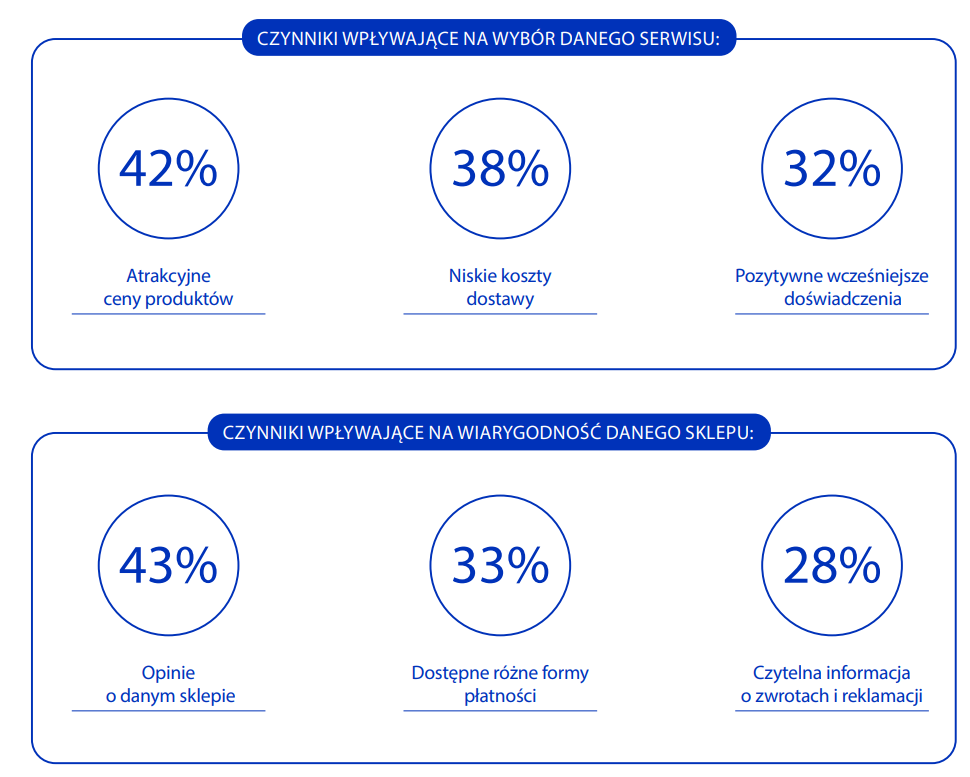
Factors influencing website selection

Source: “E-commerce in Poland 2025” report


According to the “E-commerce in Poland 2025” report by Gemius, 80% of consumers regularly compare prices, read reviews, and check delivery conditions before making a purchase. This means that most users arrive on a website with an already-formed perception of a product’s value. Every element visible in search results shapes how they interpret the offer they see later.

These elements include:

  • page title,
  • meta description,
  • promotional information,
  • prices displayed in Merchant Listings,
  • ratings and reviews,
  • price comparison websites,
  • AI-generated answers.

This is where users form their initial perception of a product’s value.

  • If a user sees messaging that positions the product as a premium solution, a higher price is more likely to be perceived as a natural reflection of its quality.
  • On the other hand, if the messaging focuses solely on affordability but the actual price is significantly higher than expected, the likelihood of users leaving the website increases.

AI Search is also becoming increasingly important. Large language models no longer simply answer users’ questions—they also synthesize information about products, features, and pricing. If a brand wants to appear in these AI-generated responses, it needs to build its visibility within the AI ecosystem through AI Search Optimization. As a result, users arrive on websites with far more specific expectations than they did just a few years ago.

The more information users receive before clicking, the less room there is for ambiguity once they land on the website.

Increase Your Brand's Visibility in AI Answers

Learn how to improve your chances of appearing in AI-generated responses across today's leading search platforms.

Learn More
Michał Grzyb
Michał Grzyb SEO & AI Specialist

Why Can the Same Price Be Perceived So Differently?

Pricing psychology has consistently shown that consumers do not evaluate a product’s value in a purely rational way.

We don’t buy numbers. We buy what those numbers mean.

Anchoring Effect

Daniel Kahneman and Amos Tversky described the anchoring effect as our tendency to evaluate new information through the lens of the first value we encounter. In practice, this means that the first price a user sees becomes the reference point for every price that follows.

If a customer first sees a package priced at $4,999, an offer priced at $2,999 may appear reasonable.

If the order is reversed, however, the exact same price may seem expensive. This is why the way pricing options are presented has a greater impact than many businesses realize.

Reference Price

Users rarely evaluate a price in isolation. Instead, they compare it with:

  • competing offers,
  • their previous purchases,
  • the price they remember seeing in Google,
  • their own perception of the product’s value.

If the offer falls within an acceptable price range, users move on to the next stage of evaluation.

If the gap is too large, the buying journey often ends immediately.

Framing

The way the same price is presented also matters. Compare these three messages:

  • $1,200,
  • From $1,200,
  • $100 per month.

The amount is exactly the same. What changes is how users interpret it. This is known as the framing effect.

Mental Accounting

Richard Thaler observed that people do not perceive all money as belonging to a single mental budget. They evaluate the cost of a product differently from shipping costs, and both differently from a monthly subscription fee.

That’s why free shipping often has a stronger psychological impact than reducing the product price by the same amount. The economic value of the transaction remains unchanged. What changes is how the offer is perceived.

How Does Price Presentation Influence User Behavior?

Research in UX and e-commerce shows that users evaluate not only the price itself but also how easy it is to understand.

  • If the cost is presented clearly, users can focus on evaluating the offer.
  • If the pricing requires interpretation or raises doubts, it creates additional cognitive load.

As a result, the likelihood of users leaving the website increases.

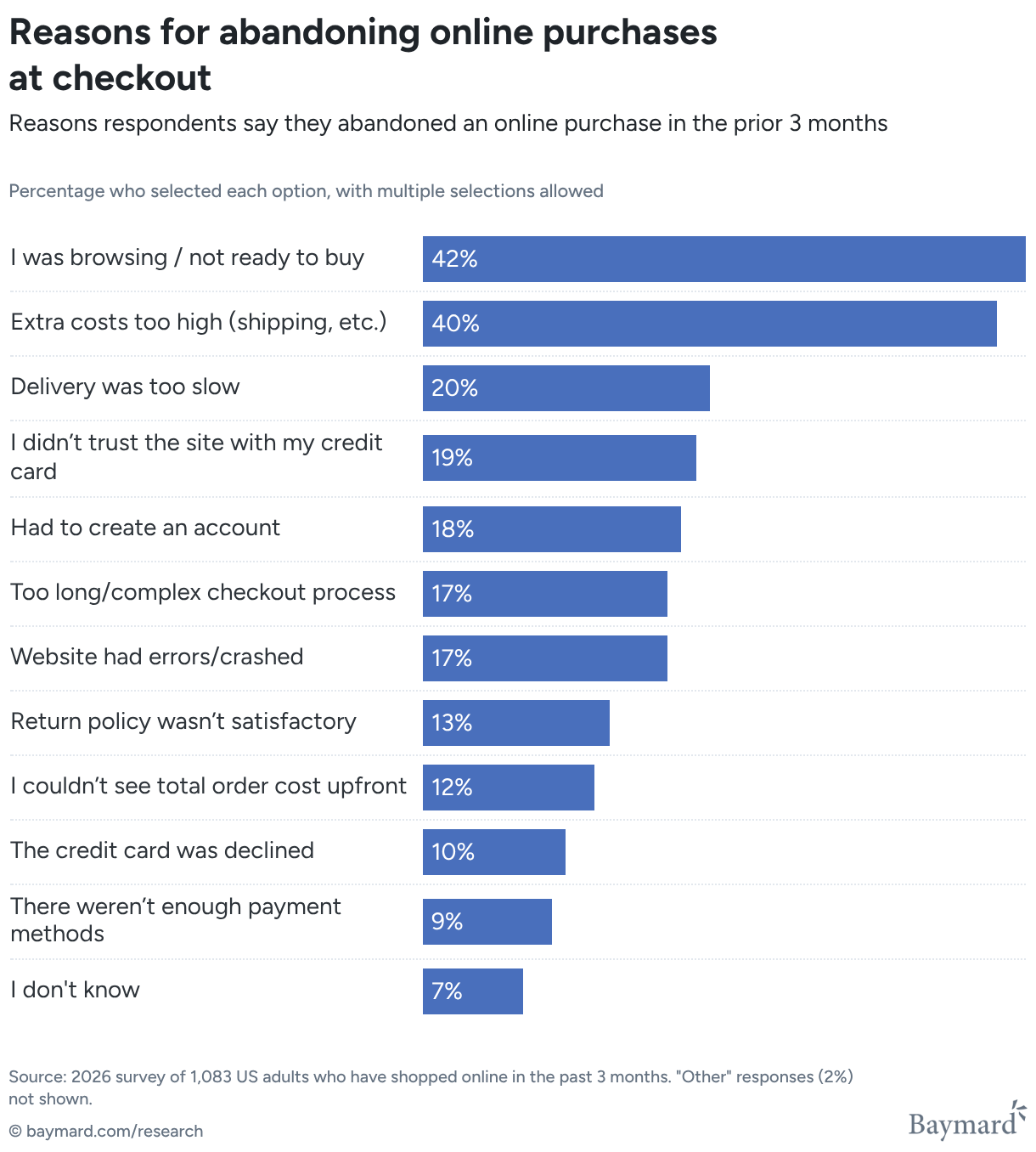
Reasons for cart abandonment

Source: Baymard Institute

Baymard Institute’s research illustrates this well. One of the most common reasons users abandon the checkout process is unexpected additional costs that appear only at the final stage of the purchase journey. In other words, the issue is not just the price itself, but when and how that price is communicated.

Similar conclusions can be drawn from research on pricing psychology. Users are influenced not only by the amount they see, but also by where the price appears on the page, how it is compared with the regular price, and how savings are presented.

For users, each of these elements helps answer one essential question:

Is this offer worth the price?

What Has the Greatest Impact on How Users Perceive a Price?

Price Presentation Element

Potential Impact on User Decision

Strikethrough price

Creates a reference point for the current offer

Clearly displayed savings

Increases perceived value

Free shipping

Reduces the psychological cost of the purchase

Installment or subscription pricing

Reduces the perceived burden of a one-time payment

Hidden fees

Reduce trust and increase the likelihood of users leaving the website

Unclear price presentation

Increases uncertainty and makes decision-making more difficult

The biggest obstacle to conversion is often not a high price. It’s uncertainty.

What Pricing Presentation Mistakes Increase Bounce Rate?

Mistake

How Users Perceive It

Potential Business Impact

Price shown without explaining the value

“That’s expensive.”

Users leave the website quickly

Hidden costs

“What else will appear later?”

Loss of trust

No information about what the price includes

“I don’t know what I’m paying for.”

Lower likelihood of making contact

Unclear discounts

“I don’t understand the promotion.”

Increased uncertainty

Too many pricing options

“I don’t know which one to choose.”

Decision paralysis

How Should You Present Prices to Reduce Bounce Rate?

There is no single pricing presentation model that works for every industry. However, research on decision psychology and observations of user behavior point to several best practices.

Don’t Hide the Price If Users Expect to See It

If someone searches Google using terms such as “price,” “cost,” or “pricing,” the absence of pricing information may be perceived as a lack of transparency.

If the final price depends on multiple factors, it’s worth providing at least an estimated price range and explaining what influences the final cost.

Present the Price in the Context of Value

A number alone says very little. It’s far more important to explain:

  • what the price includes,
  • which features or services are included,
  • what costs it helps eliminate,
  • what business outcomes it can help achieve.

The price then becomes part of a broader value proposition rather than the only criterion users use to evaluate the offer.

Communicate All Costs as Early as Possible

Unexpected charges remain one of the leading reasons users abandon the purchase process. That’s why it’s important to communicate upfront:

  • shipping costs,
  • implementation or setup fees,
  • subscription costs,
  • additional services,
  • taxes, where relevant to your target audience.

Transparency reduces the risk of losing users’ trust.

Use Pricing Psychology Responsibly

Anchoring, package comparisons, and highlighting savings can make decision-making easier.

However, their purpose should be to simplify the buying process—not to pressure users into making a purchase. In the long run, transparency is what builds customer trust and loyalty.

Test Different Pricing Presentations Instead of Assuming One Version Will Work Best

Not every audience responds in the same way. That’s why it’s worth running A/B tests on elements such as:

  • the order of pricing plans,
  • how discounts are displayed,
  • monthly versus annual pricing,
  • where pricing information appears on the page,
  • how additional value is communicated.

Sometimes changing the way a price is presented delivers better results than changing the price itself.

Why Should You Combine SEO with UX Analysis?

Price is an integral part of the user experience and shouldn’t be analyzed from an SEO perspective alone. If users arrive from Google but leave shortly after viewing your offer, it’s worth evaluating not only the quality of your traffic but also the quality of the page itself. A good starting point is a product page analysis, which helps determine whether the way pricing, value, and product information are presented supports purchasing decisions—or encourages users to return to the search results.

It’s equally important to look at the entire customer journey. Analyzing the purchase path  helps identify the exact moment when potential customers drop off and determine whether the issue lies in the quality of organic traffic, the way the offer is presented, or friction points appearing throughout the buying process.

It’s worth analyzing the entire journey:

Google → User expectations → Landing page → Price presentation → Trust → Engagement → Conversion

Only by looking at the entire sequence can you determine whether the real issue lies in the quality of organic traffic or in the way your offer communicates value.

Find Out Why Users Leave Your Website Without Converting

We'll analyze your website's UX and identify the points where users lose trust, abandon the purchase journey, or leave after seeing the price.

Book a UX Consultation
Damian Hliwa
Damian Hliwa Head of SEO

How Can You Tell Whether Price Presentation Is Causing Users to Leave Your Website?

Instead of focusing solely on bounce rate, it’s worth combining insights from several data sources. Use this checklist:

  • Analyze user behavior in GA4.
  • Review session recordings using tools such as Microsoft Clarity.
  • Use heatmaps to see whether users actually reach the pricing section.
  • Identify the exact point at which users leave the page.
  • Run A/B tests on different pricing presentation formats.

This approach makes it easier to distinguish visibility-related issues from problems caused by the user experience itself.

Companies trying to reduce bounce rate often begin by optimizing content or investing in additional SEO efforts. In many cases, however, users leave for a completely different reason: the way the price is presented doesn’t match the expectations formed before they even clicked on the search result.

Price isn’t just a number. It’s a signal of value, trust, and the quality of the experience your brand promises to deliver.

That’s why analyzing the performance of organic traffic shouldn’t end with session counts or Google rankings. Only by combining data with an understanding of consumer psychology can you uncover why some users choose not to engage any further.

Author
Paulina Ogórek - Junior SEO Specialist
Author
Paulina Ogórek

SEO Specialist

Paulina holds a degree in Information Management and Digital Publishing, as well as a Master’s in Social Economics. During her studies, she was actively involved in the Scientific Circle of Information Architects, where she explored the fields of UX and UI.

FAQ

How Does Price Presentation Influence Users' Buying Decisions?

Users evaluate more than just the price itself—they also assess how it’s presented. Factors such as reference pricing, the order of pricing plans, visible savings, installment payment options, and transparency around additional costs all shape how an offer is perceived. Clear and transparent pricing reduces uncertainty and makes purchasing decisions easier.

How Can You Tell Whether Price Presentation Is Causing Users to Leave Your Website?

The best approach is to combine insights from multiple data sources. Analyze user behavior in GA4, review session recordings and heatmaps, and run A/B tests with different pricing presentations. This makes it possible to determine whether users leave because of the quality of your organic traffic or because of the experience they have after arriving on your website.

Does a High Organic Bounce Rate Always Mean There's an SEO Problem?

No. A high bounce rate may simply mean that users found your website through the right search query, but the offer failed to meet the expectations they had formed before clicking the search result. In many cases, the issue lies in how the price is presented, the lack of clear pricing information, or poor communication of value—not in the quality of the organic traffic itself.