Google Ads: Changes in Bidding Strategies and Ad Communication – SEM News #1 August 2026

Google is changing how automated bidding is configured in Google Ads. Target CPA and Target ROAS will once again be available as separate options, making it easier to choose an optimization model aligned with specific business objectives. The Smart Bidding technology itself remains largely unchanged – the update mainly concerns how settings are structured within the interface.
What does this mean for you?
It is worth reviewing whether your current bidding strategies align with your campaign goals – whether that is scaling sales, generating leads, or maintaining profitability. For larger budgets, the quality of data, proper conversion tracking setup, and well-defined CPA or ROAS targets remain critical.
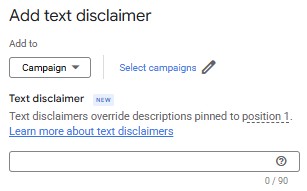
Google has introduced an update regarding text disclaimers. From now on, such messages may replace the first line of the ad description, taking the place of standard advertising copy. This change applies to ads that require additional legal or informational statements.
Source: Google Ads panel
What does this mean for you?
In practice, this means less space for sales messaging in ads that include disclaimers. It is advisable to review ad copy structure and ensure that key value propositions are also present in headlines and other ad elements.
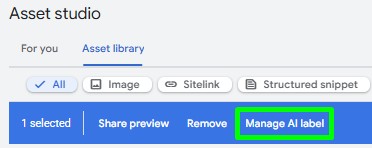
Google has added a new “AI Label” column in Asset Studio, indicating whether a given asset was created or modified using artificial intelligence. Marked assets may display a visible label informing users about AI usage, and Google automatically applies identifiers such as SynthID to content generated by its tools.
Source: Google Ads panel
What does this mean for you?
This new feature improves control over compliance with AI transparency requirements. Companies using AI-generated assets should include an additional verification step before launching campaigns.