Google Ads: New Testing Options for Performance Max and YouTube Campaign Planning – SEM News #1 November 2026

1min.

Comments:0

06 November 2026

Google Ads: New Testing Options for Performance Max and YouTube Campaign Planning – SEM News #1 November 2026
Google introduces A/B testing for Performance Max assets and new recommendations for weekly ad frequency in YouTube Reach Planner.

1min.

Comments:0

06 November 2026

Testing Changes to Performance Max Asset Groups

Google is introducing the “Save and test asset group changes” feature, which allows advertisers to run A/B experiments at the asset group level in Performance Max campaigns. Advertisers can test changes to headlines, ad copy, images and videos by saving them as an experiment directly while editing an asset group. This makes it possible to assess how individual modifications affect campaign performance without relying solely on the results of the entire asset group.
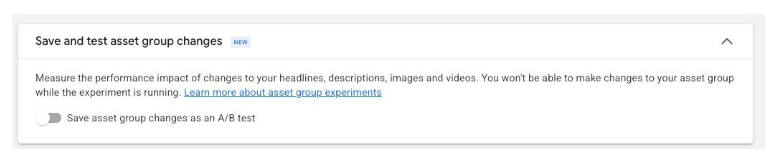
Source: Google Ads.

What does this mean for you?

You can test PMax creatives in a more controlled way and evaluate the impact of specific changes on campaign performance. This makes it easier to make data-driven decisions when optimizing assets rather than relying solely on observations and assumptions. For campaigns with large budgets, this can reduce the risk of implementing ineffective changes and improve creative management.


YouTube Reach Planner Adds Recommendations for Ad Frequency

Google has expanded the capabilities of Reach Planner by introducing recommendations for average weekly YouTube ad frequency. Since October 2026, advertisers have been able to compare their projected ad frequency with recommended benchmarks for their industry. The tool uses the Google Ads account ID to identify the advertiser’s business sector and provide relevant benchmarks.

What does this mean for you?

You gain an additional reference point when planning YouTube campaigns and managing ad exposure. These recommendations can help you assess whether the planned ad frequency is sufficient to achieve your campaign objectives. This is particularly useful when planning large-scale reach campaigns, where success depends not only on reaching the right audience but also on ensuring an appropriate level of brand exposure.

Author
Weronika Strzeżyk - Junior SEM Specialist
Author
Weronika Strzeżyk

SEM Specialist

A graduate of the AGH University of Science and Technology and the University of Economics in Krakow. At Delante since the SEM internship in August 2023.

In her free time, she is an enthusiast of watching ski jumping and exploring the culture of the Pieniny and Upper Silesia regions.

Author
Weronika Strzeżyk - Junior SEM Specialist
Author
Weronika Strzeżyk

SEM Specialist

A graduate of the AGH University of Science and Technology and the University of Economics in Krakow. At Delante since the SEM internship in August 2023.

In her free time, she is an enthusiast of watching ski jumping and exploring the culture of the Pieniny and Upper Silesia regions.