Author


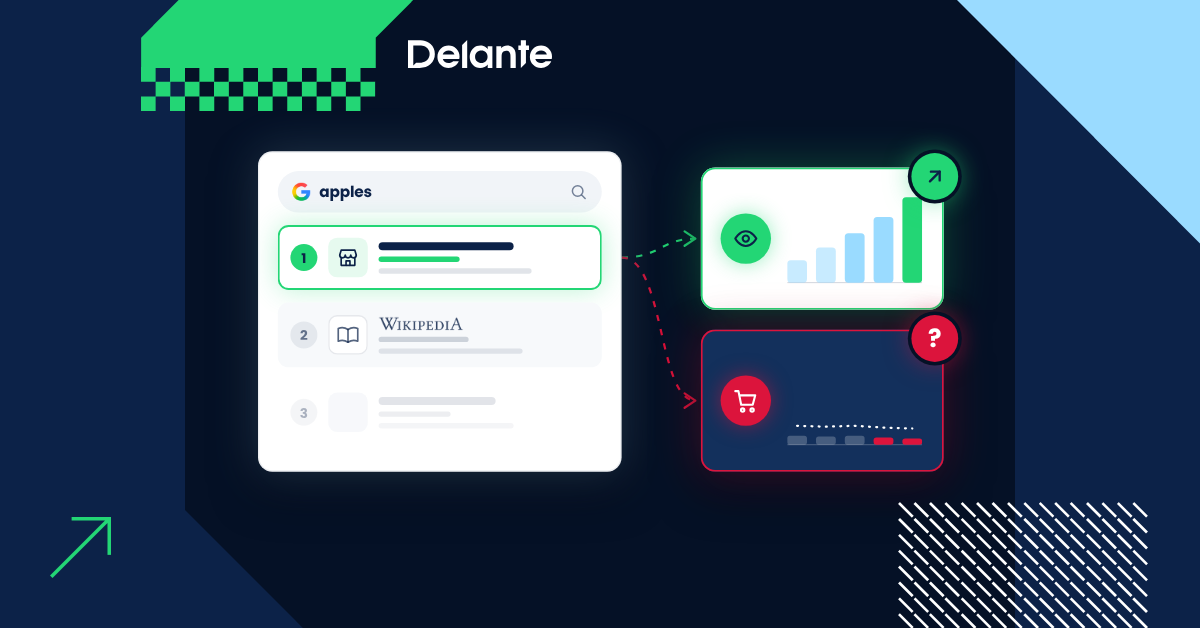
A small Connecticut grocery chain has appeared above Wikipedia in some Google search results for the broad keyword “apples.” The unusual rankings involving LaBonne’s Markets were reported by Search Engine Land on November 5, 2026, following screenshots shared by SEO professionals. The retailer’s apple variety guide reportedly ranked highly even outside its local market, including in Dallas, Texas. Yet the business owner said the visibility had not translated into additional sales. The case highlights an important distinction for SEO: ranking for a popular keyword is not the same as attracting customers who are likely to buy.
What does this mean for businesses? SEO performance should be evaluated through search intent, geographic relevance, qualified traffic, and conversions—not keyword rankings alone.
The case also demonstrates why search results for short, ambiguous queries are worth analyzing carefully. A person searching for “apples” might want general information, a comparison of varieties, recipes, or a nearby place to buy them.
On November 5, 2026, Search Engine Land reported an unusual Google ranking involving LaBonne’s Markets, a family-owned grocery business operating four locations in Connecticut.
Its website appeared above Wikipedia for the generic search query “apples” in certain observations.
The story gained attention after the business owner, Rob LaBonne, shared the ranking with the SEO community.
Other SEO professionals checked the query and reported different results depending on the search context.
One observer, Joe Youngblood, reported seeing LaBonne’s page in the top organic position when searching from Dallas, Texas, using an incognito window.
That’s notable because Dallas is far outside the grocery chain’s immediate geographic market.
However, the available evidence consists primarily of individual search observations and screenshots.
It does not establish that the retailer consistently ranked first across the United States or globally.
Nor does it provide enough data to determine whether the rankings were stable over time.
[EDITORIAL IMAGE: Screenshot showing the observed Google results for “apples,” with the original source credited and reuse permissions confirmed.]
The page attracting attention was titled Types of Apples: A Complete Guide to Choosing the Best at the Market.
Rather than providing a broad encyclopedia-style overview, the retailer published practical advice to help shoppers understand different apple varieties.
The article includes information about:
The guide also connects informational content to relevant purchasing opportunities.
For example, readers researching baking apples can follow links to shopping options and related products.
Explore the original LaBonne’s Markets apple guide.
The page displays a publication date of April 8, 2026. However, its exact publication and revision history was not independently established in the Search Engine Land reporting.
The most interesting aspect of this content is its focus on a practical problem.
Instead of simply defining what an apple is, it helps people decide which apple to choose for a particular purpose.
That distinction is central to understanding search intent.
A broad query does not always have a single obvious meaning.
Consider the keyword “apples.”
A user could be looking for:
Google attempts to identify results that are relevant and useful for different interpretations of a query.
This is where search intent becomes important.
Search intent refers to the underlying goal behind a search.
It is commonly categorized as informational, navigational, commercial, or transactional.
However, many real queries involve overlapping intentions.
Someone researching the differences between Honeycrisp and Granny Smith apples may initially want information, but the research could also support a future purchase.
Wikipedia may serve a broad informational need.
LaBonne’s guide addresses a more specific need: selecting an appropriate apple variety.
Both pages can be relevant to the same general topic while satisfying different user goals.
For a deeper explanation, read Delante’s Search Intent in SEO: How to Understand Users.
No.
The case does not establish that Google has abandoned authority-related signals or that smaller websites now receive preferential treatment.
Google evaluates search results through a combination of signals, including relevance, usefulness, content quality, and user context.
A smaller business can compete for certain queries when its content is particularly relevant.
But one observed ranking does not reveal which factors were responsible or how much weight Google assigned to them.
The lesson is not that domain reputation has become irrelevant.
It is that a recognizable brand or a large website does not automatically deserve the highest position for every possible interpretation of a query.
Not necessarily.
LaBonne’s Markets is a local retailer, but the ranking attracted attention because its informational article appeared highly in ordinary organic results.
This is different from ranking in the Google Maps Local Pack.
The article was also reportedly visible in Dallas, well outside the business’s primary service area.
These details make it difficult to attribute the ranking solely to geographic proximity.
Google does consider location when determining which results may be relevant to a user.
However, location is only one element of the broader search experience.
It is important to distinguish between two types of visibility.
Organic search visibility concerns the ranking of website pages in conventional results.
Local search visibility includes location-oriented experiences such as Google Business Profiles and map results.
Google explains that local business results are influenced by relevance, distance, and prominence.
You can read more about these factors in our Local Packs definition.
For retailers with physical stores, both areas can contribute to customer acquisition.
A useful product guide may attract people researching an item.
An optimized local presence can help nearby customers find a place to purchase it.
However, the LaBonne’s example is not proof that a local ranking factor caused the article to outperform Wikipedia.
This is arguably the most important business lesson from the story.
Despite the attention generated by the ranking, LaBonne’s owner said it had not brought additional business.
That is understandable when considering the store’s geographic limitations.
Someone in Texas may find the retailer’s apple guide helpful.
They might read the article, compare apple varieties, or follow additional informational links.
But they are unlikely to travel to Connecticut solely to purchase apples.
The website may therefore attract a visitor who finds the content useful but has no realistic opportunity to become a customer.
This is the difference between search visibility and commercially relevant visibility.
A number-one ranking can look impressive in an SEO report.
But its actual value depends on whether it reaches the right people and supports a meaningful business objective.
The retailer did not publicly provide sufficient Google Search Console or transaction data to quantify the article’s incremental traffic, geographic distribution, or long-term commercial effect.
The owner’s assessment should therefore be understood as a business observation, not a complete attribution study.
For businesses, the story offers a useful reminder that SEO should not be reduced to competing for the largest keywords.
A successful strategy must connect keyword selection, content quality, search intent, geographic targeting, and business results.
Broad keywords can attract large audiences.
However, those audiences often represent different needs, locations, and stages of the buying journey.
A grocery chain may rank for “apples” and reach people nationwide.
But a query such as “grocery store near me” or “fresh apples in Watertown CT” could be more directly related to an in-store purchase.
That doesn’t mean broad informational keywords are worthless.
They may contribute to brand awareness, topical relevance, or future purchases.
The important point is to assign appropriate objectives and metrics to each group of keywords.
A ranking that generates awareness should not be evaluated exactly like a ranking intended to generate immediate sales.
LaBonne’s guide provides a valuable example of content built around a practical question.
The retailer helps shoppers distinguish between products and select the right option.
The same approach can work in many industries.
For example, an electronics retailer might compare devices based on compatibility and use cases.
A home improvement store could explain which materials work best under different conditions.
A sporting goods retailer might recommend equipment for different experience levels.
This approach connects informational content with commercial decision-making.
At Delante, we also use the concept of an Intent Gap.
An Intent Gap occurs when a website covers a relevant topic but fails to satisfy the user’s actual need or stage of the decision-making process.
For example, a website may have plenty of content about a product category while offering no useful comparisons, selection criteria, or evidence to help customers choose.
Closing that gap may require improving an existing page rather than publishing more generic content.
For businesses with physical locations, the location of the potential customer is often critical.
A local retailer might attract visitors from across the country with informational content.
But transactions typically depend on whether the business can actually serve those visitors.
That makes geographic targeting essential.
A strategy for a multi-location retailer should consider store pages, local product availability, geographic modifiers, Google Business Profiles, and local competitors.
Businesses should also test how organic results vary across relevant cities and regions.
One screenshot from one location is not enough.
In our Local SEO guide, we explain how geographic relevance and local search optimization work together to help businesses reach nearby customers.
A ranking report describes where a website appears.
It does not explain what visitors do after discovering the business.
For local retailers, useful performance indicators may include:
These metrics provide context for understanding whether search visibility supports the company’s commercial goals.
Not every offline purchase can be attributed to a particular Google query.
Still, combining ranking, traffic, and conversion data is more informative than relying on keyword positions alone.
At Delante, we approach SEO as a way to support measurable business outcomes rather than simply increase keyword rankings.
Our work with location-dependent businesses illustrates why this distinction matters.
For example, our FORM Grupa Lekarska case study describes how an SEO strategy for a medical services provider combined expertise-driven content, relevant search visibility, and customer acquisition objectives.
The reported results included an 86% increase in organic traffic and a 52% increase in conversions.
This is a separate project, not evidence explaining LaBonne’s rankings.
It does, however, demonstrate the importance of connecting visibility with actions that matter to the business.
A keyword ranking can be valuable, but its value depends on the audience it reaches and the outcomes it supports.
No.
Search results may vary depending on location, language, device, search settings, timing, and other contextual factors.
An incognito window can reduce some forms of personalization, but it does not eliminate geographic differences or guarantee identical results.
In the LaBonne’s case, the evidence does not establish:
The screenshots document a specific observation, not a comprehensive SEO performance study.
This is especially important when unusual search results become popular on social media.
A striking SERP can be an interesting starting point for research, but broader claims about ranking systems require repeated measurements and comparable data.
The LaBonne’s example is a useful opportunity to review how a company’s informational content supports its commercial strategy.
1. Audit your broadest keywords. Identify which terms drive impressions and traffic, then evaluate whether those visitors represent your target customers.
2. Compare search intent across locations. Review how Google results change between relevant cities and markets, rather than relying on a single national ranking.
3. Connect informational content to relevant next steps. Product guides should help customers find suitable items, locations, availability information, or purchasing options where appropriate.
4. Strengthen local search foundations. Maintain accurate Google Business Profiles, store hours, location pages, contact information, and relevant product details.
5. Segment SEO performance by geography. Analyze organic traffic and conversions from markets the business can realistically serve.
6. Align reporting with commercial goals. Measure useful customer actions, not only keyword positions.
7. Investigate unusual rankings before changing strategy. Confirm whether they are persistent and commercially relevant using Google Search Console, analytics, and consistent rank-tracking methods.
LaBonne’s Markets appearing above Wikipedia for “apples” is an unusual example of a smaller business competing with a well-established informational website.
It illustrates how practical, focused content can be relevant to broad queries.
But it does not prove that Google has introduced a new algorithm update, that local retailers receive special treatment, or that domain authority has stopped mattering.
The most useful lesson is commercial.
Ranking first for a popular keyword is not necessarily an SEO success if the searchers are unlikely to become customers.
For local and multi-location businesses, effective SEO means combining useful content with geographic relevance, customer intent, and measurable outcomes.
The goal is not simply to appear in more search results.
It is to appear in the searches that matter to the business.
At Delante, we analyze search visibility in the context of customer intent, geographic targeting, competition, and measurable business results.
Our SEO strategies are designed to help local and multi-location businesses attract relevant traffic rather than focus exclusively on high-volume keywords.
Explore our Local SEO services to learn how we help businesses improve their visibility in the locations that matter most.
The best SEO results aren’t necessarily the highest rankings. They’re the rankings that help your business grow.