Author


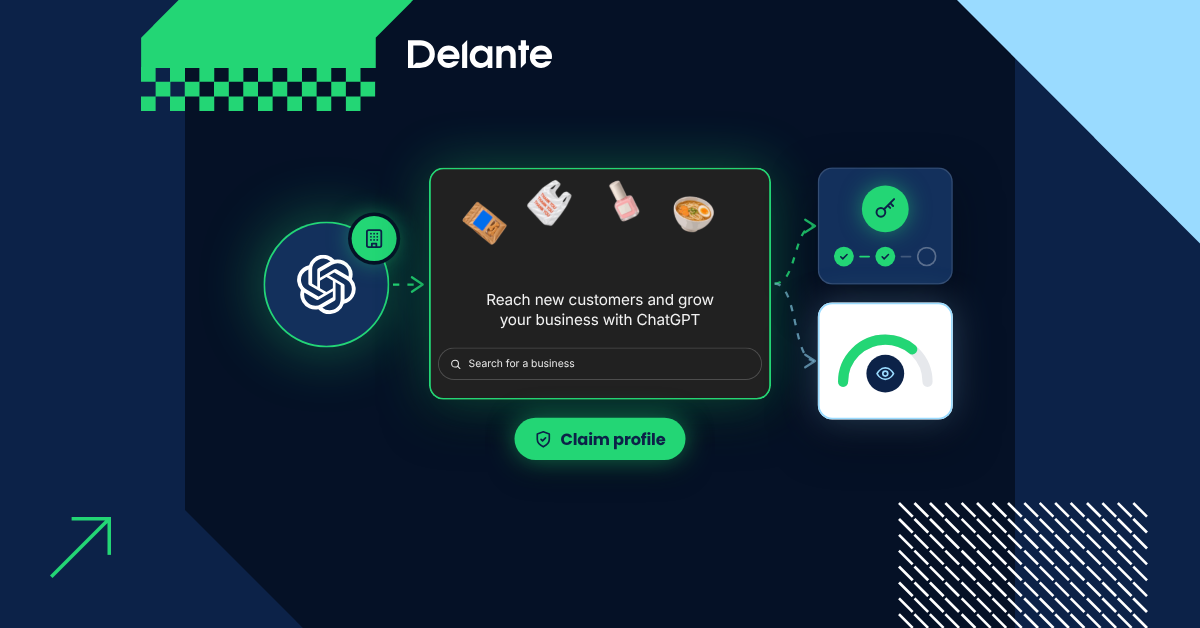
OpenAI launched Businesses in ChatGPT on November 10, 2026, introducing a new Business Hub where companies can claim their profiles, manage business information, and access insights into their visibility on ChatGPT. The beta feature provides aggregated data on business mentions, website clicks, and topics where brands appear in AI-generated answers. Eligible businesses can begin the verification process now, while additional features, including Business Agents, are being introduced gradually.
For companies investing in AI Search Optimization (AISO), this is an important development: businesses now have access to visibility data provided directly by OpenAI.
Previously, companies relied primarily on third-party monitoring tools, manual testing, and website analytics to understand how ChatGPT represented their brands.
With Business Hub, eligible businesses can now:
The dashboard provides aggregated insights covering the previous 28 days.
Importantly, OpenAI does not share users’ private conversations with businesses, and some statistics are only available once sufficient activity has been recorded.
Claiming a profile does not guarantee more recommendations, higher visibility, or increased sales. ChatGPT continues to generate independent answers, which may also use information from sources beyond the verified business profile.
OpenAI has introduced a dedicated process for businesses that want to manage their presence in ChatGPT.
Here’s how to get started:
Depending on your circumstances, additional documentation may be required.
Once verification is approved, you can begin managing your business information and accessing the available analytics.
A verified profile can also display a blue checkmark in ChatGPT.
Our recommendation: Start the claiming process now. Even if you don’t immediately receive access to every feature, completing verification will help prepare your business to use the new tools.
Eligible businesses in countries where ChatGPT operates can apply to claim their profiles.
Availability depends on the business category, location, and supported verification methods.
Not every organization will qualify automatically.
Business Agents have separate eligibility requirements and are currently limited to qualifying US-based e-commerce and online service businesses.
The most significant change is the introduction of official data on how businesses appear in ChatGPT.
Until now, measuring brand visibility in AI-generated answers has required a combination of monitoring tools, AI response analysis, and website traffic data.
Business Hub adds another source of information.
Businesses can see how often their websites are referenced, how frequently users click through to their websites, and which topics are associated with their presence.
However, these metrics need careful interpretation.
A mention is not necessarily a recommendation. For online businesses, OpenAI generally counts a mention when ChatGPT references the business’s website. Simply naming a brand may not count.
Similarly, website clicks are not equivalent to completed purchases or qualified leads.
This is why Business Hub should complement, rather than replace, a broader AISO strategy.
At Delante, we analyze AI visibility through metrics such as brand presence, Share of Voice, citations, recommendations, AI referral traffic, and conversions.
The new Business Hub data can provide additional context for those analyses.
It can also help businesses identify topics where their content is already being cited and opportunities to improve the accuracy of information presented about their products or services.
Business Hub’s click data is particularly interesting because conventional analytics doesn’t always recognize AI traffic correctly.
In October 2026, Delante identified changes in how ChatGPT referral information was passed to Google Analytics 4, causing some AI visits to be classified as Direct traffic.
Read our analysis: ChatGPT Changes Are Causing a Drop in AI Traffic Recorded by GA4.
This is another reason to compare information from different sources rather than treating a single analytics report as a complete picture.
Alongside Business Hub, OpenAI introduced Business Agents.
These are AI-powered assistants representing individual companies. They can answer customer questions and help users explore products or services using information supplied by the business.
At launch, Business Agents are available to eligible e-commerce and online service companies in the United States.
OpenAI is also introducing the ability for qualifying advertisers to promote Business Agents through ChatGPT Ads.
This creates additional opportunities for businesses to engage customers directly within ChatGPT.
However, claiming a business profile, launching a Business Agent, and running advertisements are separate activities.
Businesses do not need to advertise or publish an agent to claim a profile and access eligible business insights.
You can learn more about the broader shift toward AI-assisted purchasing in our Agentic Commerce guide.
Businesses don’t need to wait for every feature to become available before taking action.
Start by claiming your profile, verifying ownership, and reviewing the accuracy of your company information.
Once Business Hub analytics become available, evaluate what they reveal about your brand’s visibility and compare the results with your existing AI monitoring and website analytics.
For online stores, it’s also worth reviewing product data accuracy, particularly pricing, availability, and descriptions.
The key takeaway: Businesses in ChatGPT gives companies a new way to manage information about their brands and understand how users discover them through AI.
For AISO, this is an important step toward more transparent measurement, although the platform’s data remains only one part of a complete visibility strategy.
At Delante, we help international brands understand how they appear across ChatGPT, Gemini, Perplexity, and other AI-powered search environments.
We combine AI visibility monitoring, technical optimization, content strategy, and conversion analysis to connect brand presence with business performance.
Explore our AI Search Optimization services to learn how we can help you measure and improve your visibility in AI-generated answers.
Ready to claim your profile? Start with ChatGPT Business Hub.