
Author


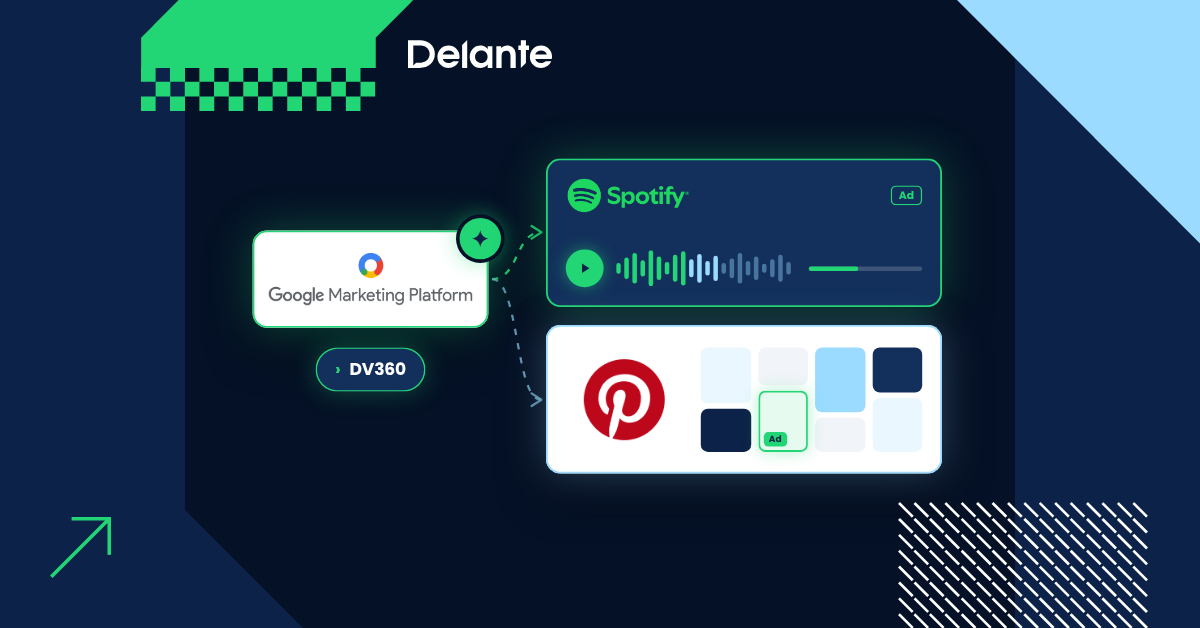
Google announced new Google Marketing Platform capabilities on November 18, 2026, expanding how advertisers can reach audiences across Spotify and Pinterest through Display & Video 360 (DV360). Advertisers in the United States and India can now use Google Audiences when buying eligible Spotify audio and video ads, while Pinterest inventory is accessible through programmatic deals in selected markets. Google also highlighted improvements to vertical video buying and retail media measurement in Canada. These updates strengthen DV360’s role in omnichannel advertising, but they are not new features available to every Google Ads advertiser worldwide.
Google’s November update includes several developments for advertisers managing campaigns across multiple channels.
| Feature | What’s Changing | Availability |
| Spotify and Google Audiences | Audience targeting for eligible Spotify audio and video inventory through DV360 | United States and India |
| Pinterest Programmatic Deals | Access to selected Pinterest display and video inventory through DV360 | North America, South America, and Asia Pacific |
| Vertical Video Unification | More unified management of vertical video investments | Eligibility and campaign setup vary |
| Loblaw retail media integration | Access to retail audiences and SKU-level sales measurement | Canada |
| Search Ads 360 | Holiday bidding and campaign optimization recommendations | Existing SA360 capabilities |
Source: Google Marketing Platform, November 18, 2026; Pinterest, October 26, 2026.
Two details are particularly important.
First, the Pinterest integration was not introduced for the first time in November. Pinterest officially announced the general availability of Programmatic Deals on October 26.
Second, these updates primarily concern Display & Video 360, Google’s enterprise programmatic advertising platform.
They do not mean that Spotify and Pinterest placements have automatically become available as new campaign types in the standard Google Ads interface.
One of the most notable updates is the ability to use Google Audiences when buying eligible Spotify advertising inventory through DV360.
According to Google, buyers in the United States and India can use this capability across Spotify’s audio and video inventory.
This provides another way for advertisers to connect audience targeting with digital audio and video campaigns.
Spotify reaches people in a different context from traditional Search advertising.
Users may be listening to music, consuming entertainment, or engaging with audio content rather than actively searching for a product.
For advertisers, that creates opportunities to reach audiences earlier in the customer journey.
For example, a consumer electronics brand might use Search campaigns to reach customers comparing specific products, while using digital audio advertising to support brand awareness among relevant audiences.
DV360 allows eligible advertisers to incorporate Spotify inventory into a broader programmatic media strategy.
However, the announcement does not specify that every Spotify placement or podcast advertising format is included.
Availability, supported formats, targeting options, and commercial terms should be confirmed before campaign planning.
The current Google Audiences integration is limited to DV360 buyers in the US and India.
Google has not announced a general European rollout.
The integration also fits into a wider change in Spotify’s advertising business.
Automated advertising has become an increasingly important area of development for the platform.
We previously covered this in our article Spotify’s Automated Ad Sales Surge as Direct Advertising Revenue Declines.
The new DV360 capability is another example of how digital audio is becoming part of broader automated media buying strategies.
Pinterest is the second major platform highlighted in Google’s November announcement.
Advertisers using DV360 can access selected Pinterest display and video inventory through Pinterest Programmatic Deals.
This gives eligible businesses a way to include Pinterest in programmatic media plans alongside other digital channels.
Pinterest is often used during product discovery and purchase planning.
People explore ideas for home decoration, fashion, beauty, celebrations, travel, and other interests.
This makes the platform particularly relevant to brands that want to reach consumers before they have decided which product or retailer to choose.
Unlike a search query focused on a specific brand or product, Pinterest activity may reflect an earlier stage of consideration.
For businesses, this can support awareness and product discovery campaigns.
The potential benefit of the DV360 integration is the ability to plan and purchase selected Pinterest advertising inventory through an established demand-side platform.
However, results will depend on audience relevance, creative quality, campaign objectives, and measurement.
An important clarification: Pinterest officially announced Programmatic Deals on October 26, 2026.
The company named several supported demand-side platforms, including:
Pinterest also identified Magnite as its primary supply-side partner.
The initial geographic availability covers North America, South America, and Asia Pacific.
Europe was not included in the markets listed in the launch announcement.
Google’s November Marketing Platform Drop therefore highlights an existing integration rather than announcing its first launch.
In its official announcement, Pinterest shared an example involving Moroccanoil.
The company used a Pinterest programmatic deal as part of a broader campaign through Amazon Ads.
According to Pinterest, the campaign generated:
These results concern a specific campaign using Amazon Ads, not the new DV360 integration.
They illustrate potential programmatic opportunities but should not be treated as expected results for every advertiser.
Google also highlighted its Vertical Video Unification capabilities.
The solution is designed to help advertisers manage vertical video investments more consistently across eligible inventory.
Vertical video has become an important part of digital advertising, particularly in mobile-first environments.
Managing these placements effectively can be challenging when inventory, targeting, and measurement are fragmented across multiple channels.
Google’s update emphasizes the opportunity to coordinate investments and assess reach more efficiently.
In its November announcement, Google shared results from Ford Motors.
According to the company, using Vertical Video Unification delivered:
These results suggest that a more coordinated video strategy can improve reach efficiency in certain circumstances.
However, they come from a specific advertiser example.
Google’s short announcement does not provide sufficient methodological detail to establish that similar improvements will occur in other industries or campaigns.
For marketers, the practical takeaway is to evaluate vertical video based on incremental reach, audience overlap, and cost efficiency not simply impressions.
Another development concerns retail media measurement in Canada.
Google announced that Loblaw Advance, the retail media business associated with Canadian grocery retailer Loblaw, is now integrated into Google’s Commerce Media Suite within DV360.
The integration allows eligible advertisers to reach Loblaw audiences and access closed-loop measurement at the SKU level.
SKU stands for Stock Keeping Unit, an identifier for a specific product or product variation.
SKU-level measurement makes it possible to analyze advertising performance in relation to sales of individual products.
For example, a consumer packaged goods brand could use the available measurement environment to evaluate outcomes associated with advertising for particular items.
This can provide more commercially relevant insight than impressions and clicks alone.
However, closed-loop sales measurement does not automatically prove incremental sales caused by advertising.
Understanding the causal impact of a campaign may require separate incrementality testing or controlled measurement.
The Loblaw integration is relevant to the Canadian retail market.
It does not mean that equivalent data has become available for retailers in every country.
Google also mentioned existing commerce media relationships involving Walmart, Costco, and other retailers.
Together, these partnerships demonstrate the growing importance of connecting programmatic media buying with retail audience data and sales measurement.
One of the most important distinctions in this announcement concerns the advertising platforms themselves.
Although Google Ads and Display & Video 360 are both Google advertising products, they serve different needs.
| Google Ads | Display & Video 360 |
| Widely used for Search, Shopping, video, and other Google advertising campaigns | Enterprise demand-side platform for programmatic media buying |
| Accessible to businesses of many sizes | Typically used for larger or more complex media operations |
| Campaign management within the Google Ads environment | Access to eligible third-party inventory and programmatic deals |
| Google Ads reporting and measurement | Programmatic planning, buying, and measurement capabilities |
| Spotify and Pinterest integration not announced as standard Google Ads campaign features | The relevant integrations are described for DV360 |
This distinction is especially important for companies evaluating the November update.
Having an active Google Ads account does not automatically provide access to the Spotify or Pinterest opportunities described by Google.
Eligibility depends on the platform, geographic market, available inventory, and commercial arrangements.
For businesses that don’t currently use DV360, these developments may be relevant to future media planning rather than immediate campaign activation.
Google’s November announcement demonstrates an increasingly important direction in digital advertising: brands are looking for ways to coordinate media buying across different environments rather than managing every channel independently.
For international advertisers, three implications stand out.
Consumers don’t interact with brands through a single channel.
They may discover a product on Pinterest, encounter an audio advertisement on Spotify, search for reviews on Google, and return to purchase later.
These interactions can serve different roles in the decision-making process.
A campaign designed to build awareness should not necessarily be assessed using the same metrics as a high-intent Search campaign.
When choosing channels, advertisers should consider where their audiences are in the purchasing journey.
Spotify, Pinterest, and Google Search offer different contexts for reaching potential customers.
Google’s examples highlight both incremental reach and sales measurement.
These are distinct objectives.
An awareness campaign may aim to reach more people efficiently.
A retail media campaign may focus on product-level sales outcomes.
A performance campaign may prioritize qualified leads or profitable transactions.
Advertisers should define these objectives before comparing channels.
The same ROAS target may not be appropriate for every placement or stage of the customer journey.
This is particularly important when developing international media strategies across markets with different consumer behavior and advertising availability.
Not every new Google Marketing Platform feature is globally available.
Spotify’s Google Audiences integration is limited to the US and India.
Pinterest Programmatic Deals initially cover North America, South America, and Asia Pacific.
Loblaw’s retail measurement capabilities are specific to Canada.
Therefore, a brand operating across several countries may have access to different inventory and measurement options in each market.
Before recommending an integration, marketing teams should verify eligibility rather than assuming global availability.
At Delante, we have practical experience combining Google Ads and Pinterest in a coordinated strategy.
For Home Concept, a network of interior design shopping centers in Poland, we developed campaigns focused on increasing visits to physical locations.
The strategy included:
According to the project’s results, offline conversions reported in Google Ads increased by approximately 20%, comparing January–May 2025 with August–December 2024.
The case illustrates how visual discovery and performance advertising can support the same business objective.
However, the project did not use Pinterest’s newly announced Programmatic Deals through DV360.
It is an independent example of coordinated multichannel advertising, not evidence of results from the November 2026 integrations.
Read the full Home Concept case study: How Google Ads and Pinterest Increased Foot Traffic by 20%.
Businesses using or evaluating DV360 should begin by reviewing the opportunities available in their markets.
The November update is particularly relevant to international advertisers, retailers, and brands investing in multiple advertising formats.
We recommend focusing on five areas:
1. Check platform eligibility. Confirm whether your DV360 account and target markets support the available Spotify and Pinterest integrations.
2. Evaluate audience relevance. Consider whether audio, video, or visual discovery placements align with your customers’ needs and purchasing behavior.
3. Define campaign objectives. Separate awareness, incremental reach, lead generation, and sales measurement.
4. Verify measurement capabilities. Check which conversion, audience, and retail sales data are available for your specific configuration.
5. Test before scaling. Where eligible, consider controlled campaigns with clearly defined performance indicators and budget limits.
For businesses operating outside the currently supported markets, monitoring future geographic expansion may be the most practical next step.
Google’s November 2026 Marketing Platform Drop reinforces DV360’s role as a platform for managing programmatic advertising across multiple media environments.
Spotify expands the opportunities for digital audio and video advertising.
Pinterest adds another channel for visual discovery and purchase consideration.
Vertical Video Unification focuses on reach efficiency, while retail media partnerships such as Loblaw connect advertising with more detailed sales measurement.
These developments highlight a shift toward more connected media planning.
The key takeaway: Google Marketing Platform is expanding beyond Google’s own advertising inventory, but these integrations remain subject to specific platform and geographic requirements.
For advertisers, the opportunity is not simply to add more channels.
It is to determine whether each channel contributes measurable value to the customer journey and fits the company’s wider media strategy.
At Delante, we help brands develop performance marketing strategies based on audience behavior, campaign objectives, and business results.
We combine Google Ads management, campaign audits, conversion analysis, and cross-channel planning to identify opportunities for more effective advertising.
Explore our Google Ads services or Google Ads Audit to learn how we can help improve your advertising performance.