
Heavy Industry, Logistics, and Manufacturing on Google. Why Do Technical Industries Achieve the Highest ROI from Combining Google Ads and LinkedIn Ads?

4min.

Comments:0

21 July 2026

Ads
Heavy Industry, Logistics, and Manufacturing on Google. Why Do Technical Industries Achieve the Highest ROI from Combining Google Ads and LinkedIn Ads?d-tags
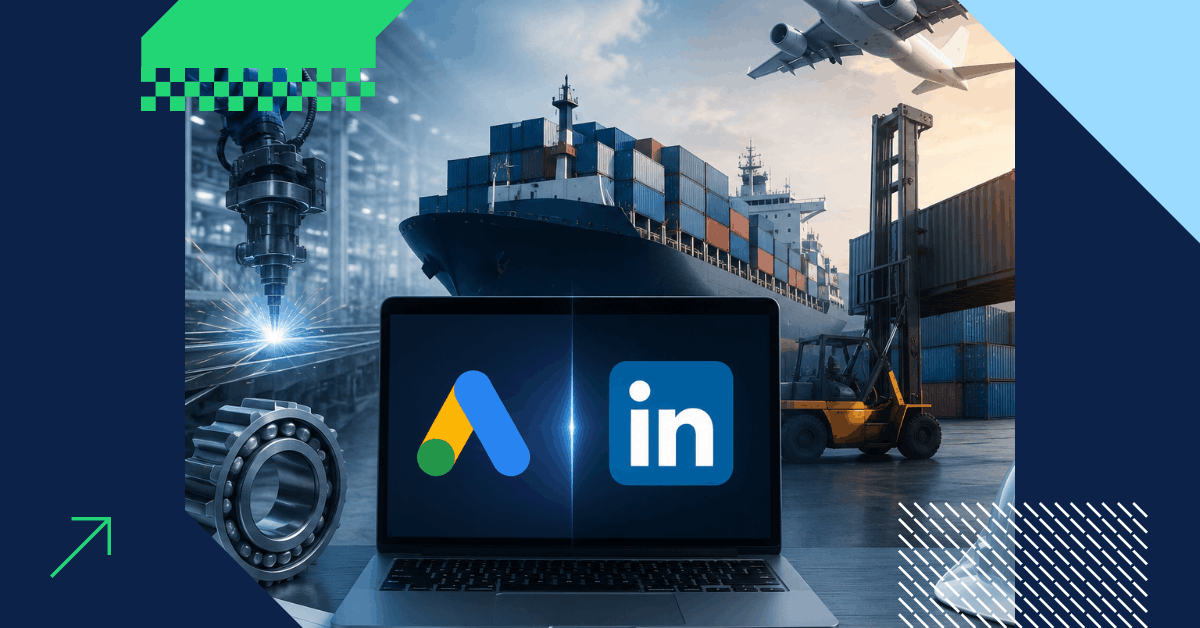
Technical industries, heavy industry, manufacturing, and logistics, achieve the highest ROI from combining Google Ads and LinkedIn Ads because the two channels cover complementary stages of the months-long B2B buying process: LinkedIn Ads builds awareness among decision-makers (TOFU/MOFU) through job-title and company targeting (ABM), while Google Ads captures existing demand (BOFU) at the exact moment an engineer or technical director types a specific machine or supplier into the search engine.

4min.

Comments:0

21 July 2026

Precise B2B Decision-Maker Targeting with LinkedIn Ads

The challenge for businesses in industrial sectors is reaching the potential decision-makers who might be interested in a company’s offer. And no advertising channel allows for targeting users by professional profile as precisely as LinkedIn Ads. Because of its thematic focus and the detailed data it holds on its users, LinkedIn’s advertising ecosystem makes it possible to direct messages with great precision, taking professional criteria into account. When setting up a LinkedIn Ads campaign, you can target your ads directly to:

  • CEOs and owners of companies that may need logistics services.
  • Production directors and technical directors.
  • Managers and engineers at industrial companies.
  • Procurement and supply-chain specialists.

LinkedIn even lets you go a step beyond the job titles listed in users’ profiles. An Account-Based Marketing (ABM) strategy lets you tap into LinkedIn’s databases and serve ads exclusively to employees of specifically selected, key companies.

Using an ABM strategy, preceded by research into the prospective partners who might be interested in the company’s services, makes it possible to significantly increase campaign ROI.

What Does the Data Say About LinkedIn Ads’ Effectiveness?

In its report The State of B2B Lead Generation, HubSpot analyzed traffic and conversion using data from more than 5,000 companies. The research found that the conversion rate for the B2B sector (a user who visits a site from an ad and becomes a lead) reached as high as 2.74%, compared to just 0.77% for Facebook and 0.69% for the X platform. This means that LinkedIn traffic converted nearly three times more effectively than the other advertising platforms.
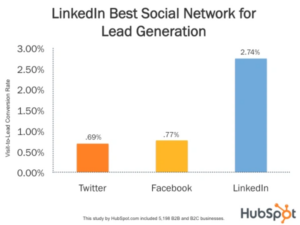
 

linkedin lead generation report

Source: HubSpot

LinkedIn Ads campaigns let you build brand awareness and an expert image precisely among the people who will, in the future, be the decision-makers when choosing a service provider. This channel works effectively for reaching customers at the top (TOFU) and middle (MOFU) stages of the sales funnel. Before the customer types specific queries into Google, they will already know your brand and subconsciously perceive it as an industry leader.


Capturing Existing Demand with Google Ads

Google Ads let you reach users at the bottom of the buying funnel (BOFU), who are already showing clear intent. An engineer, technical director, or logistics specialist who types the name of a specific machine or specialized component into the search engine, or who is looking for a certified supplier, is at an advanced stage of the buying process. By planning an ad campaign targeted at these keywords, you deliver your message at exactly the moment the potential customer is making a decision.

Research on B2B decision-maker behavior presented in the report The Changing Face of B2B Marketing indicates that as many as 71% of corporate decision-makers look for suppliers and business partners by typing keywords into Google. Ads within the Google Ads ecosystem allow companies to gain visibility for exactly those phrases that decision-makers in a given industry are typing.

The Synergy Effect: Full Coverage of the Decision-Making Process

When planning your advertising budget, limiting yourself to just one of these two channels caps their potential. LinkedIn Ads builds trust and brand image, while Google Ads captures the user who is ready to buy. Integrating the two systems allows you to effectively reach the potential customer at every stage, from evaluating suppliers all the way to sending a request for a quote.

Full coverage of the decision-making processLinkedIn Ads creates demand and builds trust. Google Ads captures it at the moment of decision.

TOFU · TOP OF THE FUNNELBuilding brand awarenessLinkedIn AdsMOFU · Middle of funnelGenerating demand and educating the marketLinkedIn AdsBOFU · bottom of funnelCapturing demand and the request for a quoteGoogle Ads↻ Remarketing ties both channels together: a decision-maker who has grown familiar with the brand on LinkedIn is more likely to click a Google ad during the research stage.

Being present on both channels also increases touchpoints, the points of contact between the user and the company. The more such touchpoints there are along the buying journey, the greater the chance the customer will choose a trusted, familiar supplier. This allows you to acquire high-value, substantial leads, which is especially important in such a specific sector as heavy industry or logistics.

CriterionGoogle AdsLinkedIn Ads
User intentActively searching for a solution, machine, or supplier. The user shows direct readiness to buy (high intent).No purchase intent at that moment. The user is browsing the platform for professional, educational, or networking purposes.
Reach method (targeting)Keywords (e.g., “steel hall manufacturer,” “CNC machine parts”). You reach the problem, not a specific person.B2B demographic data: industry, job title (e.g., production director), company size, and specific company names (ABM strategy).
Position in the sales funnelBottom of the funnel. Closing the research process and encouraging contact or a request for quote.Top and middle of the funnel. Building brand awareness, generating demand, and educating the market.
Key advantage in industryInstant lead capture at the moment an organization has the budget and urgently needs a solution.Guarantees you bypass lower-level staff and hobbyists, you pay only for ad impressions shown to decision-makers.
Role in an integrated strategyCaptures the demand created by LinkedIn ads and closes deals through remarketing campaigns.Familiarizes decision-makers with the brand, so they are more likely to click that company’s Google Ads results later in their search.

How to Measure the Effectiveness of LinkedIn and Google Ads Campaigns in Technical Industries

For technical and industrial sectors, campaign effectiveness should not be assessed from the perspective of traffic metrics or the sheer number of clicks on ad creatives. The main KPIs for industrial-sector campaigns should include:

  1. SQL (Sales Qualified Lead): how well the lead matches your offer in terms of budget and decision-making authority.
  2. Win Rate: the conversion of a marketing lead into a signed contract.
  3. LTV / CAC Ratio: the relationship between the long-term value of a contract and the cost of acquiring the customer.
Main KPIs for the industrial sectorNot traffic and not the number of clicks; effectiveness is determined by lead quality and contract value.KPI 01SQLSales Qualified LeadsHow well the lead matches your offer in terms of budget and decision-making authority.KPI 02Win RateClosing RateThe conversion of a marketing lead into a signed contract.KPI 03LTV / CACContract value relative to acquisition costThe ratio of a contract’s long-term value to the cost of acquiring the customer.

Keep in mind that the cost of an ad impression or a single click for a technical B2B industry can be high, but it should be considered from the perspective of the value of the signed contract.

Both industry research and our own experience working with clients in this sector show that it is precisely LinkedIn and ABM-type ads combined with Google campaigns that deliver the highest ROI of all marketing initiatives in the B2B sector.


Sources:

  • https://www.academia.edu/39195932/The_Changing_Face_of_B2B_Marketing
  • https://blog.hubspot.com/blog/tabid/6307/bid/30030/linkedin-277-more-effective-for-lead-generation-than-facebook-twitter-new-data.aspx

Synergy Between Google Ads and LinkedIn Ads

Tailored to the specifics of your business and industry

Check out our offer!
Jerzy Cygan
Jerzy Cygan Senior SEM Specialist
Author
Jerzy Cygan - SEM Specialist
Author
Jerzy Cygan

Senior SEM Specialist

Senior SEM specialist, in the industry since 2009. He joined Delante in 2022. He is interested in knowledge of website development, online marketing, advertising tools, as well as web analytics. Privately passionate about soccer, mountain hiking and science fiction literature.

Author
Jerzy Cygan - SEM Specialist
Author
Jerzy Cygan

Senior SEM Specialist

Senior SEM specialist, in the industry since 2009. He joined Delante in 2022. He is interested in knowledge of website development, online marketing, advertising tools, as well as web analytics. Privately passionate about soccer, mountain hiking and science fiction literature.

FAQ

Why is it worth combining Google Ads and LinkedIn Ads for industrial sectors instead of choosing just one system?

Google Ads captures existing demand; it reaches people who are already actively searching for a specific machine or service in the search engine, so it targets users who are close to making a purchase decision. LinkedIn Ads, on the other hand, lets you create that demand and actively supports building brand recognition. With LinkedIn campaigns, you build brand awareness and trust among decision-makers before they even begin their research. Combining both channels, tied together with remarketing, lets you guide the customer by the hand through the entire, often months-long, decision-making process.

Who exactly can I reach with LinkedIn ads?

The platform enables remarkably precise targeting of B2B decision-makers. You can direct your messages straight to people in specific roles, such as technical directors, chief engineers, or logistics specialists. What’s more, you can apply an Account-Based Marketing (ABM) strategy and serve ads exclusively to employees of specifically selected production plants and companies.

Does a high cost per click (CPC) in technical industries mean the campaigns aren't profitable?

Absolutely not. In the industrial and logistics sector, what matters isn’t a cheap click but the value of the contact acquired. The cost per click for specialized keywords can be high, yet when contracts are worth hundreds of thousands or millions of PLN, you only need to acquire a handful of high-quality inquiries for the campaign to generate an enormous return on investment (ROI).