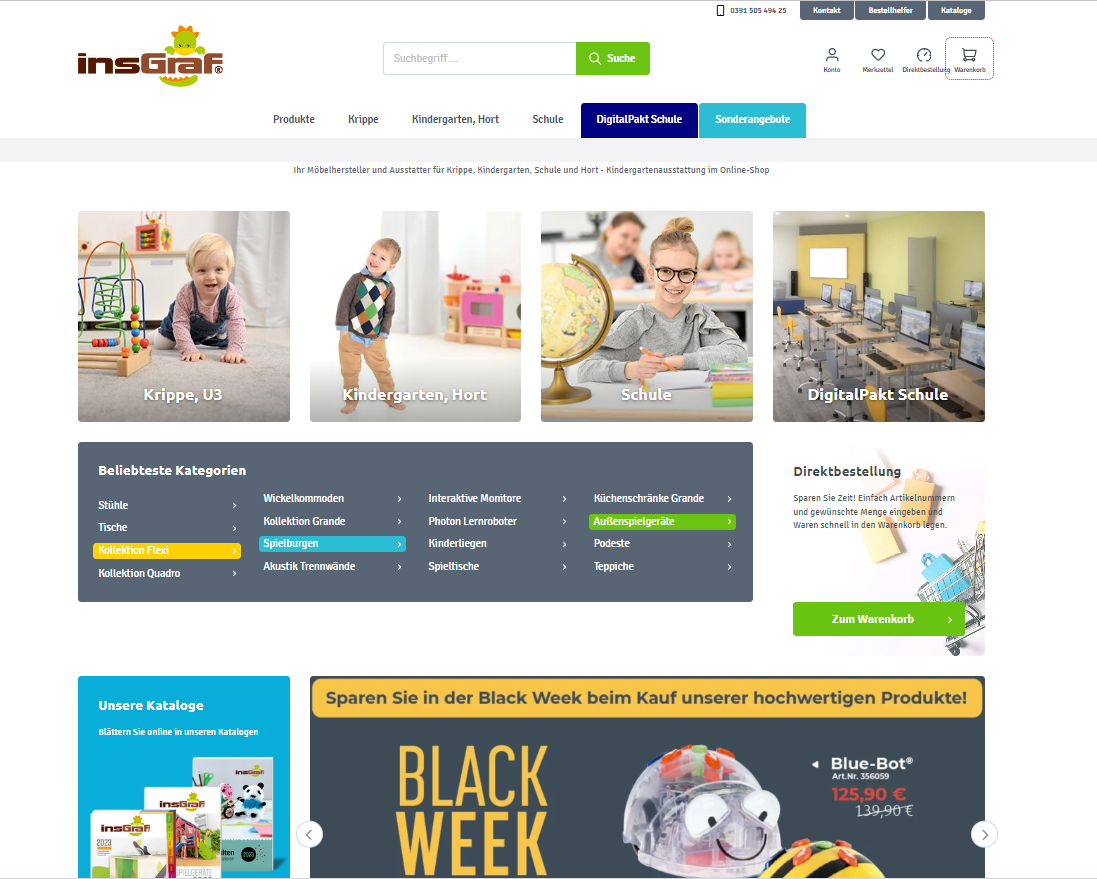
Our cooperation with insGraf started back in June 2022. We teamed up to work on the client’s visibility in the German market.
The company provides nursery, kindergarten, and school equipment including high-quality furniture as well as educational aids for teaching facilities. Given the wide range of products that InsGraf has to offer, the website required a holistic approach and a planned keyword-oriented process. We knew that we were up to a great adventure and challenge, especially with the demanding market, which Germany undoubtedly is!
The German market is extremely challenging to work with when it comes to the SEO process. Letting alone the competitiveness within, there’s also a matter of quality content and backlink earning that makes it difficult. Luckily, with the high quality of our client’s offer and close cooperation between our teams, we could easily increase insGraf’s position in search!

First, we took a closer look at the InsGraf’s sitemap files. We had a few concerns regarding the links included within the current sitemap.
When running an initial website audit we discovered that insGraf’s sitemaps required improvement. While the sitemap.xml file was correct, the links included within it didn’t direct users (or crawlers in that case) to our client’s page.
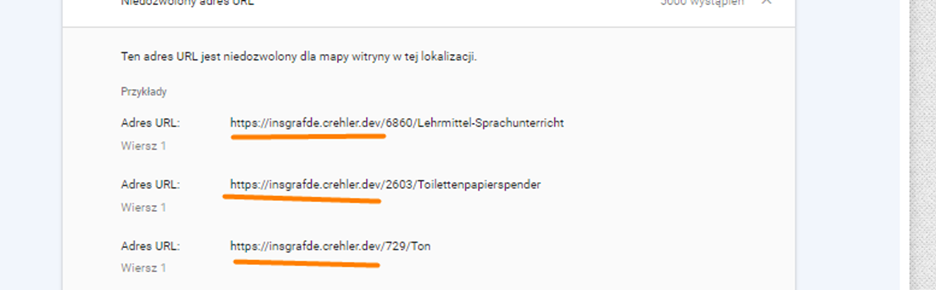
After fixing the problem we needed to wait until Google crawlers would revisit and evaluate the file. At this point, we recommended editing existing URLs to make them shorter.
/sitemap-1.xml.gz
Once we made sure Google crawlers had correct access to the website sitemap, we moved to another pillar part – the homepage.
To give insGraf’s homepage better SEO potential we started with changing its title and meta description. After keyword analysis, we chose the most relevant phrases (considering the traffic generation and conversion abilities) and prepared the title and meta description accordingly.
Example of new Title and Meta Description:
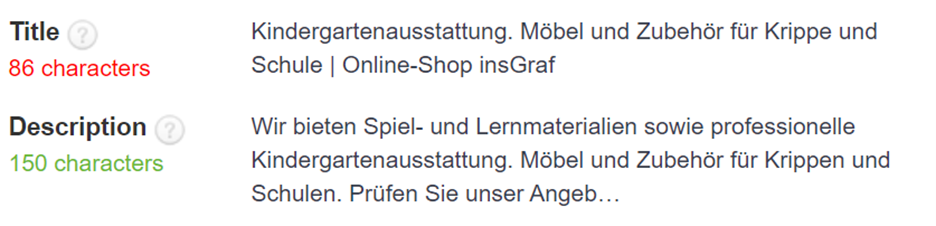
As you may already notice, the new title element included the brand tag at the end. This is due to implementing a global suffix setting. With this solution, all titles created within the domain would be automatically assigned the same ending: Online-Shop insGraf.
The client implemented unique content specifically created for the homepage – that was a great start. It required a few enhancements to make full out of its SEO potential.
First, we recommended and prepared a content extension that focused on the key assortment within the store. This allowed us to implement internal linking on the most business-relevant phrases.
The content also required optimization for relevant keyword phrases, such as improving the keyword saturation and use of <strong> attributes on correct phrases.
Other elements to take care of were images and website speed.
The total weight of pictures and graphics on the insGraf site was too big. We decided to decrease the image size to the recommended 100kB.
Taking care of image size helped a little with the long website loading time, but there was more we could do. To maintain satisfactory website speed, we continuously optimize it for both mobile devices and desktops using Google Speed Insights analytics.
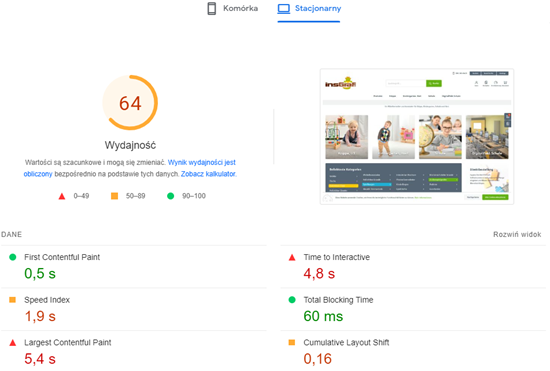
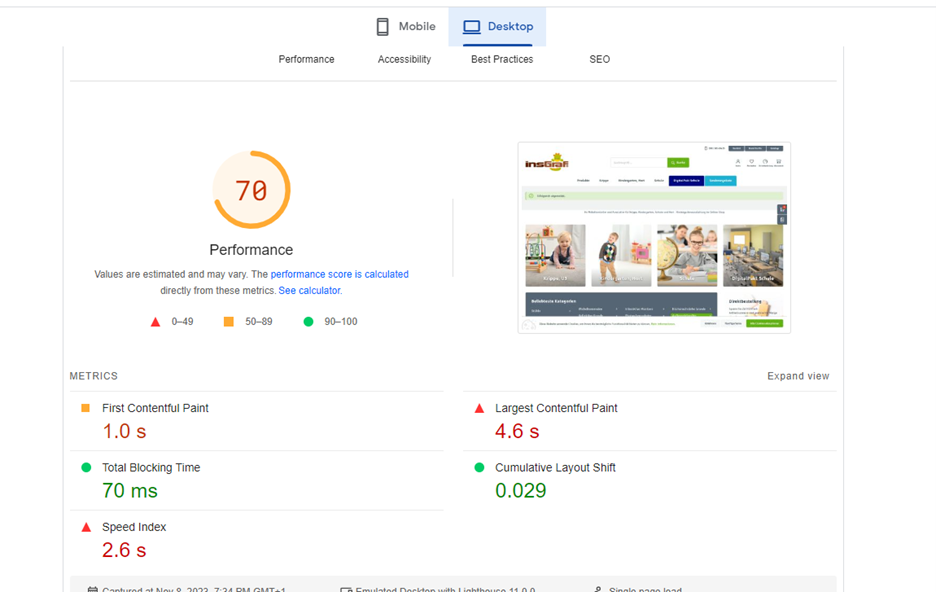
Example of website speed for desktop
Before:
After:
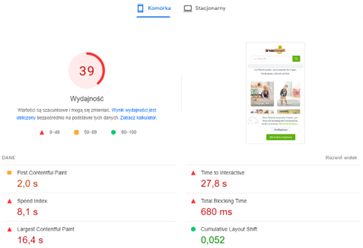
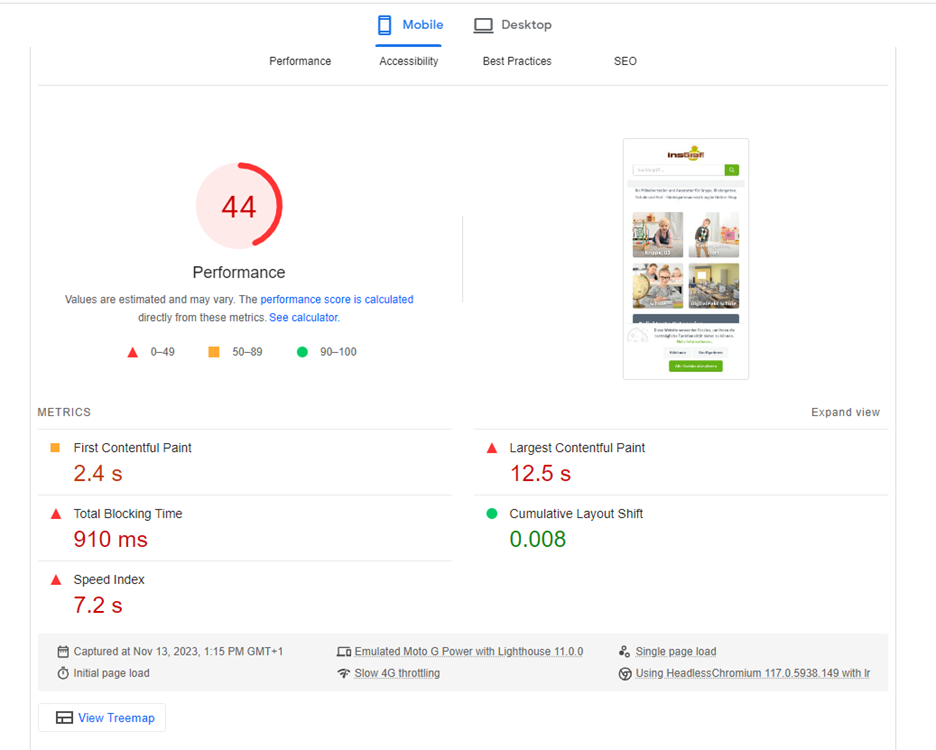
Example of website speed for mobile
Before:
After:
Our client operates in various markets with distinct language versions of the domain. Implementing an hreflang solution was a genuine necessity.
While our client has different language versions of the store – e.g. insGraf and Moje Bambino (Polish market) we suggested implementing the Hrelflang solution. This would help Google decide which version of the site should be displayed for the users from a particular location. The solution was eventually implemented on the German-language versions of the domain (for example dedicated to Austria and Switzerland).
Here’s an example of correctly implemented hreflangs:

While analyzing insGraf’s website we detected incorrect URL structure that needed to be fixed.
The client’s URL addresses were initially including the catalog ID and used capital letters:
We recommended getting rid of the ID number (it wasn’t necessary there) and capital letters to simplify the URL address:
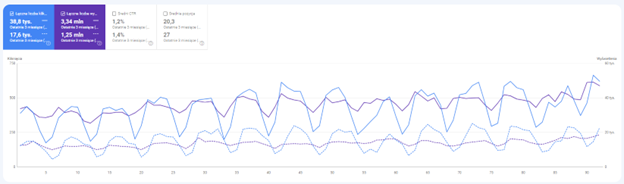
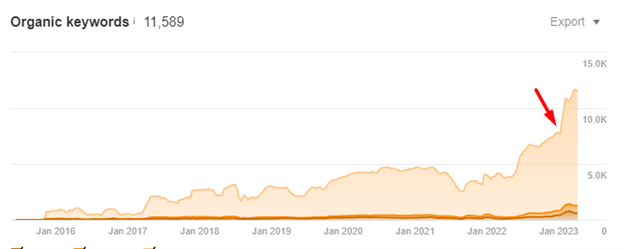
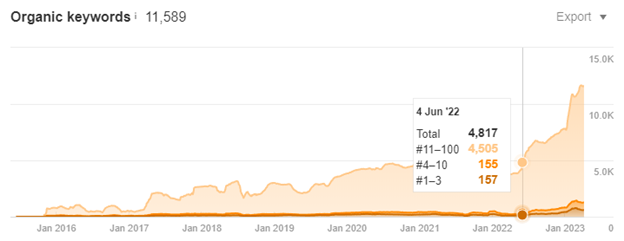
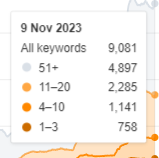
The solution proved to be effective when it came to site keyword performance almost immediately. There was no distraction from the phrase used in the URL. After changing the URL structure, the charts spiked, and the number of keywords in the top3, top10, and more increased significantly:
Content is a major element of every search engine optimization process. It wasn’t different in this case.
When working on insGraf’s content we took care of several aspects.
We wrote the content for the client’s categories. The descriptions were prepared based on the initial keyword research.
The text implemented on the domain was also formatted for better search visibility. We used <strong> and <em> tags to highlight the relevant phrases that would support SEO results.
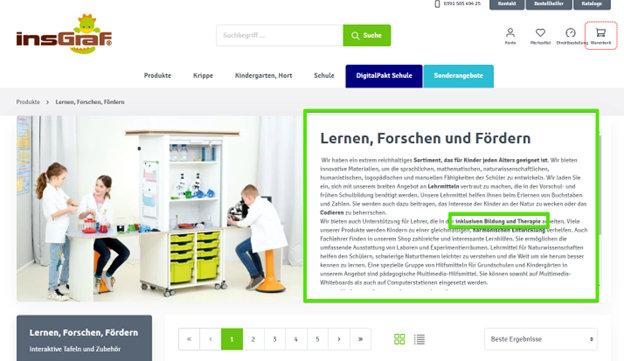
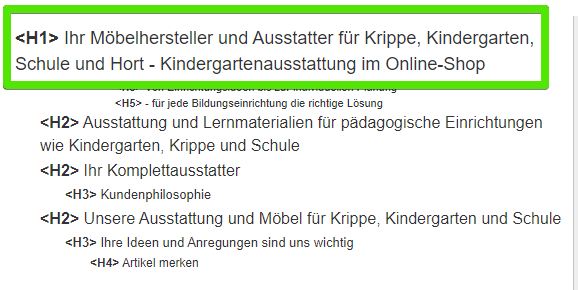
We also took care of improving the headings game on the insGraf domain. We implemented keyword-rich H1s – for example: before the attribute was only on the Beschreibung element, we recommended changing it for H3 or 4 attributes.
Instead, we went with H1 which would actively work for keyword position:
Internal links, we couldn’t forget about optimizing this element!
In our work for insGraf we’re focusing on increasing the visibility of insGraf’s original products, why not give them an additional buzz on the website? The internal linking comes with help here. We suggested implementing additional exposure for other pages and products through the “similar products” section.
The solution not only helps with building an internal linking net on the InsGraf site but also actively supports conversion and sales!
We followed a two-step off-site approach for insGraf.
Step one was all about boosting the website’s credibility. We gathered high-quality backlinks from websites related to the same topics. Additionally, we studied the link profiles of competitors and filled the gaps by securing links from external sources already used by the leading competitors.
At the same time, we used link building to enhance the website’s visibility and elevate its ranking in search engine results. To support the keywords that were already performing well, we collaborated with top authority websites to publish sponsored content.
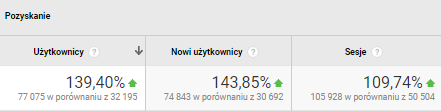
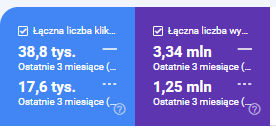
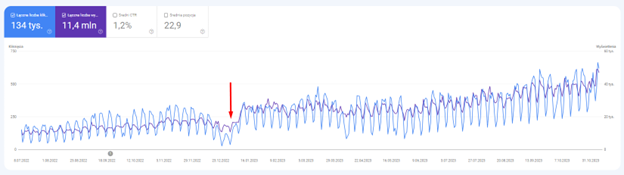
As mentioned above, the first positive results appeared already after changing the URL structure. Take a look at the growth in website visits. Here’s how the traffic grew throughout the 16 months of cooperation, the boost after URL enhancement didn’t stop!(source: Google Search Console)
But, that’s not the only growth we achieved!