Competitors on Vacation? 5 SEO Actions Worth Implementing in August to Dominate the Market in Autumn

7min.

Comments:0

04 August 2026

SEO
Competitors on Vacation? 5 SEO Actions Worth Implementing in August to Dominate the Market in Autumnd-tags
For e-commerce businesses, the summer months are often a period of lower sales and reduced activity. It is worth using this quieter time to build an advantage over your competitors before the autumn season. Google's algorithms need time to react to the optimizations and changes you introduce, which is why right now is a good moment to organize your data, fix errors, and build seasonal pages. By the time your competitors start fighting for autumn traffic, you should already be checking what works. See which moves are worth making to prepare your business for the sales season.

7min.

Comments:0

04 August 2026

Key Takeaways

  • Instead of panicking about summer declines, analyze last year’s trends and investigate your customers’ future purchase intent.
  • Use August to fix costly technical errors such as indexing problems, slow page loading, or broken product variants.
  • Create seasonal landing pages and buying guides now, because Google’s algorithms need time to index them before the sales peak.
  • Organize your product data on the site and in Google Merchant Center, making sure prices, variants, shipping costs, and return conditions are communicated clearly.
  • Build an advantage over your competitors and increase your visibility in AI tools by publishing unique, hard-to-copy materials such as original research or customer reviews.

Nie każda cisza w okresie wakacyjnym jest problemem

If your e-commerce store is seeing traffic declines during the summer, stop and consider where the decline comes from before you rush into hasty fixes. For many businesses, the summer months mean a shift in demand and a low point in seasonality, so lower traffic on the site will usually be a natural consequence of that. How can you check this?

  • Compare your site’s traffic trends year over year (YoY), and verify the number of transactions and the revenue in the same way. The chart will show you whether seasonality is visible.
  • For more popular products and categories, you can also use Google Trends, which shows interest in Google queries over time.
So before you start “rescuing” your summer results, check whether the declines really stem from problems other than seasonality. Sometimes the problem is not the decline itself, but taking chaotic action in response to natural seasonality in the industry.

The summer is often a natural period of calm, and it is worth using this time to rethink your strategy and implement work that will pay off in the autumn and let you build an advantage over your competitors before the season starts. Which actions are worth taking?

1. Check What Your Customers Will Be Searching for Before They Start Searching for It En Masse

Your starting point should be an analysis of seasonality and user intent before the season begins. When planning your optimization work, you need to know which products and categories can deliver the highest profit. Start by checking:

  • Which categories grew year over year during the autumn period,
  • Which phrases bring sales and not just traffic, and which of them have potential if their visibility improves,
  • Which topics your competitors have already started to claim ahead of the biggest season,
  • Which products have potential and interest (verified through search volumes) but are missing something, such as a proper landing page.
Instead of askingBetter to check
“What can we publish on the blog in August?”“What purchase needs will appear in our category in 6 to 10 weeks?”
“What positions do our key phrases hold?”“Which phrases do we have visibility for without a page that answers the intent?”
“What are our competitors doing today?”“What are our competitors preparing before demand becomes obvious?”
“Has traffic dropped?”“Did traffic drop for our brand, or across the whole industry?”
In the race for visibility and customers, the winning brand is the one that prepares for autumn while everyone else is busy with their vacations.

2. Fix the Things That Will Cost You the Most in Autumn

Errors that may look like a minor problem during the summer can turn out to be costly once traffic intensifies in the autumn season. What is worth verifying in August from a technical point of view?

  • Indexing errors

If you have indexing problems with some products, you can lose a lot of potential revenue during the peak sales season, because Google will not show your products to users. Verify indexing for the products you identify as key based on the seasonality analysis mentioned above.

  • Category pages Google does not reach, and internal linking

Verify the internal linking to your most important categories, and if you see problems with rankings and with visibility in AI, plan a budget for link building that will support your site’s authority. It is also worth adding tailored cross-selling sections to your most popular products, in the form of links to other similar products or items that complete the set.

  • Content duplication

If several blog posts on your site say practically the same thing, and your categories are optimized for the same phrases as those posts, this will lead to problems with visibility and sales during the season. Run an audit for content duplication and plan to consolidate it, especially in the areas that are key from a seasonality standpoint.

  • Slow page loading on mobile devices

A study conducted by Deloitte, “Milliseconds Make Millions”, showed that improving mobile page load time by just 0.1 seconds translates into an average 8.4% increase in e-commerce conversion rates and a 9.2% increase in average cart value. This shows how important the user experience is, and how a small technical change can clearly increase revenue.
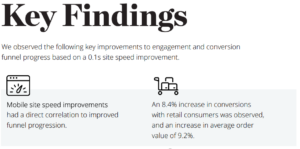
milliseconds make milions report

Source: Milliseconds Make Millions Report

  • Broken product pages or variants

Incorrectly implemented product variants, 404 errors, and broken product pages are a trap for both SEO and UX. When a customer lands on a product variant whose photo does not change to the selected color, or sees a size marked as available that turns out to be gone after switching to another variant, they will quickly get frustrated and leave the store. Taking care of product variants before the autumn season is an important step toward reducing abandoned carts and building trust in your store.

In the autumn, technical problems start to cost far more, because they affect more traffic, a larger number of ad campaigns, and customers who are ready to buy. Protect your revenue now and implement the technical fixes described above.


3. Build the Pages Your Customer Will Need in a Month, Not When They Are Already Looking for Them

Newly created content needs time for Google to notice it and include it in search results. So if your initial analysis reveals gaps in your content around autumn sales, August will be a good moment to prepare them.

Remember that this is not about producing articles on every possible topic and phrase connected to your industry and your products. Google’s own recommendations call for content that is useful and unique, and that is not a generic copy of what has already been written on other sites. Instead of creating content only because a given phrase exists, focus on covering the topics where you can add real value for the user and help them make a purchase decision.

Which types of content and pages are worth preparing in August?

  • Seasonal landing pages with your autumn offer,
  • Buying guides, meaning “how to choose” articles,
  • Comparison pages (this type of content also helps with AISO),
  • Gift idea pages for various occasions,
  • Knowledge bases for customers who will compare different options before buying.

Example topics you can cover in the materials you prepare, depending on your industry:

IndustryWhat can you prepare in August?
FashionAutumn capsule wardrobe, office wardrobe, transitional jackets, rain shoes.
BeautyPost-summer skincare, skin regeneration, switching your routine for autumn.
Home & decorPreparing your home for autumn, lighting, textiles, interior organization.
B2BQ4 budgeting, end-of-year planning, cost optimization.
EducationBack to school, autumn courses, developing skills after the summer break.
TravelAutumn city breaks, off-season trips, long weekends.

4. Organize Your Product Data Before the Customer Starts Comparing

When making a purchase decision, a customer pays attention to many elements connected with the offer and with buying the product:

  • availability,
  • price,
  • shipping cost and shipping options,
  • estimated delivery date,
  • return policy,
  • customer reviews,
  • variants,
  • photo quality,
  • store credibility.
If any of the information listed above is missing from your product page while a competitor states every element clearly, it is very likely that you will lose the potential customer to that better prepared competitor.

Beyond the elements indicated above, Google also recommends connecting structured data (schema) with the feed you place in Google Merchant Center. Structured data helps Google’s bots understand product information better and at the same time influences whether elements such as price or reviews in the form of stars appear in search results. Merchant Center, in turn, gives you more control over how quickly data on price, availability, and product variants is updated and can be more effective and faster than Google’s standard crawl of your site.

Below is a short checklist of what is worth verifying in the area of product data:

ObszarWhat to check in August?
PriceIs the price on the site, in the structured data, and in Merchant Center consistent?
AvailabilityDoes a product that is sold out still look available?
VariantsDo the customer and Google understand which color, size, or model they are looking at?
PhotosIs the product shown clearly, including in the context of use? Is the photo quality good enough?
ShippingAre the delivery time and shipping cost easy to find?
ReturnsDoes the customer understand the return conditions before adding the product to the cart?

5. Build an Advantage Your Competitors Will Not Copy

One of your company’s biggest strengths against the competition is everything that is unique to your e-commerce business. Your experience, the data from the research you run, the reviews and photos from your customers, the materials you create. By showing all of these elements, you gain more trust among new users and increase your brand’s visibility in AI tools, because original materials and data are exactly what LLMs cite most willingly.

What is worth publishing on your site before the sales season if your company has not been doing it so far?

  • your own data and analysis results,
  • product tests,
  • comparisons of products and solutions,
  • expert commentary,
  • the project team’s experience,
  • authentic photos and video materials,
  • customer reviews and stories,
  • answers to the questions most often asked of your sales and customer service teams,
  • calculators, checklists, configurators, and other interactive tools,
  • case studies showing how the products are used in practice.

Generic text is easy to copy and rewrite for someone else’s blog. It is much harder to copy company data, experience, customer reviews, or video materials that address a real user problem. Unique and valuable content is currently one of the most important assets influencing brand visibility, both in Google search and in AI tools. So if you are not publishing this kind of material yet, it is high time to change that.

An August Action Plan: Do Not Do Everything at Once

Below we have prepared a summary with an action plan that will let you map out your strategy step by step, without the chaos.

WeekMain activityResult
Week 1Analysis of seasonality, competitors, and data from your own analytics and from Google Trends.You know where demand will actually appear and what your competitors are working on.
Week 2Running a technical audit, prioritizing errors and strategic pages.You know what could limit your visibility and sales in the autumn.
Week 3Preparing landing pages, categories, and seasonal content.You build your assets before demand grows.
Week 4Checking product pages, the feed, and Google Merchant Center.Your offer is ready for customers to compare and to buy.

Verifying product data or technical errors is not a task for the turn of September and October. At that point your marketing team should be focused on executing sales, not fixing basic errors. If you want a non-automated, strategic site audit before the Q4 sales peak and want to consult your plans directly with SEO and DEV specialists, let’s talk about a dedicated strategy for your e-commerce business.


E-Commerce SEO

Grow your online sales with our help

Check out our offer!
Przemek Jaskierski
Przemek Jaskierski SEO Strategy Manager

Sources:

  • https://developers.google.com/search/docs/fundamentals/ai-optimization-guide?hl=en
  • https://www.thinkwithgoogle.com/_qs/documents/9757/Milliseconds_Make_Millions_report_hQYAbZJ.pdf
Author
Wiktoria Wójciak - SEO Specialist
Author
Wiktoria Wójciak

Senior SEO Specialist

She joined the Delante team in 2021, specializing in local SEO and managing Google My Business Profiles.

A graduate in Information Management from Jagiellonian University, she analyzes and optimizes service and e-commerce websites in her daily work. She feels comfortable working in any industry, as long as client communication is based on mutual understanding and cooperation. She believes that good relationships and shared goals are key to achieving satisfying results.

At Delante, she is responsible for processes such as Google My Business optimization and listing positioning. She believes that SEO success lies in understanding the client’s needs and taking a flexible approach to the specifics of each industry.

Author
Wiktoria Wójciak - SEO Specialist
Author
Wiktoria Wójciak

Senior SEO Specialist

She joined the Delante team in 2021, specializing in local SEO and managing Google My Business Profiles.

A graduate in Information Management from Jagiellonian University, she analyzes and optimizes service and e-commerce websites in her daily work. She feels comfortable working in any industry, as long as client communication is based on mutual understanding and cooperation. She believes that good relationships and shared goals are key to achieving satisfying results.

At Delante, she is responsible for processes such as Google My Business optimization and listing positioning. She believes that SEO success lies in understanding the client’s needs and taking a flexible approach to the specifics of each industry.

FAQ

Why Is August a Good Moment for SEO Work Ahead of the Autumn Season?

Google’s algorithms need time to notice, process, and account for the changes you introduce in search results. Implementing technical fixes, organizing product data, or creating new content in August means your site will reach high visibility exactly when customers start searching for autumn products en masse.

Does a Traffic Drop in an Online Store During the Summer Always Mean There Is a Problem With the Site?

No. In many e-commerce industries, the summer period comes with a natural change in customer needs and a lower season. Instead of taking sudden, unconsidered corrective action, it is worth comparing your data with the same period last year (YoY) and checking general market trends in Google Trends to make sure the decline is not simply the result of seasonality across the whole industry.

How Can You Stand Out From the Competition and Gain Higher Visibility in Search Engines and AI Tools?

The most effective method is publishing unique assets that your competitors cannot easily copy. It is worth adding your own research results, reviews, and photos from real customers, expert commentary, video reviews, and dedicated tools (such as calculators or configurators) to your site. Materials like these build buyers’ trust and are also readily cited by LLMs and valued by Google.